Recent industry data shows that most enterprises now treat Azure Migration Services as a core part of their IT modernization plans rather than a one time project. Businesses are actively prioritizing cloud migration to Azure to improve reliability, security, and long term cost control.
Why Azure Migration Services Matter for Businesses Today
Azure Migration Services help businesses move existing applications, data, and workloads into Microsoft’s cloud in a controlled and low risk way. For many organizations, legacy systems limit
scalability and slow decision making. Rising infrastructure costs and security concerns add more pressure.
By using Azure Migration Services, companies can confidently migrate to Azure without disrupting daily operations. These services are designed to support real business needs such as uptime protection, predictable costs, and future readiness. This is why Microsoft Azure migration has become a strategic initiative rather than a technical upgrade.
The Beginner Challenge with Azure Migration
For beginners, Azure migration often appears complex. Business leaders are exposed to terms like Azure migration tools, Azure migration assessment, and Azure cloud migration services without clear explanations of what they mean in practice. The result is hesitation and delayed action.
Azure Migration Services for businesses bridge this gap. They simplify planning, reduce uncertainty, and provide a clear path for cloud migration to Azure. Instead of focusing on technical detail, they focus on business continuity and measurable outcomes.
This beginner’s guide explains Azure Migration Services from a business execution perspective. It highlights how Azure cloud migration services support informed decisions and sustainable growth.
Azure Migration Assessment as the First Business Step
An Azure migration assessment is the most critical phase of Azure Migration Services because it determines whether a migration will deliver business value or create operational risk. For beginners, this step provides structure and removes uncertainty before any workloads are moved.
What an Azure Migration Assessment Really Evaluates
A proper Azure migration assessment goes beyond a basic inventory. It analyzes applications, databases, servers, and integrations in the context of how the business actually operates. It identifies dependencies between systems, performance expectations, security exposure, and compliance obligations.
From a business standpoint, the assessment answers key questions.
Which workloads are stable enough to move now?
Which ones need modernization?
Which systems will benefit most from cloud migration to Azure in terms of cost or scalability?
This level of clarity is essential for effective Microsoft Azure migration planning.
How Assessments Shape Smarter Migration Decisions
Without assessment, businesses often attempt a lift and shift approach that ignores real world constraints. This increases the risk of downtime and cost overruns. Azure Migration Services rely on structured assessments supported by reliable Azure migration tools to prevent this.
These tools help estimate Azure readiness, expected costs, and performance outcomes. They also support phased migration plans, allowing organizations to migrate to Azure in controlled stages rather than all at once.
Why Assessment Protects Business Continuity
For beginners, assessment is about protection. It safeguards uptime, customer experience, and internal operations during Azure migration. It also creates a shared understanding between technical teams and business leaders.
Most importantly, a strong Azure migration assessment becomes the foundation for defining an effective Azure migration strategy. Without it, Azure Migration Services cannot deliver predictable results.
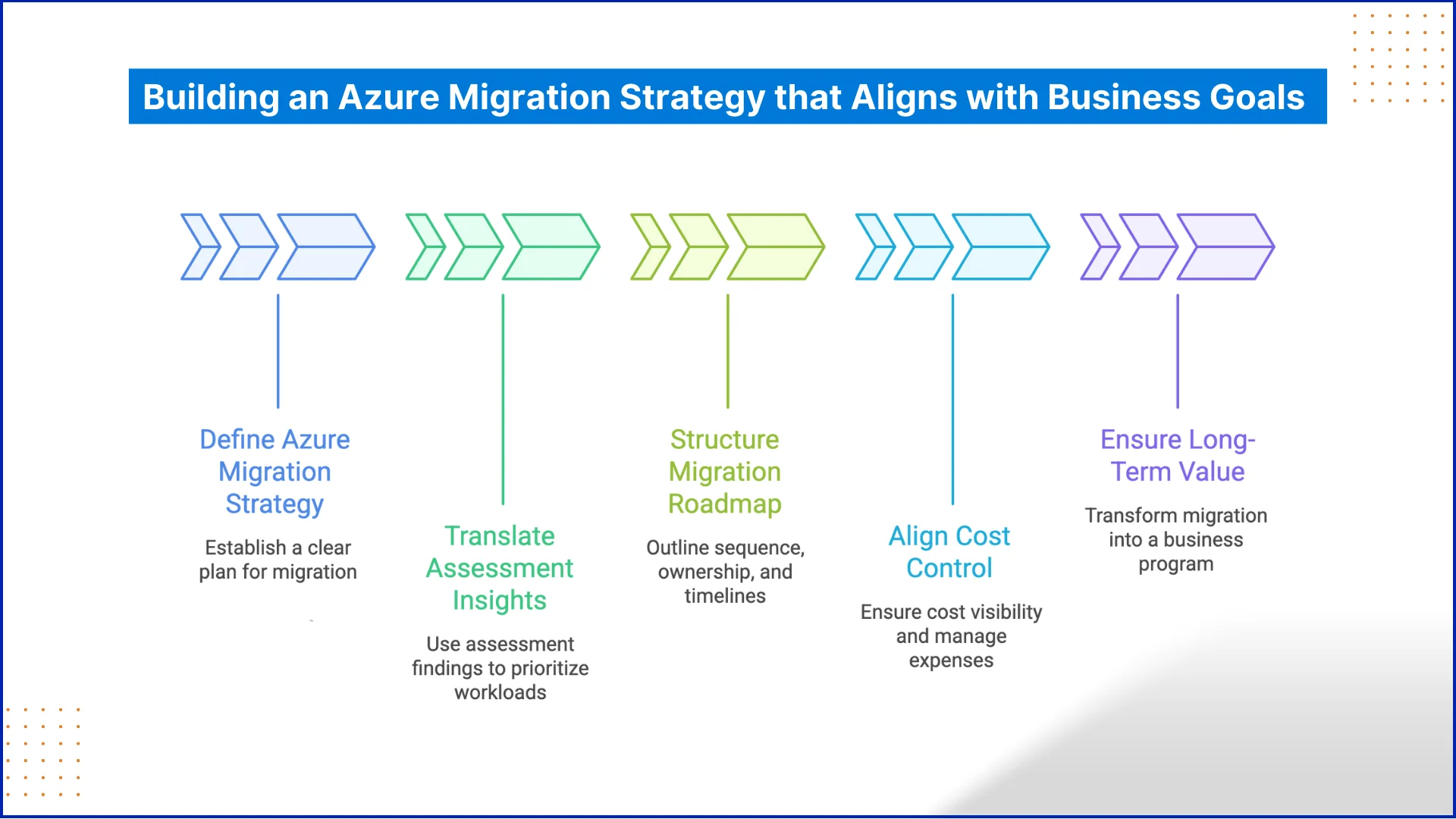
Building an Azure Migration Strategy that Aligns with Business Goals
A well defined Azure migration strategy is what turns planning into controlled execution. Within Azure Migration Services, this strategy ensures that migration supports business priorities rather than disrupting them. For beginners, this step provides direction, governance, and measurable outcomes.
Translating Assessment Insights into Action
An effective Azure migration strategy is built directly from the Azure migration assessment. It uses assessment findings to define which workloads move first, which require changes, and which should be delayed. Business critical systems are prioritized based on revenue impact, customer experience, and regulatory requirements.
This approach allows organizations to manage risk while progressing steadily through Azure migration. It also supports phased cloud migration to Azure, which is easier to control than large scale, single phase moves.
Structuring the Migration Roadmap
Strategy defines the sequence of activities, ownership, and timelines. It outlines how teams will use Azure migration tools, how data will be secured, and how performance will be validated after each move. This creates consistency across teams involved in Microsoft Azure migration.
A clear strategy also includes rollback planning and testing cycles. These elements protect business operations and prevent prolonged downtime during migrate to Azure initiatives.
Aligning Cost Control and Long Term Value
Cost visibility is a core part of strategy. Azure Migration Services help forecast expenses and avoid unexpected charges by aligning resource usage with actual business needs. This ensures the migration supports growth without creating financial strain.
For beginners, a strong Azure migration strategy transforms migration into a business program, not an IT task. It ensures accountability, predictable outcomes, and sustained value from Azure Migration Services.
Let's Discuss Your Project
Get free Consultation and let us know your project idea to turn into an amazing digital product.
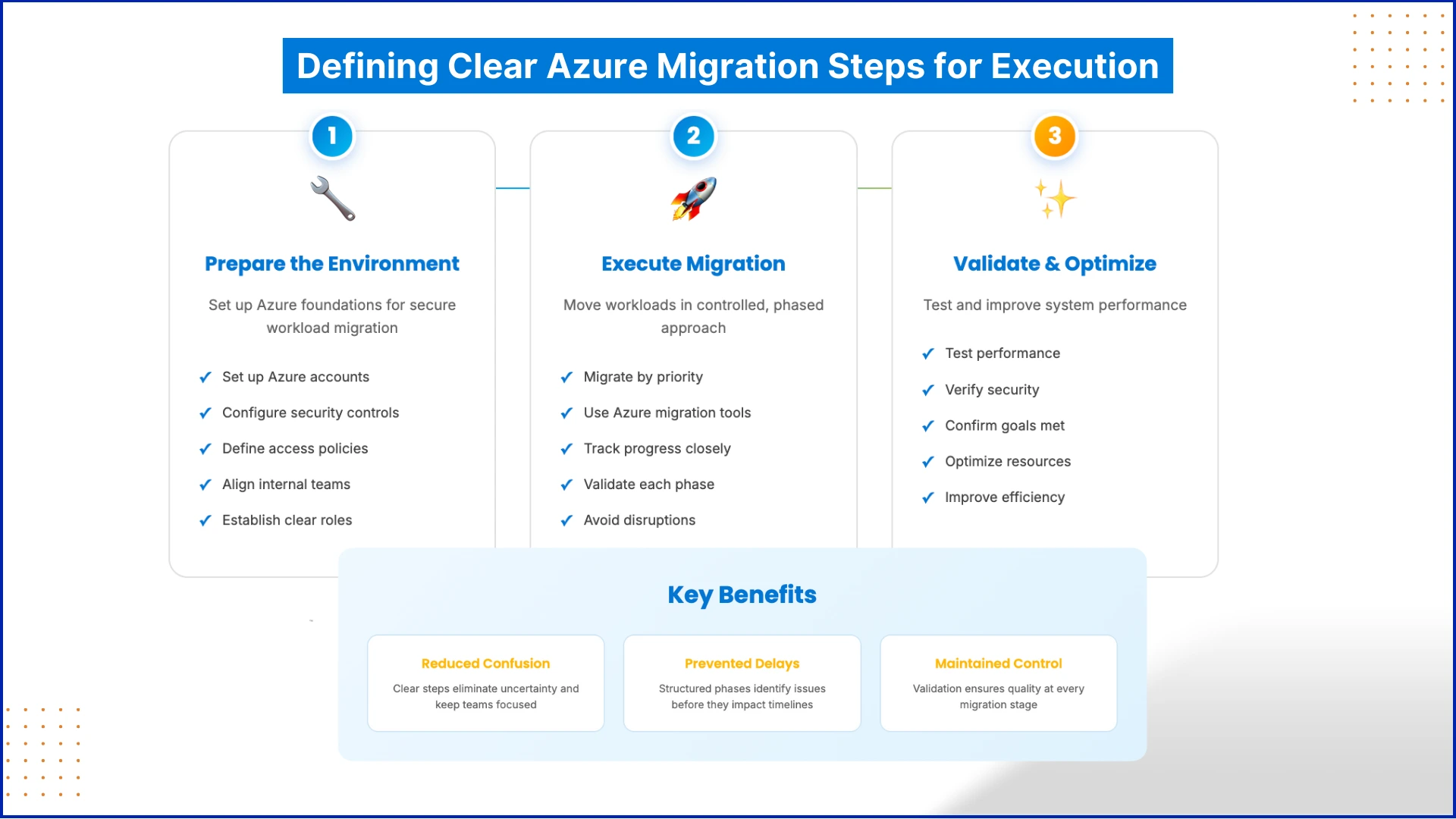
Defining Clear Azure Migration Steps for Execution
Clear Azure migration steps turn strategy into action. Within Azure Migration Services, this phase focuses on execution discipline. For beginners, defined steps reduce confusion and prevent delays during migration.
Step One: Prepare the Environment
The first step is preparing the Azure environment. This includes setting up accounts, security controls, and access policies. These foundations ensure that workloads can move safely during Azure migration.
Preparation also involves aligning internal teams. Business owners, IT teams, and partners must understand their roles before migration begins. This coordination supports stable cloud migration to Azure.
Step Two: Execute Controlled Workload Migration
Once preparation is complete, workloads are moved in planned phases. Azure Migration Services support moving applications and data based on priority and readiness. Using proven Azure migration tools, teams can track progress and address issues quickly.
Phased execution allows businesses to migrate to Azure without interrupting daily operations. Each move is validated before the next one begins.
Step Three: Validate and Optimize
After migration, systems are tested for performance, security, and reliability. Validation confirms that Microsoft Azure migration goals are met. Optimization follows to adjust resource usage and improve efficiency.
These Azure migration steps ensure predictable execution. They help beginners move forward with confidence while maintaining control through every stage of Azure Migration Services.
Establishing Governance Through Azure Migration Best Practices
As Azure Migration Services mature, governance becomes the deciding factor between short term success and long term stability. Azure migration best practices at this stage focus on control, accountability, and operational discipline after workloads are live in Azure.
A primary governance practice is ownership definition. Every migrated application must have a clear business owner and a technical owner. This ensures faster decisions and prevents gaps in responsibility during Azure migration operations. Without ownership, issues often remain unresolved and costs increase.
Security governance is equally critical. Access rules, identity controls, and data protection policies must be enforced consistently. During cloud migration to Azure, many businesses overlook this step, which later creates compliance exposure. Microsoft Azure migration should always align with internal security standards and regulatory expectations.
Cost governance is another core best practice. Azure Migration Services should include regular cost reviews tied to actual usage. Teams must track spending trends and adjust resources early. This prevents budget surprises after organizations migrate to Azure.
Operational monitoring completes the governance model. Performance tracking, availability checks, and usage reviews help teams detect issues before they affect users. These practices ensure that Azure migration best practices support stable operations rather than reactive fixes.
For beginners, governance focused Azure Migration Services provide structure beyond deployment. They protect business value and ensure Azure remains a reliable long term platform.
Defining a Clear Azure Migration Process and a Scalable Azure Migration Roadmap
As businesses move beyond initial workloads, structure becomes critical. Azure Migration Services rely on a clearly defined Azure migration process and a forward looking Azure migration roadmap to maintain control, pace, and alignment with business priorities.
The Business View of the Azure Migration Process
The Azure migration process is not a single event. It is a repeatable operating model that guides how workloads are evaluated, moved, validated, and optimized over time. This process connects earlier steps such as Azure migration assessment, strategy, and execution into one continuous flow.
From a business perspective, the process defines decision points. It clarifies when to move, when to pause, and when to optimize. This reduces risk during Azure migration and supports consistent cloud migration to Azure across teams and environments.
Creating a Realistic Azure Migration Roadmap
An effective Azure migration roadmap translates strategy into time bound phases. It outlines which business systems move first, which follow later, and how dependencies are managed. This roadmap helps leadership understand how Microsoft Azure migration supports operational goals and future growth.
The roadmap also accounts for capacity planning, cost forecasting, and compliance alignment. After teams migrate to Azure, it guides optimization and expansion without creating unmanaged sprawl.
Why Process and Roadmap Drive Long Term Success
Without a defined process, migration efforts lose momentum. Without a roadmap, teams react instead of plan. Azure Migration Services use both to maintain direction, transparency, and accountability.
For beginners, a structured Azure migration process paired with a practical Azure migration roadmap ensures that migration remains predictable, scalable, and aligned with business outcomes.
Eager to discuss about your project ?
Share your project idea with us. Together, we’ll transform your vision into an exceptional digital product!
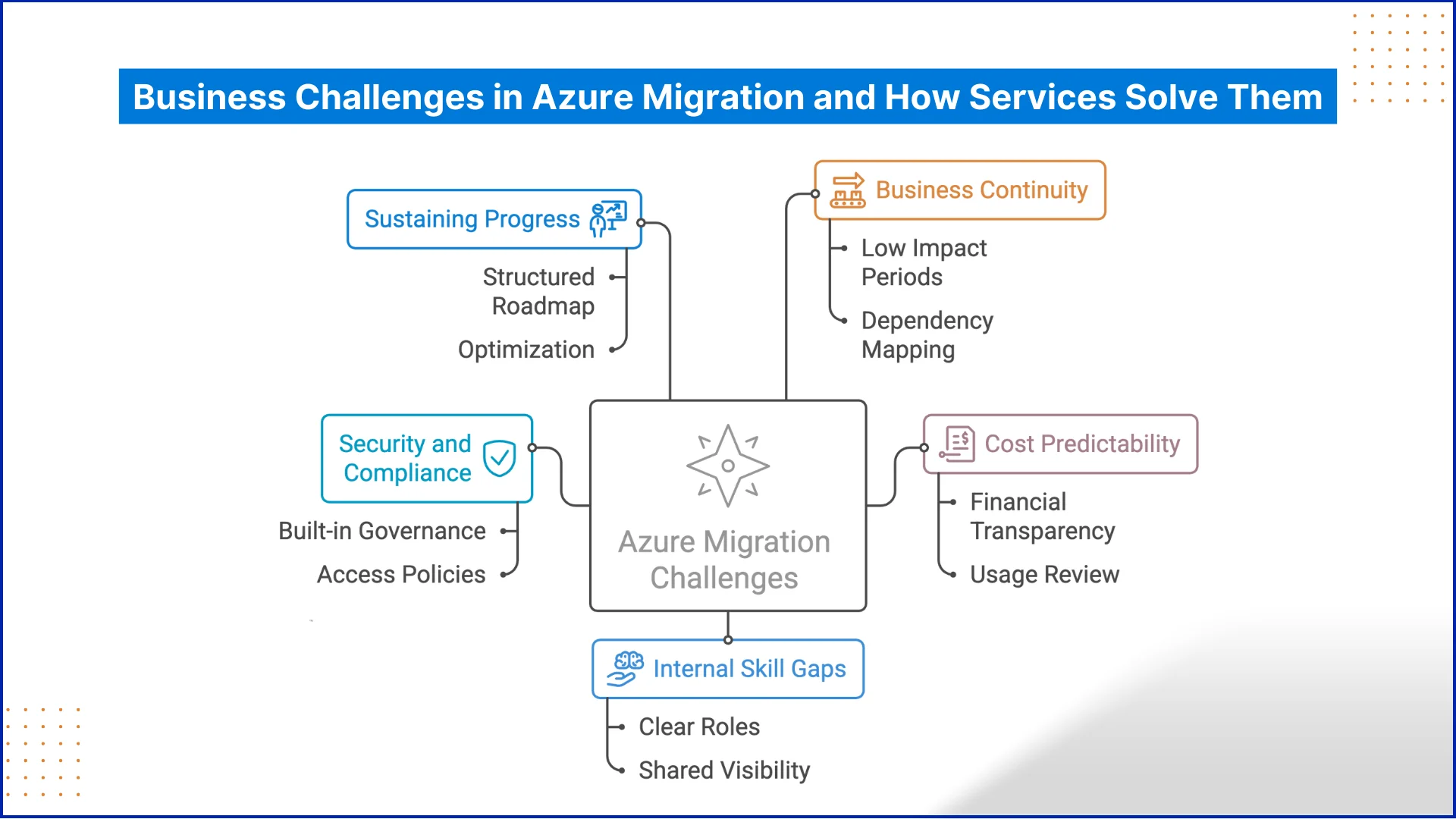
One of the most critical concerns in cloud migration to Azure is continuity. Business systems are deeply interconnected. A disruption in one application can impact multiple teams or customers.
Azure Migration Services address this by designing migrations around business cycles rather than technical convenience. Workloads are scheduled during low impact periods. Dependencies are mapped in advance. Validation happens before users are redirected. This approach reduces downtime and ensures that Azure migration does not interrupt revenue generating activities.
Gaining Cost Predictability and Financial Control
Cost uncertainty is a major barrier in Microsoft Azure migration. Many businesses fear losing control once systems move to the cloud.
Through structured planning and ongoing review, Azure Migration Services create financial transparency. Costs are estimated before migration and tracked during execution. After organizations migrate to Azure, usage is reviewed regularly to ensure resources match demand. This discipline prevents long term overspending and supports responsible growth.
Overcoming Internal Skill and Alignment Gaps
A common challenge is internal readiness. Teams may lack experience with Azure migration tools or cloud operations. Business leaders may also struggle to align technical work with business priorities.
Azure Migration Services for businesses reduce this friction by providing clear roles and shared visibility. Technical teams understand execution steps. Business stakeholders understandtimelines and outcomes. This alignment speeds decision making and reduces confusion during Azure migration.
Maintaining Security and Compliance Confidence
Security and compliance concerns often delay cloud migration to Azure. Businesses worry about data exposure and regulatory risk.
With built in governance and best practices, Azure Migration Services ensure security controls are applied consistently. Access policies, data protection rules, and compliance requirements are enforced throughout the migration lifecycle. This allows businesses to move forward with confidence rather than hesitation.
Sustaining Progress Beyond Initial Wins
Many migrations lose momentum after early workloads move. Optimization is delayed and future phases become unclear.
A structured Azure migration roadmap keeps progress intentional. It defines what happens next, how systems are optimized, and when additional workloads move. This ensures that Azure Migration Services support long term transformation rather than a one time move.
For beginners, these challenges are not reasons to delay migration. They are reasons to approach it with structure. When addressed early, Azure Migration Services turn complexity into a controlled and predictable business transition.
Conclusion
Azure Migration Services are no longer optional for businesses that want stability, scalability, and long term operational control. For beginners, the real value of migration is not in moving workloads quickly. It is in moving them correctly.
This guide explained how Azure migration works from a business perspective. It showed why assessment creates clarity, why strategy prevents risk, and why structured execution protects daily operations. It also highlighted how governance, process, and a clear roadmap ensure that cloud migration to Azure delivers value beyond the initial move.
When businesses plan to migrate to Azure, success depends on discipline and experience. Decisions must be guided by real operational needs, cost visibility, and security responsibility. Migration should support business continuity, not disrupt it. When done right, Microsoft Azure migration becomes a foundation for growth rather than a source of uncertainty.
Organizations that treat Azure Migration Services as a long term capability gain better control, stronger alignment, and predictable outcomes. This is where experienced partners like QServices help businesses move with confidence, clarity, and purpose.
What are Azure Migration Services in simple terms?
Azure Migration Services help businesses move their existing applications and data to Azure in a planned way. The goal is not just to move systems, but to do it without disrupting daily work, customers, or internal teams.
How long does an Azure migration usually take?
There is no single timeline. Some systems can move quickly, while others need careful planning and testing. Most businesses choose a phased approach so operations continue smoothly during the transition.
Is Azure migration only meant for large enterprises?
No. Many small and mid sized businesses migrate to Azure to reduce infrastructure maintenance and gain flexibility. Azure Migration Services can be scaled to match the size and pace of the business.
What should a business do before migrating to Azure?
The most important step is understanding the current environment. An assessment helps identify what is ready to move, what needs improvement, and what risks should be addressed early.
Will our business experience downtime during migration?
Some disruption can happen, but it can often be limited or avoided. Careful scheduling, testing, and validation help keep customer facing systems available.
How do businesses control costs after moving to Azure?
Costs stay under control when usage is reviewed regularly and resources are adjusted as needed. Migration services help businesses avoid paying for capacity they do not use.
Do internal teams need strong Azure skills to begin migration?
Not necessarily. Many teams build their knowledge during the process. With the right guidance, teams gain confidence while migration progresses.
How is security handled during Azure migration?
Security is addressed from the start. Access controls, data protection, and compliance rules are applied as systems move to Azure, not after.
What happens once workloads are live on Azure?
After migration, systems are monitored and optimized. Performance, cost, and security are reviewed to ensure everything works as expected.
How does QServices support businesses during Azure migration?
QServices supports businesses by planning carefully, managing risk, and guiding teams through each stage. The focus is on long term stability and real business outcomes.
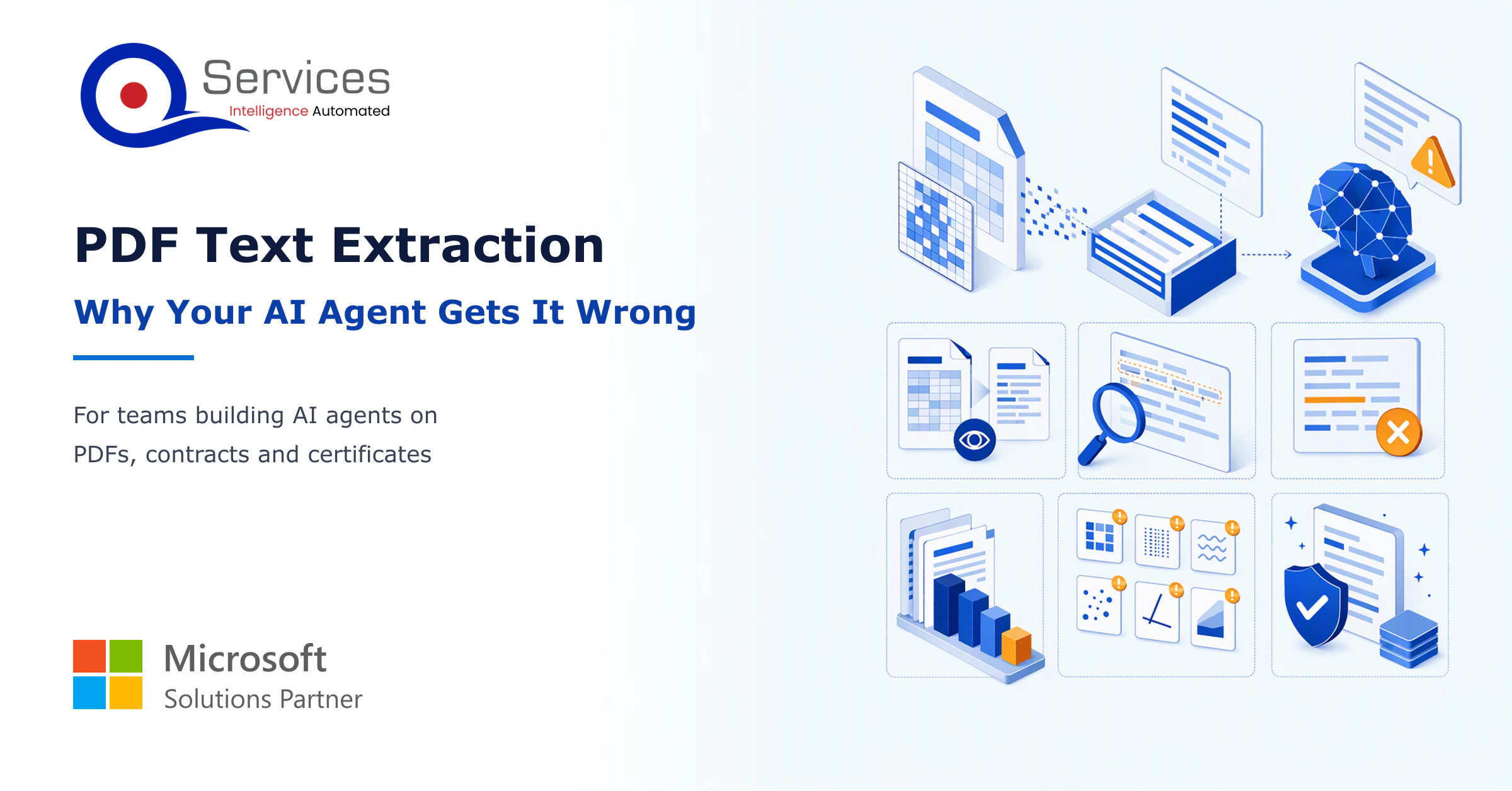
When PDF text extraction drops the spaces between words, AI agents can’t find facts that are right there. How we found it in Azure AI Foundry and fixed it.
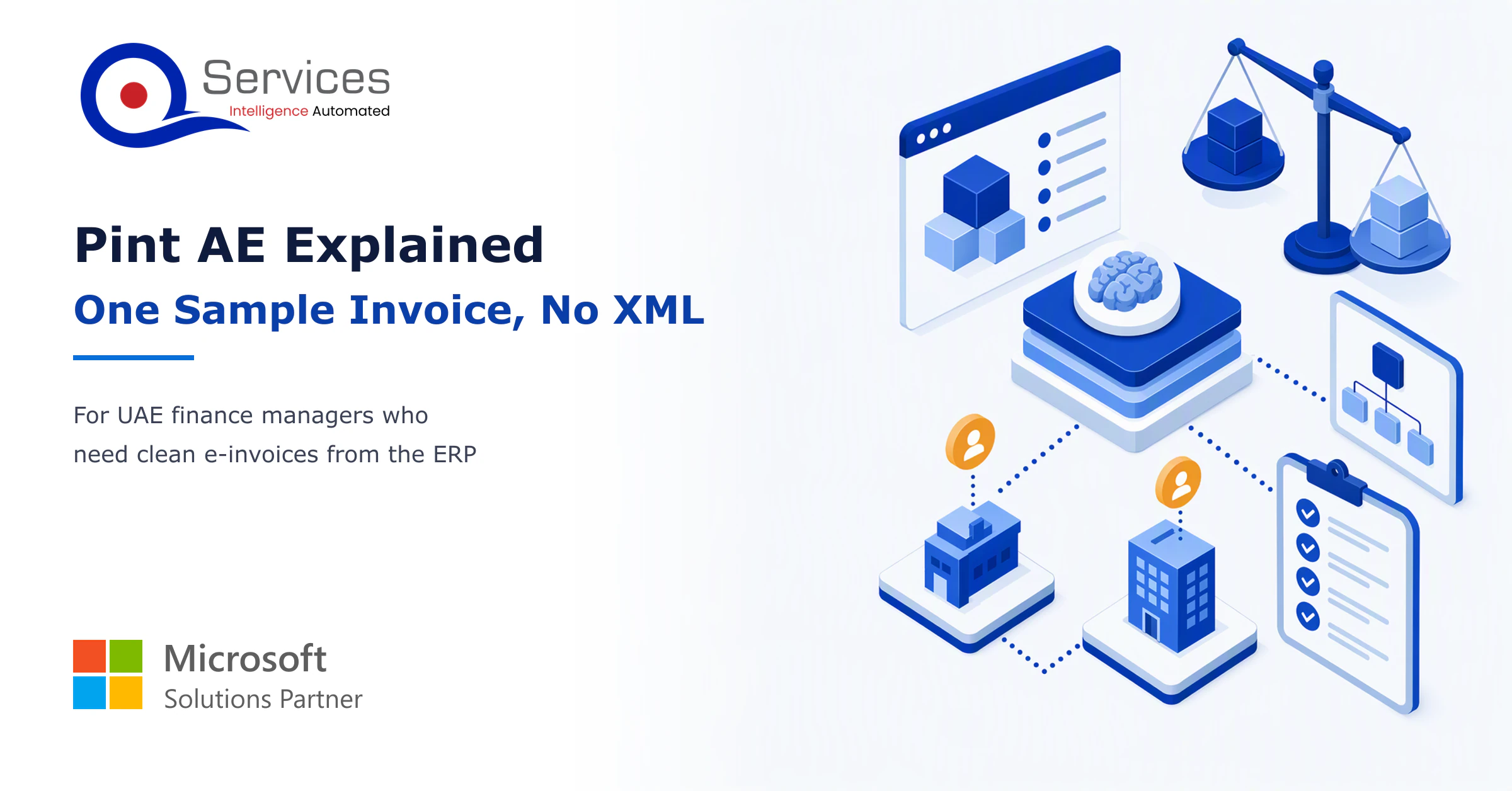
Pint AE explained for UAE finance teams with one sample invoice: see which fields come from your ERP, which go missing, and how to test before go-live.
Days sales outstanding explained for CFOs: the formula, worked examples, named industry benchmarks, and why seasonal sales distort DSO. See what moves it.
QServices Inc. undertakes every project with a high degree of professionalism. Their communication style is unmatched and they are always available to resolve issues or just discuss the project.
Turn the Microsoft Licenses
You Already Own Into an AI Workplace
Join our live webinar on Sept 24 and see five ways to automate meetings, approvals, and