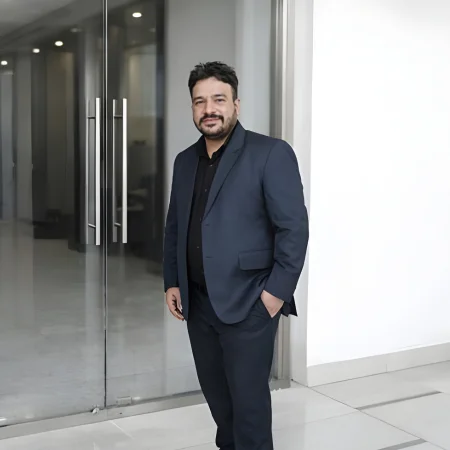
By Sahil Kataria, Chief Executive Officer, QServices
Updated June 13, 2026
Sahil Kataria is the CEO of QServices, a Microsoft Solutions Partner delivering AI agents and custom software for regulated industries. He leads enterprise AI strategy and FinTech delivery. LinkedIn ↗
Written from QServices' hands-on delivery work and reviewed by Rohit Dabra, Chief Technology Officer, QServices, before publishing.
QServices is a remote-first legacy modernization company serving Austin businesses in tech, healthcare, and real estate. We are not headquartered in Austin, but we work with Texas clients on remote engagements with Central Time hours overlap each workday. See our full services portfolio for related offerings.
What Austin buyers typically need from legacy modernization
Austin's mix of technology companies, healthcare networks, and real estate platforms creates specific modernization patterns:
- Tech and SaaS companies: Platforms built in the 2010s on aging .NET Framework, Rails, or Java EE stacks that now slow down feature releases. The typical project extracts one service at a time using a strangler-fig approach rather than a full rewrite.
- Healthcare organizations: Legacy EHR integrations and patient data pipelines that need re-platforming to Azure with PHI access controls. The Texas Data Privacy Act (effective July 2024) adds consumer data rights obligations to any system handling patient or client PII.
- Real estate and PropTech firms: Property management platforms and MLS integrations running on decade-old codebases not designed for modern API consumption.
- Insurance carriers and MGAs: Policy administration systems under Texas Department of Insurance (TDI) oversight, often brittle and dependent on staff nearing retirement.
Two compliance regimes shape nearly every Austin modernization engagement. The Texas Data Privacy and Security Act requires businesses that process Texas resident data to build in consent management and data minimization, features most legacy systems do not have. TDI oversight on insurance systems adds audit trail and data retention requirements that must be preserved or rebuilt during migration.
How we work with Austin clients
Austin is on Central Time. Our engineering team is in India on IST, which runs 10.5 to 11.5 hours ahead of CT depending on the season. We run an evening shift so engineers are available when Austin's workday starts. When your team comes in at 9 AM CT, our engineers are online for standups and questions until roughly noon CT, then hand off to async.
The working cadence for Austin engagements:
- Weekly 60-minute video standup via Microsoft Teams or Zoom, scheduled for Austin morning
- Async channel (Slack or Teams) for day-to-day questions and pull request review comments
- Pull requests reviewed and returned within one business day
- Bi-weekly sprint demos with a written summary for stakeholders who cannot attend live
- Shared project board (Jira or Linear) visible to Austin stakeholders at any time
On-site visits to Austin are available for major milestones such as project kickoff or go-live. For regulated-industry clients where face-to-face review of the migration plan is preferred before cutover, we can arrange it.
Relevant work in similar markets
We do not have a published case study for an Austin-based client. Our two closest examples involve technology-sector modernizations with direct parallels to what Austin software and financial services companies face:
Global EHS Software Platform: VB.NET Monolith to .NET 8 and React
A global Environmental Health and Safety software company needed to retire a legacy VB.NET monolith and rebuild on .NET 8 and React, hosted on Azure. The scope covered Management of Change, Incidents, LMS training, and automated scheduling, all rebuilt behind a clean API layer. Outcome: improved scalability and global performance. Austin tech companies running .NET Framework monoliths face the same architectural decision.
Case Study
Global EHS Platform Modernization: VB.NET Monolith to .NET 8 and React
Global Environmental Health and Safety software company
Improved scalability, maintainability, and global performance after rewriting a legacy VB.NET monolith
Streamlined Management of Change, Incidents and Events, Action Items, LMS training, and automated scheduling in a single platform
.NET 8ReactAzureAxios REST Client
Stock Market Analytics Platform: Spreadsheets to Azure Dashboard
An investment management firm had operational data scattered across spreadsheets with no reliable reporting. We built a role-authenticated Azure dashboard with automated scraping, real-time financial metrics, and stock category classification on ASP.NET and Entity Framework. This is the kind of data consolidation project that Austin fintech and real estate analytics companies also run.
Case Study
Stock Market Analytics and Categorization Platform (StockScrapping)
Investment management and stock analytics company
Replaced scattered spreadsheets with a role-authenticated dashboard on Azure with automated scraping and real-time financial metrics
Category-based stock classification (XLF, XLV, XLY) with P/E ratios and earnings schedule tracking
ASP.NET MVC.NET CoreEntity FrameworkSQL ServerMicrosoft Azure
What legacy modernization costs for a typical Austin project
Legacy modernization for Austin companies typically runs between $60,000 and $500,000. Our rates are in USD:
- Standard engineer: $35/hour
- Senior engineer or architect: $65/hour
Typical project brackets:
- Targeted module extraction ($30,000 to $120,000): One legacy service migrated via strangler-fig. 600 to 2,000 hours. Right for teams validating the approach before committing to a full program.
- Full platform modernization ($120,000 to $400,000): End-to-end re-platforming: new API gateway, data migration, containerized Azure deployment, CI/CD pipeline. 2,000 to 6,000 hours over 6 to 12 months.
Add 15 to 25 percent for HIPAA-regulated healthcare scope or TDI-regulated insurance systems. Add $3,000 to $12,000 per non-trivial third-party integration. Full details on our legacy modernization cost page.
How to start working with us
Three steps to get a project started:
- Discovery call (30 to 45 minutes): We discuss your current system, the pain driving the change, and your timeline. No pitch deck, just a direct conversation about fit.
- Scoping document: Within one week, we deliver a written scope with phases, milestones, and a fixed-price or time-and-materials estimate.
- Project start: Once the statement of work is signed, the team is onboarded to your tools and the first sprint begins within five business days.
Use the contact form on this page to book a discovery call. We respond within one business day.
Can you work with Austin companies remotely?
Yes. Every Austin engagement we run is fully remote. We have no office in Texas. Our engineers cover Central Time mornings from India, so Austin teams have live access to the project team during the first half of their workday.
We use Microsoft Teams or Slack for communication, GitHub or Azure DevOps for code, and Jira or Linear for project tracking. For clients with data residency requirements under the Texas Data Privacy Act or TDI-regulated data handling rules, we deploy to the appropriate Azure US regions and configure access controls per your legal team's specifications. See Texas Department of Insurance guidance for regulated carrier system requirements.
Ready to discuss your project?
Share your requirements with QServices. Our engineers will give you a straight answer on fit, timeline, and cost — no sales scripts.
Book a Free Consultation
Frequently Asked Questions
Do you have an office in Austin, Texas? +
No. QServices is a remote-first company based in India with no physical presence in Austin or Texas. All client work is conducted remotely. We maintain Central Time hours overlap so Austin teams have live access to engineers during their morning each workday. Communication runs through Teams or Slack, and we can travel for major milestone reviews if needed.
What is the time difference between Austin and your engineering team? +
Austin is on Central Time; our engineers are in India on IST, which is 10.5 to 11.5 hours ahead depending on the season. We run an evening shift to cover Austin mornings. When your team starts at 9 AM CT, our engineers are online until roughly noon CT, then continue work async and deliver results by the next morning.
Have you worked with companies in Austin or Texas before? +
We have not published a Texas-based case study. Our closest work involves a global EHS software company migrated from VB.NET to .NET 8 on Azure, and an investment analytics platform built on ASP.NET and Azure. Both reflect the modernization patterns common in Austin's tech and financial services sectors, even though neither client is in Texas.
How do you handle Texas Data Privacy Act compliance during a modernization project? +
The Texas Data Privacy and Security Act, effective July 2024, governs how your new system processes Texas resident data. During migration, we map existing data flows, identify fields requiring consent management or data minimization, and architect the replacement system to meet your legal team's TDPSA specifications. We implement what your counsel prescribes; we do not make legal determinations.
What industries do you serve in the Austin market? +
We work with Austin companies in technology and SaaS, healthcare, real estate, and insurance. For HIPAA-regulated healthcare organizations and TDI-regulated insurance carriers, we include the additional access controls and audit trail requirements in project scope. This typically adds 15 to 25 percent to the base project cost and is scoped explicitly at the proposal stage.