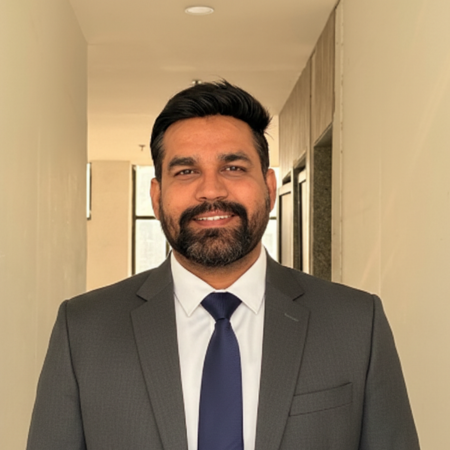
By Sahil Kataria, Chief Executive Officer, QServices
Updated June 13, 2026
Sahil Kataria is the CEO of QServices, a Microsoft Solutions Partner delivering AI agents and custom software for regulated industries. He leads enterprise AI strategy and FinTech delivery. LinkedIn ↗
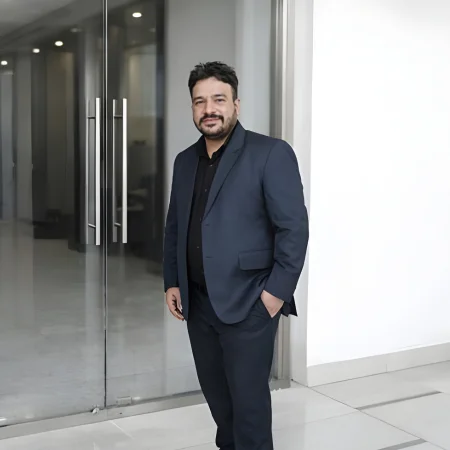
Written from QServices' hands-on delivery work and reviewed by Rohit Dabra, Chief Technology Officer, QServices, before publishing.
QServices works with Berlin clients in Tech, FinTech, and manufacturing on legacy modernization engagements with four to five hours of daily CET morning overlap. We are a remote-first consultancy based in India, helping German businesses move off aging codebases onto .NET 8 and Azure.
What Berlin buyers typically need from legacy modernization
Berlin's Tech, FinTech, and manufacturing sectors each carry a distinct type of legacy debt. The project types we see most from German buyers:
- FinTech core systems: Older .NET Framework or Java monoliths that cannot satisfy BaFin operational-resilience requirements under MaRisk and BAIT guidelines, or pass an audit trail review under DORA.
- Manufacturing MES and ERP add-ons: On-premise VB.NET or Access-based tools that block Industry 4.0 rollouts because they cannot expose REST APIs to modern orchestration layers.
- Tech companies hitting scale walls: Monolithic web applications that handled 50 concurrent users at launch and fall apart at 5,000.
- Retiring-staff risk: Systems where two or three engineers hold all tribal knowledge and are leaving the company within 24 months.
EU GDPR applies to any Berlin company handling EU resident data. For FinTech firms, BaFin (Bundesanstalt für Finanzdienstleistungsaufsicht) adds operational-resilience obligations under MaRisk and BAIT that legacy monoliths routinely fail. Both regimes need to be built into the modernization architecture from day one, not retrofitted at go-live.
How we work with Berlin clients
Our team is based in India (IST, UTC+5:30). Berlin runs on CET (UTC+1) in winter and CEST (UTC+2) in summer. That puts the daily overlap window at roughly 9 AM to 1:30 PM CET in winter and 9 AM to 12:30 PM CEST in summer: three to four hours of live synchronous time each day for standups, PR reviews, and demo calls.
Our standard cadence on Berlin engagements: a 30-minute standup at 10 AM CET, async GitHub PR reviews completed within the same overlap window, weekly sprint demos on Friday mornings, and a written status note every Friday covering what shipped and what is blocked. We use Microsoft Teams or Slack, whichever the client already uses.
We have no Berlin office. For major milestones on larger engagements (typically end-of-phase-one and pre-go-live), we can schedule an on-site visit in Berlin. Those are scoped per engagement, not included by default.
Relevant work in similar markets
We do not have a disclosed Berlin client to name. The two closest matches in our case study library cover Berlin's primary industries directly.
Manufacturing: Global EHS platform (VB.NET to .NET 8 and React). We rewrote a global Environmental Health and Safety platform from a VB.NET monolith to .NET 8 and React on Azure. The scope covered Management of Change, Incidents and Events, Action Items, LMS training, and automated scheduling. The result was improved scalability and global performance. This is the same migration pattern Berlin manufacturing firms typically need: a VB.NET or aging .NET legacy to .NET 8 on Azure.
Case Study
Global EHS Platform Modernization: VB.NET Monolith to .NET 8 and React
Global Environmental Health and Safety software company
Improved scalability, maintainability, and global performance after rewriting a legacy VB.NET monolith
Streamlined Management of Change, Incidents and Events, Action Items, LMS training, and automated scheduling in a single platform
.NET 8ReactAzureAxios REST Client
FinTech: StockScrapping investment analytics platform. We replaced scattered spreadsheet workflows at an investment analytics company with a role-authenticated Azure dashboard featuring automated data scraping and real-time financial metrics including P/E ratios and earnings schedule tracking. Replacing uncontrolled spreadsheet processes with governed, auditable cloud infrastructure is a pattern common in Berlin's FinTech market, where BaFin auditability requirements make spreadsheet-driven workflows a compliance liability.
Case Study
Stock Market Analytics and Categorization Platform (StockScrapping)
Investment management and stock analytics company
Replaced scattered spreadsheets with a role-authenticated dashboard on Azure with automated scraping and real-time financial metrics
Category-based stock classification (XLF, XLV, XLY) with P/E ratios and earnings schedule tracking
ASP.NET MVC.NET CoreEntity FrameworkSQL ServerMicrosoft Azure
What legacy modernization costs for a typical Berlin project
Our rates are in USD. Berlin clients pay in EUR at the prevailing exchange rate; currency conversion is handled on the client side. Typical scope brackets:
- Small scope ($60,000 to $120,000, 16 to 24 weeks): Single-service extraction from a monolith using the strangler-fig pattern, API gateway layer, Docker containerization. Common entry point for FinTech firms modernizing one BaFin-regulated service.
- Medium scope ($120,000 to $250,000, 24 to 36 weeks): Multi-service extraction, data migration with integrity rule preservation, CI/CD pipeline setup. Typical for manufacturing MES or ERP modernizations.
- Full platform rewrite ($250,000 to $500,000, 36 to 52 weeks): Full monolith replacement using strangler-fig, all integration surfaces remapped, complete data layer migration. Suits Berlin Tech companies with ten or more years of accumulated technical debt.
BaFin or GDPR compliance scope adds 15 to 25 percent to the above. Each non-trivial system integration adds $3,000 to $12,000. See our legacy modernization pricing page for a full breakdown, or our manufacturing modernization service page for industry-specific detail.
How to start working with us
- Discovery call (30 minutes): You walk us through the system you need to modernize. We ask about the stack, the integration surface, and the business trigger: a regulatory deadline, retiring staff, or a blocked product feature.
- Scoping document: We return a written scope within five business days covering approach, phases, timeline, and a fixed-price or time-and-materials estimate.
- Project start: Once the scope is agreed and a contract is signed, we assign a dedicated team and begin the assessment sprint within two weeks.
Use the contact form below to book a discovery call or send an initial brief. We respond within one business day during CET morning hours.
Can a remote team handle legacy modernization for a Berlin company?
Yes. We have run complex modernization engagements fully remotely with four to five hours of daily CET overlap. The key is making the process visible: written weekly status notes, GitHub-tracked code reviews, and milestone demos that include the client team. For Berlin FinTech clients, we design data pipelines to stay within EU data residency boundaries under GDPR and provide a GDPR-compliant data processing agreement as a standard contract exhibit. BaFin's MaRisk and BAIT requirements for auditability are addressed at architecture design, not added later.
Ready to discuss your project?
Share your requirements with QServices. Our engineers will give you a straight answer on fit, timeline, and cost — no sales scripts.
Book a Free Consultation
Frequently Asked Questions
Do you have an office in Berlin? +
No. We are a remote-first consultancy based in India. Berlin clients work with us over Microsoft Teams or Slack with four to five hours of daily CET morning overlap. We can arrange on-site visits in Berlin for major project milestones, but we do not maintain a local office. Our engagement model is built for remote delivery from the ground up.
What is the time difference between Berlin and your team? +
India (IST, UTC+5:30) is four and a half hours ahead of Berlin in winter (CET, UTC+1) and three and a half hours ahead in summer (CEST, UTC+2). Our 9 AM to 6 PM IST working day overlaps with Berlin from 9 AM to roughly 1:30 PM CET in winter, giving three to four hours of synchronous time each weekday for standups and code reviews.
Have you worked with German or Berlin companies before? +
We do not have a disclosed Berlin client. Our closest work covers Berlin's primary industries: a global manufacturing EHS platform modernized from VB.NET to .NET 8 on Azure, and a FinTech investment analytics platform moved from scattered spreadsheets to a governed Azure dashboard. Both engagements are documented in our case study library.
How do you handle GDPR and BaFin compliance in a remote engagement? +
For GDPR, we design data pipelines to keep EU resident data within EU boundaries and provide a data processing agreement as a standard contract exhibit. For BaFin-regulated FinTech work, MaRisk and BAIT auditability requirements are addressed at architecture design, not added as a retrofit. Compliance scope adds 15 to 25 percent to the base estimate.
What is your approach to legacy modernization: big-bang rewrite or strangler-fig? +
We default to strangler-fig: extract services incrementally, keep the old system running in parallel, and cut over when the new service is stable. Big-bang rewrites fail because they require understanding every business rule in the old codebase before writing a line of new code. Strangler-fig lets you learn while shipping and reduces delivery risk significantly.