-
Industries
Healthcare & Compliance
Patient data systems, compliance reporting, and workflow automation for regulated environments.
- HIPAA-aware integration pipelines
- Automated compliance dashboards
- Patient workflow digitization
Logistics & Supply Chain
Real-time tracking, route optimization, and inventory visibility across your distribution network.
- ERP/WMS integration
- Automated dispatch workflows
- Supply chain dashboards
SaaS & Tech-enabled
Scale your product infrastructure, integrate third-party tools, and ship features faster with reliable ops.
- API-first architecture
- Multi-tenant infrastructure
- CI/CD and release pipelines
Banking & Financial
Secure transaction processing, regulatory reporting, and customer-facing portals for financial services.
- Regulatory reporting automation
- Secure data integration
- Customer portal modernization
- Case Studies
Featured Case Studies
Browse all case studies →Euro Truck ServiceLogistics firm automated 12 manual workflows in a single 30-day sprint
"Read case study →Ergonnex AI 360Ergonnex AI 360 is a powerful project management platform that helps IT companies manage their projects better with built-in AI-powered analytics
Read case study →PanoramikPanoramic caters to your passion for sharing photos in a social media environment.
Read case study →


Legacy System Modernization for Nonprofits
Nonprofit legacy modernization replaces outdated donor management, grant reporting, and volunteer coordination software with integrated, maintainable systems. When QServices did this for a nonprofit organization, we standardized product uploads across inconsistent formats and eliminated deployment disruptions that had blocked their operations for years. See how this fits into our broader industry solutions.
Why nonprofits need legacy modernization right now
Most nonprofits are running on technology decisions made ten or more years ago. The IRS requires every 501(c)(3) organization to file Form 990 annually, and according to the National Association of State Charity Officials (NASCO), 41 states require separate charity registration filings on top of that. This compliance overhead falls on operations staff who are already stretched thin, and it gets harder to meet every year when your systems do not talk to each other.
The pressure is not coming from regulators cracking down on software choices. It is coming from staff. When your Development Director manually reconciles Bloomerang exports with a Raiser's Edge contact list every quarter because the two systems were never integrated, you are paying senior staff wages for spreadsheet work. When grant reporting eats two weeks of a program manager's time because data lives across Salesforce NPSP, Asana, and a folder of PDFs, something has broken down at the system level.
Tech budgets at nonprofits are the last line item to get funded. That is exactly why deferring modernization costs more over time. A system that is hard to maintain gets more expensive every year, not less. And the fewer staff members who still understand how it works, the riskier any future change becomes. QServices is a Microsoft Solutions Partner, founded in 2010, with experience in Azure and .NET modernization across regulated industries. We have seen this pattern repeat: delayed investment compounds, and organizations typically discover the full cost only when a key staff member leaves and takes their system knowledge with them.
What we build for nonprofit clients
We have worked with mission-driven organizations on the specific systems they are stuck with. A modernization engagement for a nonprofit typically delivers:
- Integrated donor and program data layer: We consolidate donor data scattered across Salesforce NPSP, Raiser's Edge, Bloomerang, and spreadsheets into a single source of truth. This removes the quarterly reconciliation work your Development Director is currently absorbing. Our Human-in-the-Loop (HITL) governance model means no donor records are merged or deleted without a staff member reviewing and approving the change first.
- Automated grant reporting pipeline: We build structured data exports that map directly to your funders' reporting templates. Program managers stop pulling numbers manually from Asana and email threads. The first time this runs, it typically saves 8 to 15 hours per grant report cycle.
- Volunteer coordination off email: Volunteer scheduling and communication that still runs on email creates coordination failures and coordinator burnout. We replace this with a purpose-built layer your volunteer coordinator can manage without IT involvement.
- Strangler-fig migration, not a big-bang rewrite: We migrate functionality incrementally, so you are never fully dependent on a half-finished system. Maintenance costs typically drop 30 to 60 percent compared to running a patchwork legacy stack.
- Audit trail infrastructure for Form 990 and grant compliance: We build audit trails into the data layer from the start, so Form 990 preparation and state charity registration filings become a query rather than a two-week research project.
How a legacy modernization engagement actually works
Here is the typical phase structure for a nonprofit modernization project. Timelines run 16 to 52 weeks depending on scope.
- Weeks 1 to 3: Discovery and system mapping. We document every system your staff touches: Salesforce NPSP, Raiser's Edge, Bloomerang, Asana, spreadsheets, and anything else in active use. We map data flows, find integration gaps, and identify which legacy rules are still valid business logic and which are just accumulated workarounds.
- Weeks 4 to 6: Architecture and migration plan. We design the target architecture using .NET 8, Azure, and API gateway patterns. We define the strangler-fig migration sequence: what gets replaced first, in what order, and how old and new systems coexist during transition. This phase ends with a HITL checkpoint: our team and yours review and approve the full plan before any migration code is written.
- Weeks 7 to 20: Incremental migration. We migrate functionality in slices. Donor records first, then grant tracking, then reporting. At each phase boundary, your staff validates that the new system matches expected behavior. No phase closes without sign-off from a designated staff reviewer.
- Weeks 21 to 30: Integration and data integrity. We connect the modernized system to your remaining tools via API. Every integration gets tested with real data samples, not synthetic test data. Data integrity rules (duplicate donor detection, grant period validation, restricted fund tagging) are migrated explicitly as code, not left to manual process.
- Weeks 31 to 40: Parallel run and cutover. Old and new systems run in parallel for 4 to 6 weeks, with daily output comparisons. When your team is confident, we cut over. The old system stays on standby for 30 days after cutover.
- Post-launch maintenance: We offer $2,000 to $4,000 per month retainers for ongoing support, monitoring, and incremental improvements after go-live.
What this costs
Legacy modernization for nonprofits typically runs $10,000 to $60,000, which aligns with what a nonprofit can realistically fund from a technology budget or a capacity-building grant. Here is what moves that number up or down.
Drives cost up:
- More legacy systems to integrate: add $3,000 to $12,000 per non-trivial system
- Complex grant compliance or multi-state charity registration reporting requirements
- Large data migration volumes with inconsistent or poorly documented historical records
- Regulatory compliance scope (IRS, state charity registration) adds 15 to 25 percent to base project cost
Keeps cost down:
- Replacing one well-defined workflow rather than a full stack at once
- Starting with a strangler-fig slice (one module) rather than a complete rewrite
- Capacity-building grant funding, which many foundations now allocate specifically for technology infrastructure
- Hourly rates start at $20 for standard development, $35 for most work, $65 for senior architecture
See our full legacy modernization cost guide for a detailed breakdown by project size and integration scope.
Three things nonprofit buyers usually get wrong
1. Treating it as an IT project instead of a program operations project. When modernization is scoped and managed entirely by the person who handles IT, the system you end up with solves IT's problems, not the Development Director's or the program manager's. The people dealing with grant reporting deadlines and donor reconciliation need to define the requirements. If they are not in discovery sessions, the project will miss the problems that cost staff hours every week.
2. Not migrating data integrity rules with the code. Every legacy system accumulates rules: which donor records count as duplicates, how restricted funds get tagged, which grant periods are still open. These rules often live only in the heads of long-tenured staff. If you do not capture and migrate them explicitly as part of the project, your new system will behave differently from the old one. You will not discover this until a grant audit or a board finance review. This is the most common failure mode we see in nonprofit modernization projects.
3. Underestimating the integration surface. Nonprofits run on more tools than they realize. Salesforce NPSP connects to the email platform, which connects to the event registration tool, which connects to a spreadsheet someone built three years ago for a reporting edge case. Modernizing one system without mapping every integration point first is the fastest way to break something you did not know was connected. See our case study library for examples of how we approach this in practice.
Recent work with nonprofit and mission-driven clients
Our most direct nonprofit engagement is a full workflow and platform modernization for a nonprofit e-commerce organization, where we standardized product uploads across inconsistent designer PDF formats, added staging validation before deployment, and built deployment controls that prevented live-site disruptions during product updates.
For legacy modernization specifically, our closest reference is a full VB.NET monolith rewrite for a global EHS software company, migrating to .NET 8 and React on Azure. We improved scalability and global performance while consolidating fragmented compliance management tools into a single platform. The core patterns we applied there: incremental migration, explicit data integrity rule preservation, and full integration surface mapping before any migration begins, are the same ones we use for nonprofit modernization work.
E-Commerce Platform for Non-Profit Organizations (Charity Booster)
Non-profit e-commerce organization
Standardized product upload workflow from varying designer PDF formats with staging validation before deployment
VPN-controlled deployment preventing site disruptions during product updates
Global EHS Platform Modernization: VB.NET Monolith to .NET 8 and React
Global Environmental Health and Safety software company
Improved scalability, maintainability, and global performance after rewriting a legacy VB.NET monolith
Streamlined Management of Change, Incidents and Events, Action Items, LMS training, and automated scheduling in a single platform
How long does legacy modernization take for a nonprofit?
Most nonprofit legacy modernization projects run 16 to 40 weeks, depending on how many systems are being replaced and the complexity of data migration. A focused modernization of one workflow, such as grant reporting automation, can be delivered in 12 to 16 weeks. Full replacement of donor management, reporting, and volunteer coordination, with a parallel run before cutover, takes 30 to 52 weeks. The variable that extends timelines most is integration surface, not code complexity.
Ready to discuss your project?
Share your requirements with QServices. Our engineers will give you a straight answer on fit, timeline, and cost — no sales scripts.
Book a Free Consultation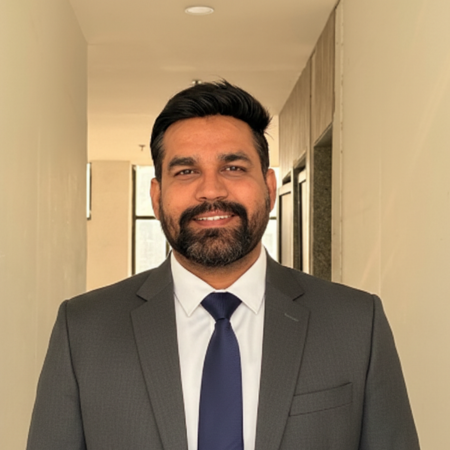
Founder and CEO
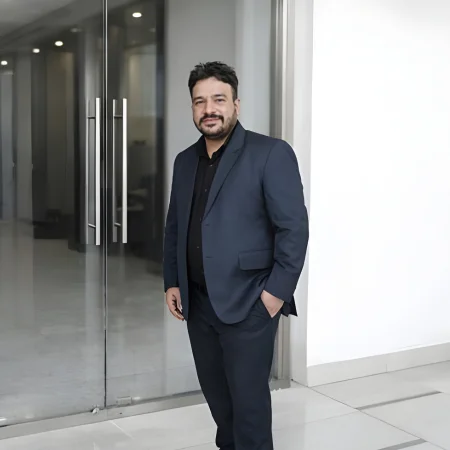
Chief Sales Officer