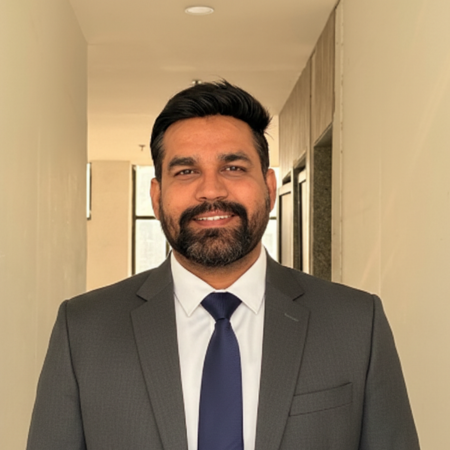
By Sahil Kataria, Chief Executive Officer, QServices
Updated May 29, 2026
Sahil Kataria is the CEO of QServices, a Microsoft Solutions Partner delivering AI agents and custom software for regulated industries. He leads enterprise AI strategy and FinTech delivery. LinkedIn ↗
Written from QServices' hands-on delivery work and reviewed by Rohit Dabra, Chief Technology Officer, QServices, before publishing.
Legacy system modernization for a college or university is replacing aging SIS platforms, ERP customizations, and administrative tools with FERPA-compliant, cloud-native alternatives that can actually be extended. QServices cuts client maintenance costs by 30 to 60 percent. Explore how we work across industries.
Why Higher Education Institutions Need Legacy Modernization Now
Most institutions still run Banner, Workday Student, or homegrown SIS installations that were never built to power modern enrollment workflows or student-facing portals. Every new feature your enrollment or advising team needs requires either a costly vendor upgrade or a custom integration that will be painful to maintain in five years.
The regulatory pressure adds a second layer. The Department of Education enforces FERPA requirements for data access controls, audit trails, and student record privacy. Title IX documentation obligations create additional record-keeping requirements. Older SIS platforms often cannot produce the access logs these requirements demand without custom middleware that becomes its own maintenance problem.
Gartner estimates that legacy maintenance consumes 70 to 80 percent of enterprise IT budgets. For higher education, the stakes are sharper: enrollment revenue is under pressure at many institutions, experienced staff are retiring and taking undocumented system knowledge with them, and the systems your team relies on daily were not built to integrate with Canvas, Slate, or modern CRM tools.
The staffing risk compounds everything. Much of the institutional knowledge for running these systems lives in staff approaching retirement. When they leave, the undocumented business rules embedded in years of Banner customizations leave with them.
What We Build for Higher Education Clients
QServices is a Microsoft Solutions Partner for Azure, Modern Work, and Security, with over 40 production software projects shipped since 2010. Our higher education engagements focus on four concrete outcomes drawn from the pain points your teams report most often.
- SIS modernization and API gateway: We replace or wrap aging Banner and Workday Student customizations with a documented .NET 8 API layer, making your SIS extensible without requiring a full vendor upgrade. Our Human-in-the-Loop (HITL) governance model means no automated data migration runs without your team approving each batch before it touches production student records.
- Enrollment workflow automation: We rebuild the specific steps where your enrollment funnel leaks, including application status notifications, financial aid document routing, and advisor scheduling. Every automated step includes a HITL checkpoint so staff can review and override before a student is affected.
- Faculty administrative tools: Faculty lose significant time to repetitive reporting, grade exports, and scheduling tasks that could be automated. We build tools that reduce that burden without requiring faculty to change how they teach or advise.
- Student support portal: Support requests that take days to resolve hurt retention. We build request-tracking and routing tools that get responses to students faster, with audit trails your compliance team can actually use.
See the full legacy modernization service page for a complete list of deliverables and what each phase includes.
How a Legacy Modernization Engagement Actually Works
Our engagements run 16 to 52 weeks depending on scope. Here is the typical phase structure for a higher education client:
- Weeks 1 to 4: Discovery and assessment. We audit your existing systems, document the integration surface (Banner, Canvas, Slate, and any custom middleware), and identify data integrity rules embedded in current workflows. Output: a written assessment with scope, risk, and a strangler-fig migration plan your CIO reviews before we proceed.
- Weeks 4 to 8: Architecture and migration plan. We design the target architecture using .NET 8, Azure, Docker, and an API gateway. We define which components migrate first, which stay in place, and where HITL sign-off checkpoints sit. Nothing moves to development until this plan is approved by your team.
- Weeks 8 to 24: Strangler-fig migration, phase one. We start replacing peripheral components first, routing traffic through the new API gateway while the old system stays live. Each new component goes through code review, automated testing, and a HITL sign-off before it handles production traffic.
- Weeks 16 to 36: Core SIS integration. We migrate core enrollment, registration, and reporting workflows. Data integrity rules move with the code. Your team approves each migration batch before it runs in production.
- Weeks 36 to 52: Cutover, stabilization, and knowledge transfer. We run parallel systems, validate data integrity end-to-end, and train your internal team. Documentation covers every business rule that moved. We do not close out until your staff can maintain the system independently.
For smaller scopes, phases compress or combine. We tell you upfront if your project fits a shorter track.
What This Costs
Legacy modernization for a higher education institution typically runs $60,000 to $500,000 depending on system complexity. Most engagements in this sector fall between $30,000 and $180,000. See our legacy modernization cost guide for a full breakdown by project size.
Drives cost up:
- Large integration surface: Banner plus Canvas plus Slate plus custom middleware each add $3,000 to $12,000 per integration
- FERPA and Title IX compliance review adds 15 to 25 percent to overall scope
- Undocumented business logic in legacy SIS customizations requires additional discovery time before migration can begin
- Poor or missing documentation for existing system interfaces
Keeps cost down:
- Clear, bounded scope: starting with one SIS module or one department workflow
- Existing API documentation for the systems being replaced
- Internal staff available to participate in discovery and testing phases
- Choosing a strangler-fig migration over a full rewrite
Three Things Higher Education Buyers Usually Get Wrong
1. Planning a big-bang rewrite. The appeal is obvious: one clean break, one go-live date. The risk is serious: a full rewrite of a Banner installation with 15 years of customizations is not a 6-month project. It is closer to a 3-year project, and the odds of completing it without a major enrollment disruption are not good. Strangler-fig migrations let you ship improvements continuously while the old system stays live as a fallback.
2. Moving code without moving the data integrity rules. Banner and similar systems have business logic embedded in database triggers, stored procedures, and application-layer validation rules that nobody documented. When you migrate to a new system, those rules do not come automatically. We spend significant time in discovery explicitly mapping these rules and validating them in the new system before any cutover happens.
3. Underestimating how many systems touch your SIS. Banner integrations with Canvas for grade sync, Slate for CRM data, financial aid portals, state reporting systems, and custom reporting dashboards create an integration surface far larger than most buyers expect at project start. We audit every integration point before writing a scope of work, so there are no billing surprises mid-engagement.
Recent Work Relevant to Higher Education
QServices, founded in 2010 and led by CEO Sahil Kataria and CTO Rohit Dabra, does not yet have a published case study from a degree-granting institution. The two closest examples from our portfolio address the same core technical challenges:
Case Study
Global EHS Platform Modernization: VB.NET Monolith to .NET 8 and React
Global Environmental Health and Safety software company
Improved scalability, maintainability, and global performance after rewriting a legacy VB.NET monolith
Streamlined Management of Change, Incidents and Events, Action Items, LMS training, and automated scheduling in a single platform
.NET 8ReactAzureAxios REST Client
This engagement migrated a global VB.NET monolith to .NET 8 and React on Azure. The core challenge: undocumented business logic spread across a large codebase with multiple integrated modules, and a zero-downtime migration requirement. The outcome was improved scalability and maintainability, with management of change, incident tracking, LMS training, and scheduling consolidated into one platform.
Case Study
Stock Market Analytics and Categorization Platform (StockScrapping)
Investment management and stock analytics company
Replaced scattered spreadsheets with a role-authenticated dashboard on Azure with automated scraping and real-time financial metrics
Category-based stock classification (XLF, XLV, XLY) with P/E ratios and earnings schedule tracking
ASP.NET MVC.NET CoreEntity FrameworkSQL ServerMicrosoft Azure
This project replaced scattered manual data processes with a role-authenticated Azure dashboard with automated data collection and reporting. The access-control and audit-trail patterns we built there apply directly to FERPA-compliant reporting requirements in higher education.
How Long Does Legacy Modernization Take for a College or University?
A higher education legacy modernization engagement runs 16 to 52 weeks. Smaller scopes involving one SIS module or one department workflow complete in 16 to 24 weeks. Full platform replacements spanning Banner, Canvas, and multiple integrated systems take 36 to 52 weeks. We give you a realistic timeline estimate after the discovery phase, not before we understand your specific integration surface.
Ready to discuss your project?
Share your requirements with QServices. Our engineers will give you a straight answer on fit, timeline, and cost — no sales scripts.
Book a Free Consultation
Frequently Asked Questions
How much does legacy SIS modernization cost for a college or university? +
Legacy modernization for higher education typically runs $30,000 to $180,000, though large platform replacements can reach $500,000. FERPA and Title IX compliance review adds 15 to 25 percent to scope. Each third-party system integration (Banner, Canvas, Slate) adds $3,000 to $12,000. We provide a fixed-scope estimate after a paid discovery phase.
Can we modernize Banner without taking it offline? +
Yes. We use a strangler-fig migration approach where new components go live incrementally while your existing Banner installation stays active. Traffic routes through a new API gateway, and each component completes testing and a human sign-off before it handles production student data. There is no single big-bang cutover date with this approach.
How does FERPA compliance affect a SIS modernization project? +
FERPA requires data access controls, audit trails, and student record privacy protections. In a modernization project, every data migration step must be logged and reversible, access control rules must transfer correctly to the new system, and your compliance team should review data handling at each phase checkpoint before production student records move.
Does QServices have experience with higher education system migrations? +
We do not yet have a published case study from a degree-granting institution. Our VB.NET to .NET 8 modernization work for a global EHS software company involved the same core challenges: undocumented business logic across a large legacy system, multiple integrated modules, and a zero-downtime migration requirement. We apply those same patterns to SIS modernization engagements.
What is the biggest risk in a university SIS modernization project? +
Undocumented business logic embedded in years of Banner customizations: stored procedures, database triggers, and validation rules that no one wrote down. If these are not mapped before migration, they get lost. Our discovery phase exists specifically to surface and document every rule before any code changes happen, so nothing is accidentally stripped out of the new system.