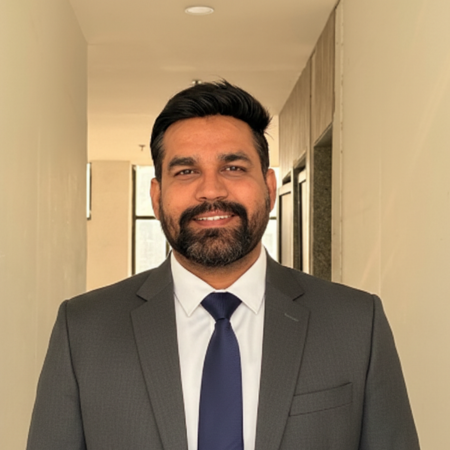
By Sahil Kataria, Chief Executive Officer, QServices
Updated June 12, 2026
Sahil Kataria is the CEO of QServices, a Microsoft Solutions Partner delivering AI agents and custom software for regulated industries. He leads enterprise AI strategy and FinTech delivery. LinkedIn ↗
Written from QServices' hands-on delivery work and reviewed by Rohit Dabra, Chief Technology Officer, QServices, before publishing.
QServices is a remote-first Azure AI Foundry implementation partner for Seattle businesses in tech, cloud, aerospace, and retail. We are not headquartered in Seattle but work with Washington State clients on remote engagements with 3-4 hours of daily Pacific Time overlap.
What Seattle buyers typically need from Azure AI Foundry
Seattle's concentration of tech and cloud companies shapes specific demand patterns for Azure AI Foundry work. Here is what we see in similar markets:
- Tech and SaaS teams building internal productivity agents or customer-facing AI assistants using Azure OpenAI with retrieval via Azure AI Search.
- Cloud platform teams needing production evaluation harnesses to measure model quality before and after every deployment, not just at launch.
- Aerospace companies with strict data handling requirements needing AI applications that remain within Azure tenants and satisfy internal security audits.
- Retail companies seeking AI-powered catalog enrichment, product recommendations, or inventory forecasting built on Azure Functions and Azure AI Search.
- LegalTech companies operating under WSBA oversight needing AI-assisted document review with traceable, auditable outputs.
Washington State's My Health MY Data Act covers consumer health data held by non-HIPAA entities. If your product touches health-adjacent signals (fitness apps, wellness platforms, retail health data), your Azure AI Foundry data flows must respect this statute. We account for it in scoping, including data residency configuration inside your Azure tenant. This is a Washington-specific obligation that does not apply to our clients in other US states without equivalent legislation.
For a full overview of the platform, Microsoft's Azure AI Foundry documentation covers the evaluation, deployment, and observability tooling in detail.
How we work with Seattle clients
Our engineering team is based in India. We work evening IST hours to create a 3-4 hour window of overlap with Seattle mornings: roughly 7 am to 11 am PT. That window covers daily standups, pull request reviews, and live demos. Outside those hours, async updates go to Microsoft Teams or Slack before you start your day.
A standard engagement runs like this: Monday through Thursday, a 30-minute standup at a time that works for both sides. Fridays, a sprint demo showing working software, not slide decks. Every two weeks, a written delivery summary covering what shipped, what is in review, and what is blocked. Code lives in your GitHub or Azure DevOps repo from day one; you own it.
For milestone reviews (requirements sign-off, architecture review, user acceptance testing), we can arrange on-site visits to Seattle. Most clients find the async-plus-overlap model sufficient once the working rhythm is set. The 13.5-hour IST-to-PT gap in winter (12.5 hours during US daylight saving time) is real, and we do not pretend otherwise. What we do is structure the week so it does not slow delivery.
Relevant work in similar markets
We do not have a published client in Seattle. Our two Azure AI Foundry engagements come from SaaS and enterprise software companies, which align closely with Seattle's tech and cloud sector. We are transparent about this rather than claiming local experience we do not have.
Case Study
AI Project Management Bot for Azure DevOps and MS Teams (Smart PM)
IT services company
Automated meeting transcript capture and backlog creation in Azure DevOps with Fibonacci story point assignment and sprint capacity tracking
Real-time Power BI sprint velocity dashboards replacing manual meeting note capture and task allocation
In the Smart PM engagement, we built an AI agent on Azure AI Foundry that reads Fireflies.ai meeting transcripts, creates Azure DevOps backlog items with Fibonacci story points, and feeds sprint velocity data into Power BI in real time. The result was automated meeting-to-backlog capture replacing manual task allocation. Any Seattle team running Azure DevOps would recognize this workflow immediately.
Case Study
Enterprise Knowledge Management Bot (Copilot Studio + Azure AI Foundry)
Enterprise software company
Accurate, prompt responses for both document-specific queries and broader general knowledge questions from a unified AI assistant
Microsoft Copilot StudioAzure AI FoundryAzure AI SearchGPT-4o
The Enterprise Knowledge Bot used Azure AI Foundry with Azure AI Search and GPT-4o to serve accurate answers from both internal documents and general knowledge through a single interface. This internal knowledge assistant pattern is a common first Azure AI Foundry project for tech companies with large internal document stores, a description that fits many Seattle engineering organizations.
What Azure AI Foundry costs for a typical Seattle project
Azure AI Foundry implementations run $25,000 to $120,000 depending on scope, over 8 to 16 weeks. All pricing is in USD. A typical engagement falls into one of these brackets:
- Small scope ($25,000-$40,000, 8-10 weeks): Single AI agent or search application, one data source, basic evaluation harness, Azure Functions integration.
- Medium scope ($40,000-$80,000, 10-14 weeks): Multi-agent orchestration or multi-source RAG, production evaluation setup, integration with Azure DevOps or Microsoft Teams, compliance configuration.
- Large scope ($80,000-$120,000, 14-16 weeks): Enterprise-wide deployment, multiple system integrations, full observability pipeline, security audit support.
Add $5,000 to $15,000 for a production-grade evaluation harness if you need to measure model quality rigorously across deploys. Projects touching consumer health data under Washington's My Health MY Data Act may add 15-25% for compliance configuration and data residency setup. See our Azure AI Foundry cost guide for a full breakdown.
How to start working with us
Three steps: a 30-minute discovery call to understand your use case, existing Azure setup, and timeline; a scoping document within five business days covering the problem, proposed approach, timeline, and cost range; then a project start date and requirements session once the scope is agreed. There is no retainer or commitment before the scoping document is signed off.
Contact us through our services page to book a discovery call.
Can you work with Seattle companies remotely?
Yes. Our team overlaps with Seattle mornings (7 am to 11 am PT) for standups and live reviews. We use Microsoft Teams or Slack for day-to-day communication. For data residency under Washington's My Health MY Data Act or your internal Azure governance requirements, we configure Azure AI Foundry to keep all data within your Azure tenant in your chosen region. West US 2 covers the Seattle area and is the region most Washington State clients use. We do not store client data on our own infrastructure.
Ready to discuss your project?
Share your requirements with QServices. Our engineers will give you a straight answer on fit, timeline, and cost — no sales scripts.
Book a Free Consultation
Frequently Asked Questions
Do you have an office in Seattle? +
No. QServices is a remote-first firm based in India. We work with Seattle clients entirely remotely, with 3-4 hours of daily overlap with Pacific Time mornings (7 am to 11 am PT). We can arrange on-site visits to Seattle for milestone reviews when clients find that useful, but most engagements run well on the remote schedule.
What is the time difference between Seattle and your team? +
India Standard Time is 13.5 hours ahead of Pacific Time in winter and 12.5 hours ahead during US daylight saving time. Our team works evening IST shifts specifically to overlap with PT mornings. Standups and demos happen between 7 am and 11 am PT, which is 8:30 pm to 12:30 am IST for our engineers.
Have you worked with companies in Seattle or Washington State before? +
Not with a published Seattle client yet. Our two Azure AI Foundry case studies come from SaaS and enterprise software companies in other markets. Both projects are directly relevant to the work Seattle tech and cloud teams typically commission. We are honest about this rather than claiming local experience we do not have.
How do you handle data residency requirements under Washington's My Health MY Data Act? +
We configure Azure AI Foundry to process and store all data within your Azure tenant in the region you specify. West US 2 covers Seattle. No client data touches our infrastructure. For projects in scope under the My Health MY Data Act, we include compliance configuration in the project scope and budget 15-25% additional effort for it.
What industries do you serve in the Seattle market? +
Our Azure AI Foundry work is most relevant to Seattle's tech and cloud companies, aerospace firms needing compliant AI applications, retail companies building AI-powered product experiences, and LegalTech companies subject to WSBA requirements. Our case study experience is in SaaS and enterprise software, which closely mirrors Seattle's primary tech and cloud sectors.