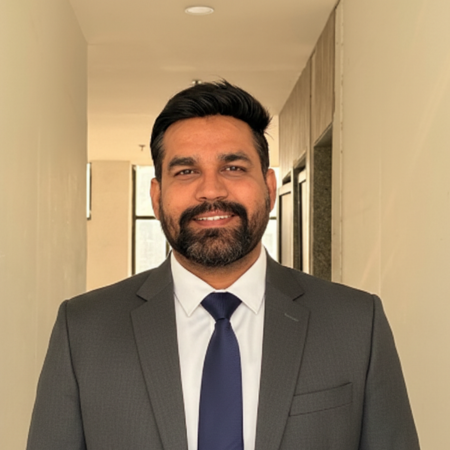
By Sahil Kataria, Chief Executive Officer, QServices
Updated June 12, 2026
Sahil Kataria is the CEO of QServices, a Microsoft Solutions Partner delivering AI agents and custom software for regulated industries. He leads enterprise AI strategy and FinTech delivery. LinkedIn ↗
Written from QServices' hands-on delivery work and reviewed by Rohit Dabra, Chief Technology Officer, QServices, before publishing.
QServices is not headquartered in Seattle, but we work with Seattle clients across tech, cloud, aerospace, and retail on remote .NET development engagements with Pacific Time hours overlap. QServices is a remote-first software consultancy serving Washington State businesses that need custom .NET 8+ applications, APIs, and Azure-deployed services built to production standards.
What Seattle buyers typically need from .NET development
Seattle's software market is shaped by proximity to Microsoft in Redmond and Amazon's platform engineering teams downtown. Companies here often need engineers who understand .NET at the infrastructure level, not just the application layer. Common project types in Seattle-area markets:
- Tech companies: RESTful APIs and microservices on Azure App Service, often replacing legacy SOAP or on-prem Windows services
- Cloud product teams: .NET 8 worker services integrated with Azure Service Bus, Event Grid, or SQL Server on Azure
- Retail backends: order management APIs, inventory sync layers, and integration bridges between ERP systems and e-commerce platforms
- Aerospace tooling: internal workflow applications and data pipeline services with auditable SQL Server backends
One compliance requirement specific to Washington State: the Washington My Health My Data Act (WMHMDA) applies to any consumer-facing application that collects or shares health data for Washington residents. It requires granular consent logging, the right to deletion, and disclosure standards stricter than HIPAA in several areas. Any .NET application in healthcare-adjacent tech built for a Washington company needs architecture that supports these workflows from day one. We scope this requirement explicitly when it applies.
For platform-level work in tech and cloud, see our .NET development for technology companies page.
How we work with Seattle clients
Our engineering team is based in India (IST, UTC+5:30). Seattle runs Pacific Time (UTC-7 in summer, UTC-8 in winter). The gap is 12.5 to 13.5 hours. That is a real constraint and we do not minimize it.
What we do instead is structure the engagement so the gap does not create blockers. Our engineers start early IST and Seattle leads join a standing 30-minute standup between 8 and 10 AM PT, which is 8:30 to 10:30 PM IST on our side. Code reviews happen overnight from Seattle's perspective, so pull requests are annotated and ready before your team arrives each morning.
Week-to-week communication model:
- Daily 30-minute standup via Microsoft Teams or Slack Huddle at a time your team sets
- Async Slack channel with a written end-of-day summary from our engineers
- Pull requests reviewed within 12 hours, with written inline comments on every change
- Sprint-end demos via live screen share or Loom recording
- On-site visits to Seattle available for project kickoff or major milestone reviews on request
We default to Microsoft Teams, GitHub, and Azure DevOps. If your Seattle team is already on those tools, there is nothing new to adopt.
Relevant work in similar markets
We do not have a published case study from a Seattle client. The closest work we can point to is in FinTech and payments, which shares the API complexity, data integrity requirements, and integration depth common in Seattle's tech and cloud sectors. It is not a direct match for aerospace or retail, and we say so plainly.
For SomBank, an Islamic bank in Somalia, we built a full mobile payment platform on .NET, Azure Service Bus, Azure B2C, and an Ocelot API Gateway. The platform launched with 100,000-plus downloads and a 4.8-star rating. The architecture required multi-layer authentication, real-time transaction routing, and strict API contract documentation throughout.
Case Study
Mobile Payment Platform for SomBank (Somalia)
Islamic bank, Somalia
100K+ downloads with 4.8-star rating on launch
First digital payment platform in a predominantly cash-based economy, enabling P2P transfers, merchant QR payments, and international remittances
React Native.NETMySQLAzure Service BusAzure B2C
For Varipay, a cross-border payments aggregator in Jamaica, we built a microservices gateway integrating Stripe, PayPal, Wise, and regional processors. Transaction fees dropped approximately 30% through optimized routing and settlement times went from 3-5 days to under 24 hours. This was .NET microservices work end to end, with documented REST contracts on every interface.
Case Study
Cross-Border Payment Gateway Aggregator (Varipay / CoolPay)
International payments and remittance business, Jamaica
Reduced transaction fees by approximately 30 percent through optimized gateway routing
Cut settlement times from 3-5 days to under 24 hours with a unified reconciliation engine and audit trail
Microservices ArchitectureStripePayPalWiseRegional Gateways
If your project is in aerospace tooling or retail systems, we do not have a matched portfolio piece to show. What we can demonstrate is the engineering discipline: API-first design, CI/CD from day one, no skipping database design.
What .NET development costs for a typical Seattle project
All engagements are priced in USD. Seattle projects typically fall in the medium to large bracket. Our hourly rates run from $20 to $65 depending on seniority.
- Small scope ($2,000-$8,000, 80-200 hours): a single API service, one module migration from legacy .NET Framework, or a single system integration
- Medium scope ($8,000-$30,000, 200-600 hours): a full backend application with authentication, Entity Framework data layer, SQL Server, and 2-3 integrations
- Large scope ($30,000-$120,000, 600-2,000 hours): a multi-service platform with CI/CD pipelines, staging environments, and ongoing sprint delivery over 3-6 months
- Platform scope ($120,000-$400,000, 2,000-6,000 hours): greenfield enterprise products or full legacy modernization programs
For projects subject to the Washington My Health My Data Act, add 15-25% for compliance architecture and consent management design. Each non-trivial system integration (ERP, identity provider, payment gateway) typically adds $3,000-$12,000 to scope.
See the full .NET development pricing breakdown for detailed estimates by project type.
How to start working with us
Three steps from first contact to project start:
- Discovery call (30 minutes): We learn what you are building, what is already in place, and what the timeline pressure looks like. No pitch, just scoping questions.
- Scoping document: Within 3 business days, we send a written summary of the proposed approach, a timeline estimate (typically 8-24 weeks), and a fixed or time-and-materials quote.
- Project start: Once terms are agreed, we assign a lead .NET engineer and schedule the kickoff call within two weeks.
Use the contact form below to book a discovery call or send a brief description of your project.
Do you work with Seattle companies remotely?
Yes. We have no Seattle office. All engagements run fully remote with a daily overlap window in the morning PT time zone. We use Microsoft Teams or Slack for communication, GitHub for code review, and Azure DevOps or GitHub Actions for CI/CD pipelines, tools Seattle engineering teams typically already use.
For data residency: Washington State companies that need application data stored within the United States can specify Azure's West US 2 region, located in Redmond, WA, as the deployment target. We document the data residency decision in the scoping document before any work begins, so there is no ambiguity when the application goes to compliance review. For full platform documentation, see the official Microsoft .NET documentation.
Ready to discuss your project?
Share your requirements with QServices. Our engineers will give you a straight answer on fit, timeline, and cost — no sales scripts.
Book a Free Consultation
Frequently Asked Questions
Do you have an office in Seattle? +
No. QServices is remote-first with no Seattle office. We work with Seattle clients entirely remotely, with a daily standup window between 8 and 10 AM PT. Our engineers in India start early IST to cover that overlap. On-site visits to Seattle are available for project kickoff or major milestone reviews on request.
What is the time difference between Seattle and your development team? +
Our team is based in India (IST, UTC+5:30). Seattle runs Pacific Time (UTC-7 in summer, UTC-8 in winter). The gap is 12.5 to 13.5 hours. We bridge it with a morning PT standup (evening IST for our team) and overnight pull request reviews, so Seattle engineers find annotated code ready each morning.
Have you worked with companies in Seattle or Washington State before? +
We do not have a published case study from a Seattle client. Our closest relevant work is in FinTech and payments: a mobile banking platform for SomBank with 100,000-plus downloads and a 4.8-star rating, and a cross-border payments aggregator delivering a 30% fee reduction and settlement under 24 hours. Both used .NET, Azure, and API-first architecture.
How do you handle the Washington My Health My Data Act for Seattle clients? +
The Washington My Health My Data Act applies to consumer-facing applications that collect or share health data for Washington residents. We scope WMHMDA requirements upfront and design consent logging, deletion workflows, and disclosure architecture into the .NET application from day one. Compliance overhead typically adds 15-25% to project cost and is itemized in the scoping document.
What industries in Seattle do you serve with .NET development? +
We serve Seattle's tech, cloud, aerospace, and retail sectors. For tech and cloud companies, this means Azure-native .NET APIs and microservices. For retail, it means backend order management and ERP integration. For aerospace, it means internal workflow tooling. We have no case studies in aerospace or retail yet, and we say so clearly rather than fabricating a match.