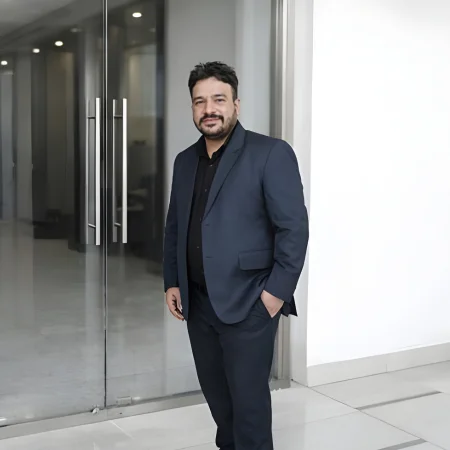
By Sahil Kataria, Chief Executive Officer, QServices
Updated June 12, 2026
Sahil Kataria is the CEO of QServices, a Microsoft Solutions Partner delivering AI agents and custom software for regulated industries. He leads enterprise AI strategy and FinTech delivery. LinkedIn ↗
Written from QServices' hands-on delivery work and reviewed by Rohit Dabra, Chief Technology Officer, QServices, before publishing.
QServices is a remote-first software consultancy offering Power Automate development for Minneapolis businesses. We are based in India, not Minneapolis, and work with Minnesota clients across Healthcare, Retail, FinTech, and Manufacturing on remote engagements with morning Central Time hours of daily overlap.
What Minneapolis buyers typically need from Power Automate
Minneapolis sits at the intersection of large healthcare networks, regional financial services firms, established retail operations, and a manufacturing base spread across the metro. The automation problems we hear most from buyers in those sectors:
- Healthcare and HITECH compliance: Automating patient intake routing, prior authorization requests, and referral workflows while keeping PHI handling aligned with HITECH requirements and Minnesota's data breach notification law under Minn. Stat. § 325E.61.
- Retail operations: Connecting inventory, order management, and supplier portals through Power Automate's 600+ connectors without building custom middleware from scratch.
- FinTech and community banking: Automating loan application routing, document collection, and compliance reporting with audit trails that hold up under Minnesota regulatory review.
- Manufacturing: Purchase order approvals, equipment maintenance alerts, and production reporting flows that cut manual data entry across ERP and field systems.
Most Minneapolis engagements we scope land in the $6,000–$35,000 range. Healthcare and financial workflows with HITECH or Minnesota breach-law scope carry a 15–25% compliance overhead on top. Our Power Automate pricing guide has a full breakdown by project size.
How we work with Minneapolis clients
Our engineering team is in India (IST, UTC+5:30). Minneapolis runs on Central Time, UTC-6 in winter, UTC-5 in summer. That is an 11.5-hour gap in winter and a 10.5-hour gap in summer. In practice, our afternoon IST window overlaps with Minneapolis mornings: from roughly 8:30 AM CT onward, engineers are available for live calls, code reviews, and demos before your lunch hour.
A typical remote engagement runs like this:
- Weekly 30-minute video standup scheduled during CT morning hours, on Microsoft Teams or Slack.
- Async daily updates posted to a shared Teams channel before your working day starts.
- Sprint demos every two weeks, recorded and shared for stakeholders who cannot join live.
- All Power Automate flows built in a client-owned environment so your team has full access throughout, not just at handover.
We do not offer routine on-site visits to Minneapolis. For enterprise contracts above $30,000 we can discuss milestone travel on a cost-pass-through basis. Our standard 30-day post-launch support period is designed to make your internal team self-sufficient before we step back. Citizen-developer handover documentation is included in every engagement.
Relevant work in similar markets
We do not have a published client based specifically in Minneapolis. The two closest engagements from our delivery history:
Banking CRM automation (BA Systems): We built Power Apps and Power Automate flows for a mid-market bank, connecting their CRM to backend banking systems with dynamic enquiry source management and automated opportunity qualification, without overwriting existing live CRM customizations. The outcome was a cleaner lead management process and a repeatable integration pattern the client's team could extend. This maps directly to the FinTech and community banking use cases common in Minneapolis. Read the BA Systems case study.
AI project management automation (Smart PM): For an IT services company, we connected Power Automate to Azure DevOps, MS Teams, and Fireflies.ai to automate meeting transcript capture and backlog creation, with Fibonacci story point assignment and sprint capacity tracking. The result replaced manual meeting note capture with real-time Power BI sprint velocity dashboards. This type of cross-system workflow automation is relevant to Minneapolis technology and professional services teams looking to reduce manual coordination overhead. Read the Smart PM case study.
Both engagements were delivered fully remotely by the same team that would work on a Minneapolis project. For context on where Power Automate fits within a broader Microsoft stack, see our services overview.
What Power Automate costs for a typical Minneapolis project
All engagements are quoted and invoiced in USD. Typical project brackets for Minneapolis buyers:
- Small scope ($6,000–$8,000): Two to four automated flows, single system integration, standard connectors, delivered in three to four weeks.
- Medium scope ($8,000–$30,000): Multi-system automation covering 200–600 hours of build, premium connectors, Dataverse or SharePoint backend, full documentation and handover training.
- Healthcare or FinTech projects: Add 15–25% for HIPAA/HITECH compliance scope and Minnesota data breach notification requirements. Each non-trivial system integration, an EHR, a banking core, a claims platform, adds $3,000–$12,000.
Post-launch maintenance retainers run $2,000–$4,000 per month. Full rate and scope detail is on our Power Automate cost page.
How to start working with us
Three steps to a scoped proposal:
- Discovery call (30 minutes): We map your current manual process, identify the highest-value flows to automate first, and flag any licensing or compliance considerations for your industry.
- Scoping document: Within three business days we send a written scope covering flows, connectors, integrations, timeline (typically three to eight weeks), and a fixed-price or time-and-materials quote.
- Project kickoff: On agreement we set up the shared Power Automate environment, schedule the first sprint, and work begins.
Can you work with Minneapolis companies remotely?
Yes. We are remote-first and have no physical office in Minneapolis. Our India-based team works with Minneapolis clients during CT morning hours, roughly 8:30–11:30 AM CT overlaps with our afternoon IST window. We use Microsoft Teams or Slack for day-to-day communication and run weekly video standups. For healthcare and financial services clients, we follow documented data handling procedures aligned with HITECH and Minnesota's data breach notification statute (Minn. Stat. § 325E.61). All source code, flow exports, and documentation transfer to client-owned environments at project close.
Ready to discuss your project?
Share your requirements with QServices. Our engineers will give you a straight answer on fit, timeline, and cost — no sales scripts.
Book a Free Consultation
Frequently Asked Questions
Do you have an office in Minneapolis? +
No. QServices is a remote-first consultancy based in India. We work with Minneapolis clients entirely remotely, with morning Central Time overlap hours for live calls and demos. There is no Minneapolis office, and we do not plan one. Remote delivery with proper async communication has worked well across our U.S. client engagements.
What is the time difference between Minneapolis and your team? +
Our team is in India (IST, UTC+5:30). Minneapolis runs Central Time, UTC-6 in winter, UTC-5 in summer. That gives an 11.5-hour gap in winter and 10.5 hours in summer. Our afternoon IST window aligns with Minneapolis mornings from roughly 8:30 AM CT, which covers daily standups, code reviews, and live demos.
Have you worked with companies in Minneapolis or Minnesota before? +
We do not have a published Minneapolis-based client. Our closest relevant work is a Power Automate banking CRM integration for a mid-market bank (BA Systems) and a cross-system workflow automation project connecting Azure DevOps, Teams, and Power BI for an IT services company. Both were delivered remotely. We are transparent about the absence of a local Minnesota reference.
How do you handle HITECH and Minnesota data breach requirements? +
For healthcare clients, we document PHI data flows, apply least-privilege connector configurations in Power Automate, and scope compliance review into the project budget (typically 15–25% overhead). Minnesota's breach notification law under Minn. Stat. § 325E.61 is addressed in our data handling agreements. We are not a compliance auditor, and we recommend third-party review for high-risk healthcare workflows.
What industries do you serve in the Minneapolis market? +
Our Power Automate work is most relevant to Minneapolis buyers in Healthcare, Retail, FinTech and community banking, and Manufacturing, the four primary industries in the metro. Healthcare engagements account for most of our compliance-scoped automation work. We do not have deep retail or manufacturing references to share yet, and we say so plainly rather than overstate our track record.