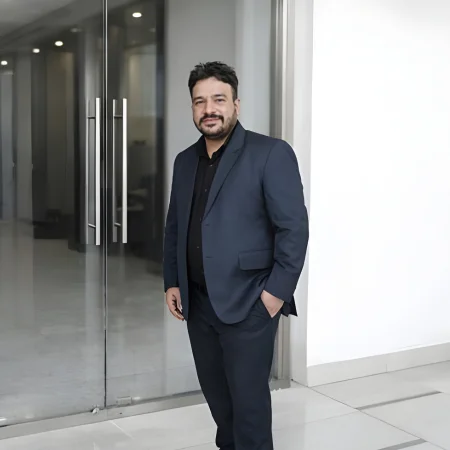
By Sahil Kataria, Chief Executive Officer, QServices
Updated June 13, 2026
Sahil Kataria is the CEO of QServices, a Microsoft Solutions Partner delivering AI agents and custom software for regulated industries. He leads enterprise AI strategy and FinTech delivery. LinkedIn ↗
Written from QServices' hands-on delivery work and reviewed by Rohit Dabra, Chief Technology Officer, QServices, before publishing.
QServices is a remote-first legacy modernization company serving Edmonton and Alberta businesses in energy, public sector, and healthcare. We are not based in Edmonton but work with Alberta clients on engagements with MT-aligned availability for daily overlap. See all our services.
What Edmonton buyers typically need from legacy system modernization
Alberta's three core industries each carry a distinct legacy problem:
- Energy (oil and gas): Environmental Health and Safety platforms built on aging VB.NET or on-premises SQL Server stacks that predate modern cloud infrastructure. These systems hold compliance records tied to Alberta Energy Regulator (AER) reporting requirements. Any migration must preserve full audit history without data loss, and the integration surface across SCADA, ERP, and document management systems is almost always larger than initial estimates suggest.
- Public sector: Provincial and municipal systems from the early 2000s, often on .NET Framework 3.5 or older, that block integration with shared federal services. PIPA Alberta governs all personal data touched in the migration, so data-handling architecture must be defined at the start, not retrofitted after the fact.
- Healthcare: Clinical and administrative platforms that predate modern API design, making integration with Alberta Health Services digital infrastructure or the provincial electronic health record system difficult without a deliberate strangler-fig approach that avoids service disruption.
PIPA Alberta (the Personal Information Protection Act) is the baseline privacy regime for private-sector organizations operating in Alberta. Unlike PIPEDA at the federal level, PIPA Alberta has its own notification and accountability obligations administered by the Office of the Information and Privacy Commissioner of Alberta. Any modernization project touching employee records, patient data, or customer information needs a data-handling design that satisfies PIPA from day one.
How we work with Edmonton clients
Our engineering team is in India (IST, UTC+5:30). Edmonton runs on Mountain Time, which is UTC-7 in winter (MST) and UTC-6 during daylight saving (MDT). The gap is 11.5 hours MST or 12.5 hours MDT. We do not pretend this is small.
What we do instead: engineers on Alberta-facing projects align to late IST shifts, which puts them online during Edmonton's 9 a.m. to noon MT window. That gives us roughly three hours of live daily overlap for calls, urgent decisions, and code walkthroughs. Everything outside that window runs async via Microsoft Teams or Slack, with a written end-of-day summary posted before your team arrives in the morning.
Our standard cadence for an Edmonton engagement: weekly 45-minute standup via Teams (MT mornings), a fortnightly sprint review with a working demo, and a shared async log updated each business day. Code reviews happen in GitHub with written comments so nothing is lost to a verbal exchange. For milestone reviews, we can arrange an in-person visit at project start or midpoint on request.
Relevant work in similar markets
We do not have a published case study from an Edmonton or Alberta client. The closest match in our portfolio is an EHS platform modernization for a global Environmental Health and Safety software company.
Case Study
Global EHS Platform Modernization: VB.NET Monolith to .NET 8 and React
Global Environmental Health and Safety software company
Improved scalability, maintainability, and global performance after rewriting a legacy VB.NET monolith
Streamlined Management of Change, Incidents and Events, Action Items, LMS training, and automated scheduling in a single platform
.NET 8ReactAzureAxios REST Client
That project rewrote a legacy VB.NET monolith into .NET 8 and React on Azure using the strangler-fig pattern, consolidating Management of Change, Incidents and Events, Action Items, LMS training, and automated scheduling into a single platform. EHS software is directly relevant to Alberta's energy sector, where oil and gas operators maintain AER compliance records across exactly these functions. The core migration challenges on that engagement, preserving audit integrity across a data layer rewrite and carrying legacy data integrity rules into the new stack, are the same challenges we would expect from a comparable project in Edmonton's energy market. See the full EHS platform modernization case study for details on the migration approach.
We also rebuilt a financial analytics platform from scattered spreadsheets into a role-authenticated Azure dashboard with automated data ingestion and real-time financial metrics, using .NET Core and Entity Framework. That pattern appears frequently in Alberta public sector systems built during the same era.
What legacy modernization costs for a typical Edmonton project
We invoice in USD. Edmonton clients working with us have historically found the USD/CAD spread favorable, but we do not manage currency conversion.
- Medium scope (USD $8,000–$30,000): A contained module or API layer extraction, 200–600 hours. Suitable for decoupling a single legacy service before a wider migration program.
- Large scope (USD $30,000–$120,000): A multi-module strangler-fig migration with data layer work, 600–2,000 hours over 16–30 weeks. This covers most mid-sized modernization programs in the Alberta energy and public sector space.
- Platform scope (USD $120,000–$500,000): Full system replacement with phased migration, 2,000–6,000 hours over 30–52 weeks. Appropriate for core business systems where downtime risk is high and AER or healthcare compliance records are in scope.
If the project touches personal information under PIPA Alberta, add 15–25% for compliance architecture, documentation, and third-party review. Each non-trivial integration with an external system, such as AER reporting endpoints, Alberta Health Services APIs, or federal shared services, adds USD $3,000–$12,000. See our full legacy modernization pricing guide for a breakdown by project type.
How to start working with us
Three steps from first contact to project start:
- Discovery call (30 minutes, MT mornings): We learn what system you are moving off, what is blocking you, and roughly what size the engagement is. No preparation required on your side.
- Scoping document: Within one week, we send a written scope defining the migration approach, timeline, team composition, and a fixed or time-and-materials cost range.
- Project start: Once scope is agreed, we set up communication channels, onboard the team to your repository, and begin the discovery sprint.
Can you work with Edmonton companies remotely?
Yes. All of our Edmonton and Alberta engagements run fully remote. The MT/IST gap is 11.5 to 12.5 hours depending on the season, and we manage this by aligning engineers to late IST shifts that cover Edmonton's morning hours. We work in Microsoft Teams or Slack, whichever your team already uses.
On data residency: for projects subject to PIPA Alberta, we scope any cloud components to Azure Canada Central so that data stays within Canada. We do not store client data on infrastructure outside the agreed regions. If your project involves AER-regulated records or Alberta Health data, we document the data classification requirements in the scoping document before any work begins.
Ready to discuss your project?
Share your requirements with QServices. Our engineers will give you a straight answer on fit, timeline, and cost — no sales scripts.
Book a Free Consultation
Frequently Asked Questions
Do you have an office in Edmonton? +
No. QServices is a remote-first consultancy based in India. We serve Edmonton clients in energy, public sector, and healthcare on fully remote engagements. Engineers align to late IST shifts to cover Mountain Time mornings, giving roughly three hours of live daily overlap. We use Teams or Slack and can arrange in-person visits for milestone reviews on request.
What is the time difference between Edmonton and your team in India? +
Edmonton (Mountain Time) is 11.5 hours behind India (IST) in winter and 12.5 hours behind during daylight saving. We handle this by scheduling engineers on late IST shifts, which aligns with Edmonton's 9 a.m. to noon MT window. Outside that overlap, all updates are async with end-of-day written summaries posted before your team starts their morning.
Have you worked with companies in Alberta or Canada before? +
We do not have a published Alberta-based client case study. Our closest relevant work is an EHS platform modernization involving a VB.NET to .NET 8 and Azure migration using the strangler-fig pattern. EHS software is central to Alberta's oil and gas sector, and the technical challenges on that engagement are directly comparable to what we would expect from a similar project in Edmonton.
How do you handle PIPA Alberta data residency requirements? +
For projects subject to PIPA Alberta, we scope cloud components to Azure Canada Central so data stays within Canadian borders. Data classification requirements are documented in the scoping phase before any work begins. We do not store client data outside agreed regions, and we flag any PIPA implications in the architecture review at project start.
What industries do you serve with legacy modernization in the Edmonton market? +
Our legacy modernization work in Alberta targets energy (oil and gas EHS and operations platforms with AER compliance records), public sector (provincial and municipal systems migrating from legacy .NET stacks), and healthcare (clinical and administrative platforms integrating with Alberta Health Services infrastructure). Each engagement accounts for PIPA Alberta from the architecture phase.