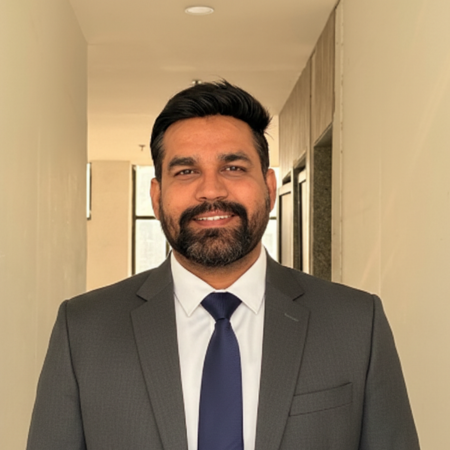
By Sahil Kataria, Chief Executive Officer, QServices
Updated June 12, 2026
Sahil Kataria is the CEO of QServices, a Microsoft Solutions Partner delivering AI agents and custom software for regulated industries. He leads enterprise AI strategy and FinTech delivery. LinkedIn ↗
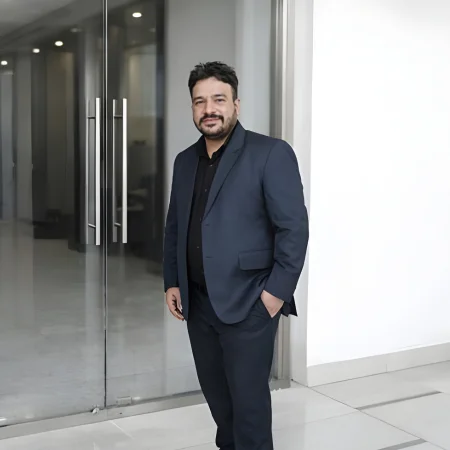
Written from QServices' hands-on delivery work and reviewed by Rohit Dabra, Chief Technology Officer, QServices, before publishing.
QServices is a remote-first software consultancy serving Calgary businesses in oil and gas, logistics, agriculture, and FinTech on Azure AI Foundry projects. We are not headquartered in Calgary, but we deliver Azure AI Foundry implementations with morning Mountain Time overlap for Alberta clients.
What Calgary buyers typically need from Azure AI Foundry
Calgary's economy runs on industries that generate high volumes of operational data and carry real compliance obligations. The use cases we see most often from Alberta businesses:
- Oil and gas operations: AI document processing for AER (Alberta Energy Regulator) field inspection reports, equipment maintenance logs, and safety documentation. Azure AI Foundry's built-in evaluation layer matters here: safety-critical AI decisions need measurable accuracy before going to production.
- Logistics and supply chain: Intelligent processing of bills of lading, freight quotes, and carrier communications. Azure AI Search integration over large document repositories for dispatch and operations teams.
- FinTech and financial services: Retrieval-augmented generation over policy documents and regulatory updates, customer-facing knowledge assistants, and internal compliance tools operating under PIPA Alberta (the Personal Information Protection Act).
- Agriculture: Data aggregation from field sensors and equipment telemetry, surfaced through a conversational AI layer for operations and field teams.
PIPA Alberta governs how private-sector organizations in the province collect, use, and disclose personal information. Any Azure AI application processing customer records, employee data, or client communications in Alberta must operate within PIPA's requirements. We design the data pipeline to meet those requirements from the start, not after the architecture is locked in. For oil and gas clients, AER reporting workflows carry document integrity obligations that factor into how we structure evaluation and logging from day one.
How we work with Calgary clients
Our engineering team is based in India, working in IST (UTC+5:30). Mountain Time is 11.5 hours behind IST in summer (MDT, UTC-6) and 12.5 hours behind in winter (MST, UTC-7). Our team extends hours into early evening IST to overlap with Calgary's morning: roughly 7:00 AM to 9:00 AM MDT is the live window where real-time calls happen.
A typical engagement runs as follows: weekly 45-minute sprint review and planning calls via Teams or Google Meet, scheduled at a Calgary morning time that works for your team. Between calls, we post written async updates in a shared Slack or Teams channel each morning your time, covering what shipped overnight and what is blocked. Pull requests go through GitHub with written review comments. On-site visits to Calgary are available for major milestone reviews on larger projects, with travel costs included in the project scope estimate.
Architecture discussions and UAT sessions are structured as prepared, document-first meetings so that the synchronous time we have is used on decisions, not catch-up.
Relevant work in similar markets
We do not have a published case study from a Calgary or Alberta client. Our delivered Azure AI Foundry projects have been with technology and SaaS companies, not energy, logistics, or agriculture firms. We say this directly because it is a fair question to ask before hiring a remote team.
The two most relevant examples of our Azure AI Foundry work:
Case Study
AI Project Management Bot for Azure DevOps and MS Teams (Smart PM)
IT services company
Automated meeting transcript capture and backlog creation in Azure DevOps with Fibonacci story point assignment and sprint capacity tracking
Real-time Power BI sprint velocity dashboards replacing manual meeting note capture and task allocation
Case Study
Enterprise Knowledge Management Bot (Copilot Studio + Azure AI Foundry)
Enterprise software company
Accurate, prompt responses for both document-specific queries and broader general knowledge questions from a unified AI assistant
Microsoft Copilot StudioAzure AI FoundryAzure AI SearchGPT-4o
The enterprise knowledge bot project is the most applicable reference for Calgary FinTech or oil and gas buyers. We connected Azure AI Foundry to Azure AI Search over a large enterprise document corpus, built an evaluation harness to measure retrieval accuracy, and shipped the assistant within an existing Microsoft environment. A PIPA-compliant knowledge assistant or an AER document workflow follows the same architectural pattern. The domain knowledge changes; the Azure AI Foundry pipeline does not.
For a full overview of our approach, see the Azure AI Foundry service page.
What Azure AI Foundry costs for a typical Calgary project
Engagements are priced in USD. For Alberta clients, apply current Bank of Canada exchange rates for CAD budget planning. The USD figures reflect project scope, not geography.
- Proof of concept or pilot (8-12 weeks): USD $25,000-$45,000. One use case, a working prototype connected to your Azure environment, and a basic evaluation harness to measure model accuracy.
- Production implementation (12-16 weeks): USD $50,000-$120,000. Full build with evaluation, observability, Azure Functions integration, user authentication, and knowledge base indexing via Azure AI Search.
Common add-ons for regulated Alberta industries:
- PIPA Alberta compliance review of data handling design: add USD $5,000-$15,000
- Third-party security review: add USD $5,000-$20,000
See the Azure AI Foundry cost breakdown for a full list of cost drivers and what each adds to project scope.
How to start working with us
Getting a project moving takes three steps:
- Discovery call (30 minutes): We learn about your use case, existing Azure setup, and compliance requirements. Scheduled at a Calgary morning time within our IST overlap window.
- Scoping document: We send a written scope covering architecture, timeline, cost range, and PIPA data-handling notes within five business days.
- Project start: On agreement, we set up the shared workspace, configure Azure resources, and begin the first sprint.
Can you work with Calgary companies remotely?
Yes, and our entire client base operates this way. We have no office in Calgary or anywhere in Canada.
Time zone: IST is 11.5 hours ahead of MDT in summer, giving us a 7:00-9:00 AM MDT live window when our team extends into the evening. Communication runs through Microsoft Teams or Slack. For Canadian data residency, Azure's Canada Central and Canada East regions keep data within Canadian borders, which satisfies PIPA Alberta's requirements for most use cases. We configure the Azure region at project setup, not after deployment. The Office of the Information and Privacy Commissioner of Alberta (OIPC) publishes guidance on AI and personal information handling under PIPA. For Microsoft's data residency commitments, see the Azure data residency documentation.
Ready to discuss your project?
Share your requirements with QServices. Our engineers will give you a straight answer on fit, timeline, and cost — no sales scripts.
Book a Free Consultation
Frequently Asked Questions
Do you have an office in Calgary? +
No. QServices is remote-first and based in India. We have no office in Calgary or anywhere in Canada. We work with Alberta clients through structured remote engagements: a morning MT overlap window, weekly video calls, and async updates in Teams or Slack. Our entire client base has worked with us this way since 2010.
What is the time difference between Calgary and your team? +
Our team works in IST (UTC+5:30). Calgary runs on MDT (UTC-6) in summer and MST (UTC-7) in winter. The gap is 11.5 hours in summer and 12.5 hours in winter. We extend our hours to overlap with 7:00-9:00 AM MDT, giving Calgary clients roughly two hours of real-time availability at the start of their workday.
Have you worked with companies in Calgary or Alberta before? +
Not yet. Our completed Azure AI Foundry work has been with technology and SaaS companies. We have no published case study from a Calgary or Alberta client. The closest work involves enterprise knowledge bots and AI assistants built on Azure AI Foundry for document-heavy operations, architectures that transfer directly to oil and gas, logistics, and FinTech contexts.
How do you handle data residency requirements for Canadian clients? +
For Canadian clients with PIPA Alberta or federal PIPEDA obligations, we configure Azure deployments to use Canada Central or Canada East regions, keeping data within Canadian borders. We document the data flow at project scoping so the residency approach is clear before a line of code is written. Third-party compliance review can be added to scope if required.
What industries do you serve in the Calgary market? +
For Calgary clients, we focus on oil and gas (AER document workflows, safety reporting AI), logistics (intelligent document processing, freight operations), FinTech (knowledge assistants, compliance tools under PIPA Alberta), and agriculture (sensor data aggregation, operational AI). These align with Calgary's primary industries and with Azure AI Foundry's strengths in document-heavy, compliance-sensitive applications.