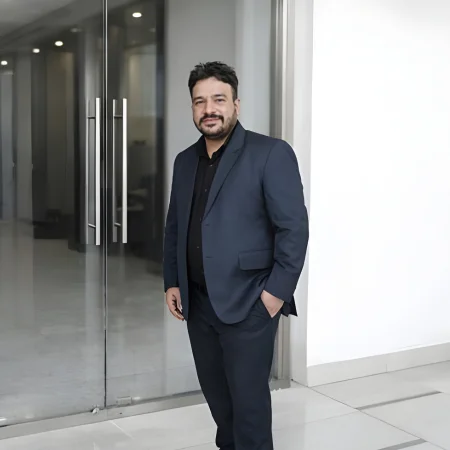
By Sahil Kataria, Chief Executive Officer, QServices
Updated June 12, 2026
Sahil Kataria is the CEO of QServices, a Microsoft Solutions Partner delivering AI agents and custom software for regulated industries. He leads enterprise AI strategy and FinTech delivery. LinkedIn ↗
Written from QServices' hands-on delivery work and reviewed by Rohit Dabra, Chief Technology Officer, QServices, before publishing.
QServices is not based in Mississauga, but we serve Ontario clients in logistics, pharma, manufacturing, and FinTech on remote Azure AI Foundry implementations with full ET hours overlap. QServices is a remote-first Microsoft Solutions Partner shipping production AI applications for Canadian businesses.
What Mississauga buyers typically need from Azure AI Foundry
Mississauga's four main sectors each have specific AI application needs that Azure AI Foundry addresses well:
- Logistics: Route optimization agents, warehouse automation with real-time inventory querying, and fleet management assistants connected to live operational data sources.
- Pharma: Clinical document search, AI-assisted content for Health Canada submissions, and adverse event monitoring pipelines with audit trails. Health Canada traceability requirements mean logging is needed at every step of the inference chain, not just at the application layer.
- Manufacturing: Predictive maintenance models connected to Azure IoT data, quality inspection agents, and supplier communication automation.
- FinTech: Client onboarding automation, fraud detection pipelines, and AI-assisted compliance workflows. OSC-regulated firms need record-keeping that covers AI decision inputs and outputs, not just final outputs.
PIPEDA applies to personal data collected from all Canadian residents, which directly shapes how you store conversation history, user inputs, and retrieved documents inside a Foundry application. The OSC's record-keeping rules add a layer on top for Ontario FinTech firms. We configure Azure AI Foundry deployments to Canada Central (Toronto) by default for all Canadian clients, keeping data within Canadian borders and satisfying PIPEDA data residency obligations.
How we work with Mississauga clients
Our team is based in India and covers full ET business hours. A standard 9am to 5pm ET workday has our engineers available throughout. We do not ask Mississauga clients to schedule around a time offset.
Typical engagement rhythm: a standing weekly call on Teams, async daily updates in a shared Slack or Teams channel, pull requests reviewed within four business hours, and a live demo at every two-week sprint boundary. All code lives in your Azure DevOps or GitHub organization from day one.
For milestone reviews such as architecture sign-off or production launch, we can arrange on-site visits to Mississauga on request. In practice, most clients do not need them. The weekly cadence and async responsiveness remove the friction that makes on-site visits feel necessary.
Accountability is built into the process: you have access to the project board at all times, sprint velocity is visible in your own Azure DevOps, and the scoping document we agree to upfront defines deliverables and acceptance criteria. We do not invoice for a sprint until you have accepted its deliverables.
Relevant work in similar markets
We have not completed an Azure AI Foundry project for a Mississauga client specifically. Our delivered Foundry work has been with SaaS and enterprise software companies, not logistics, pharma, or manufacturing firms in Ontario. We are transparent about this rather than imply otherwise.
The two closest projects on record:
- Smart PM Assistant Bot (IT services company): Built on Azure AI Foundry and Azure AI Search. Automated meeting transcript capture, created Azure DevOps backlog items with Fibonacci story point assignment, and delivered real-time Power BI sprint velocity dashboards, replacing manual note capture across delivery teams. The retrieval, logging, and Azure AD integration patterns from this project transfer directly to FinTech and logistics enterprise use cases.
Case Study
AI Project Management Bot for Azure DevOps and MS Teams (Smart PM)
IT services company
Automated meeting transcript capture and backlog creation in Azure DevOps with Fibonacci story point assignment and sprint capacity tracking
Real-time Power BI sprint velocity dashboards replacing manual meeting note capture and task allocation
- Enterprise Knowledge Management Bot (enterprise software company): A Copilot Studio and Azure AI Foundry solution providing accurate responses for both document-specific queries and general knowledge questions from a single AI assistant.
Case Study
Enterprise Knowledge Management Bot (Copilot Studio + Azure AI Foundry)
Enterprise software company
Accurate, prompt responses for both document-specific queries and broader general knowledge questions from a unified AI assistant
Microsoft Copilot StudioAzure AI FoundryAzure AI SearchGPT-4o
For Mississauga pharma and manufacturing companies, the core Foundry architecture is the same. The domain layer changes: compliance document sets, sensor data feeds, and regulatory audit trail requirements replace the meeting transcript and knowledge base use cases above. We say directly that logistics, pharma, and manufacturing in Ontario are adjacent verticals for us, not ones where we have shipped projects yet.
What Azure AI Foundry costs for a typical Mississauga project
Our Azure AI Foundry projects range from USD $25,000 to $120,000. Engagements are priced in USD; CAD conversion is at the client's end.
- Small scope (USD $25,000-$40,000): Single AI agent, one data source, basic evaluation harness, Azure AD integration. Timeline: 8 weeks.
- Medium scope (USD $40,000-$80,000): Multi-agent workflow, two to four system integrations, production evaluation, deployment pipeline. Timeline: 10-14 weeks.
- Large scope (USD $80,000-$120,000): Enterprise platform with multiple agents, full observability, compliance documentation. Timeline: 14-16 weeks.
Cost modifiers for Mississauga clients: PIPEDA or Health Canada compliance documentation adds 15 to 25 percent to the base estimate. Each non-trivial system integration (ERP, HRIS, trading platform) adds USD $3,000-$12,000. A production-grade evaluation harness adds USD $5,000-$15,000 when not included in base scope.
See our full Azure AI Foundry pricing breakdown for a detailed cost model by scope.
How to start working with us
Three steps:
- Discovery call (30 min): We ask about your use case, your existing Azure setup, your compliance environment, and your timeline. No pitch, just enough to know if Foundry is the right fit.
- Scoping document: We send a written scope within five business days covering architecture approach, integration points, timeline, and a fixed-price or time-and-materials estimate.
- Project start: On agreement, we set up your Azure DevOps board, provision the shared Teams channel, and kick off the first sprint within a week.
Can a remote team handle Azure AI Foundry work for Mississauga companies?
Yes, and the logistics are straightforward. Our team covers full ET business hours, so there is no scheduling friction for Mississauga clients. We use Microsoft Teams for calls and screen sharing, Azure DevOps for project tracking, and Slack for async questions.
On data residency: Azure AI Foundry deployments for Canadian clients are region-pinned to Canada Central (Toronto) by default. This keeps all data, including conversation logs and retrieved documents, within Canadian borders as PIPEDA requires. If your legal team needs a data processing agreement documenting retention, deletion, and sub-processor relationships, we provide one before the project starts.
For FinTech firms under OSC oversight or pharma companies subject to Health Canada requirements, we document the full data flow and model logging configuration during the architecture phase. See our Azure AI Foundry for FinTech page for more detail on regulated industry delivery.
Ready to discuss your project?
Share your requirements with QServices. Our engineers will give you a straight answer on fit, timeline, and cost — no sales scripts.
Book a Free Consultation
Frequently Asked Questions
Do you have an office in Mississauga? +
No. We are a remote-first consultancy based in India with no physical office in Mississauga or Canada. We cover full ET business hours, so your team can reach us throughout the standard Mississauga workday. All Canadian deployments default to Azure's Canada Central region (Toronto) to satisfy PIPEDA data residency requirements.
What is the time difference between Mississauga and your team? +
Mississauga runs on Eastern Time. Our team is in India (IST, UTC+5:30). During Eastern Daylight Time in summer, the gap is 9.5 hours; during Eastern Standard Time in winter, it is 10.5 hours. We cover full ET business hours, so the offset is our operational challenge to manage, not yours.
Have you worked with companies in Mississauga or Ontario before? +
Not with a Mississauga client specifically. Our Azure AI Foundry work has been with SaaS and enterprise software companies. We are transparent about this. The closest matched projects are our Smart PM Bot and Enterprise Knowledge Management Bot, both built on the same Azure AI Foundry and Azure AI Search stack your project would use.
How do you handle data residency requirements for Canadian clients? +
We default all Azure AI Foundry deployments for Canadian clients to the Canada Central region in Toronto, keeping data within Canadian borders as PIPEDA requires. We provide a data processing agreement covering retention, deletion, and sub-processor relationships. For pharma clients, we document the full data flow to meet Health Canada traceability requirements.
What industries do you serve in the Mississauga market? +
Our work is relevant to Mississauga's four main sectors: logistics, pharma, manufacturing, and FinTech. Direct Azure AI Foundry delivery has been in enterprise SaaS. We are honest that logistics, pharma, and manufacturing in Ontario are adjacent verticals where we have not shipped projects yet, though the underlying Foundry architecture is identical.