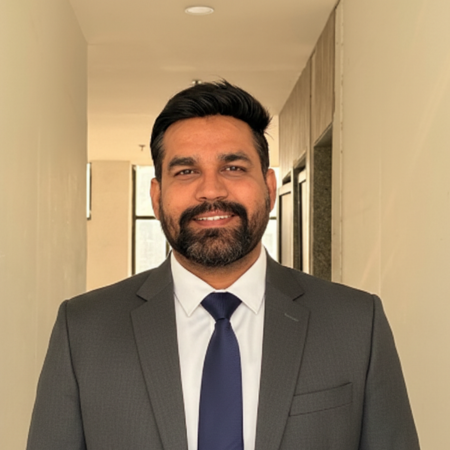
By Sahil Kataria, Chief Executive Officer, QServices
Updated June 13, 2026
Sahil Kataria is the CEO of QServices, a Microsoft Solutions Partner delivering AI agents and custom software for regulated industries. He leads enterprise AI strategy and FinTech delivery. LinkedIn ↗
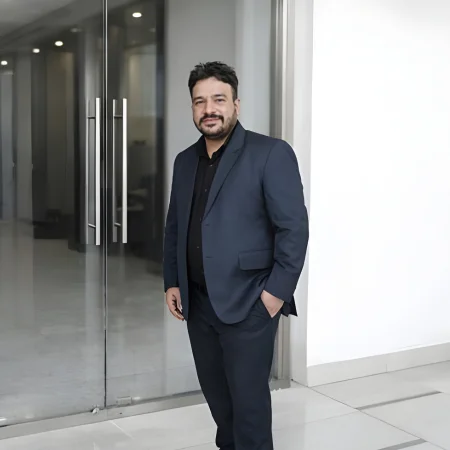
Written from QServices' hands-on delivery work and reviewed by Rohit Dabra, Chief Technology Officer, QServices, before publishing.
We are not headquartered in Ottawa, but we work with Ottawa clients across Government Tech, Cybersecurity, and Tech Services on remote engagements with ET hours of daily overlap. QServices is a remote-first software consultancy serving federal and Ontario businesses that need to modernize legacy systems without a big-bang rewrite.
What Ottawa buyers typically need from legacy system modernization
Ottawa's technology sector is anchored by the federal government. Many federal departments and their technology vendors run systems built on .NET Framework 2.0–4.x, VB.NET, or early ASP.NET MVC, code that predates the cloud and has accumulated 15 to 20 years of business rules. The modernization needs we see most often in markets like Ottawa:
- Federal and provincial government systems: Aging .NET or Java applications that can no longer integrate with modern API gateways or cloud identity providers.
- Cybersecurity platform vendors: Products built on older Windows Server stacks that need containerization (Docker, Azure) to compete in new enterprise procurement cycles.
- Tech Services firms before a growth event: Internal tools or client-facing platforms that need replatforming before a fundraise, acquisition, or federal contract bid.
Two compliance regimes shape every Ottawa modernization engagement. PIPEDA (Personal Information Protection and Electronic Documents Act) governs how personal data is collected, stored, and transferred, meaning cloud architecture decisions must account for data residency and consent mechanisms from day one. Federal procurement under PSPC (Public Services and Procurement Canada) adds requirements around security clearances and contracting formalities that affect project scoping and timelines in ways that purely commercial engagements do not.
How we work with Ottawa clients
Ottawa operates on Eastern Time (ET). Our engineering team in India runs on IST (UTC+5:30), which puts us 9.5 hours ahead during EDT and 10.5 hours ahead during EST. Ottawa's 8–10 AM window aligns with our team's 5:30–8:30 PM, giving us a reliable 2-hour window for standups, demos, and urgent questions each business day.
Here is how a typical engagement runs:
- Weekly standups at 8:30 AM ET via Microsoft Teams or Slack, 30 minutes, always recorded.
- Sprint reviews every two weeks with shared-screen demos and a written summary posted to your project channel within the hour.
- Async-first for everything else: pull request reviews, architecture decisions, and status updates happen in writing so your team has a clear record at all times.
- On-site visits are available for milestone reviews; most clients complete full engagements remotely without them.
For government or regulated-sector clients operating under PSPC or PIPEDA, we document our HITL (Human-in-the-Loop) governance checkpoints: the moments where a senior engineer on our side and a named stakeholder on yours must both sign off before the next phase begins. This gives Ottawa procurement teams the accountability trail they need, and it maps cleanly to the kind of stage-gate documentation federal contracting often requires.
Relevant work in similar markets
We have not delivered a project for an Ottawa-based federal government client. We are stating that plainly. The two legacy modernization engagements most technically relevant to what Ottawa buyers typically need are both .NET migrations on Azure.
Global EHS Platform: VB.NET to .NET 8. We rewrote a legacy VB.NET monolith for a global Environmental Health and Safety software company, migrating to .NET 8, React, and Azure using a strangler-fig approach. The outcome was improved scalability and maintainability across a platform handling Management of Change, incidents, LMS training, and automated scheduling. This is the same technical profile as many Ottawa government-sector vendors running decade-old Microsoft stacks.
Case Study
Global EHS Platform Modernization: VB.NET Monolith to .NET 8 and React
Global Environmental Health and Safety software company
Improved scalability, maintainability, and global performance after rewriting a legacy VB.NET monolith
Streamlined Management of Change, Incidents and Events, Action Items, LMS training, and automated scheduling in a single platform
.NET 8ReactAzureAxios REST Client
StockScrapping Analytics Platform. We migrated scattered spreadsheet-based workflows to a role-authenticated dashboard on Azure using ASP.NET MVC and .NET Core, with automated data scraping and real-time financial metrics. The pattern of replacing brittle manual processes with an auditable, role-controlled Azure application applies directly to internal government and enterprise tools built on aging Microsoft infrastructure.
Case Study
Stock Market Analytics and Categorization Platform (StockScrapping)
Investment management and stock analytics company
Replaced scattered spreadsheets with a role-authenticated dashboard on Azure with automated scraping and real-time financial metrics
Category-based stock classification (XLF, XLV, XLY) with P/E ratios and earnings schedule tracking
ASP.NET MVC.NET CoreEntity FrameworkSQL ServerMicrosoft Azure
Neither client is in Ottawa or the federal government sector. The technical profile of both projects, .NET stack migration to Azure with data integrity rules preserved throughout, matches what Ottawa's tech services and government vendors typically need from a modernization partner.
What legacy modernization costs for a typical Ottawa project
Our pricing is in USD. Ottawa clients convert to CAD at the prevailing rate. Typical project ranges for legacy system modernization:
- Medium scope ($8,000–$30,000 USD): A single module or subsystem extraction, API gateway introduction, or database schema migration. Typically 200–600 hours over 4–12 weeks.
- Large scope ($30,000–$120,000 USD): Multi-module strangler-fig migration with integration surface mapping. 600–2,000 hours over 4–12 months.
- Platform scope ($120,000–$400,000 USD): Full legacy platform rewrite with parallel run, data migration, and phased cutover. 2,000–6,000 hours over 16–52 weeks.
PIPEDA compliance architecture and PSPC-related documentation overhead add roughly 15–25% to any engagement where federal or regulated personal data is in scope. Each additional third-party system integration adds $3,000–$12,000 USD. For a full breakdown, see our legacy modernization pricing page.
How to start working with us
Most Ottawa engagements begin with a 45-minute discovery call where we map the current system, identify the riskiest integrations, and give you a rough order-of-magnitude estimate before any commitment.
- Discovery call: 45 minutes, no preparation required on your end.
- Scoping document: We deliver a written scope, timeline, and budget range within five business days.
- Project start: Once scope is agreed, we assign a senior engineer and begin the strangler-fig assessment in week one.
Can you work with Ottawa companies remotely?
Yes. All of our client engagements are remote. Ottawa is on Eastern Time (ET), and our team in India operates on IST, giving us roughly 2 hours of real-time overlap with Ottawa business hours each day, typically 8–10 AM ET. We use Microsoft Teams or Slack, document every architectural decision in writing, and schedule sprint reviews at times that work for Ottawa-based stakeholders.
For PIPEDA compliance, we deploy on Azure Canada Central or Canada East when data residency in Canada is required. We do not hold or process personal data on Indian infrastructure unless a client explicitly authorizes cross-border transfer under PIPEDA's accountability framework. See our full services overview for more on how we handle regulated engagements.
Ready to discuss your project?
Share your requirements with QServices. Our engineers will give you a straight answer on fit, timeline, and cost — no sales scripts.
Book a Free Consultation
Frequently Asked Questions
Do you have an office in Ottawa? +
No. QServices is a remote-first company based in India. We serve Ottawa clients through structured remote engagements with daily ET hour overlap. We have completed full legacy modernization projects without an on-site office, and most clients find the async-first documentation model more thorough than in-person-only arrangements.
What is the time difference between Ottawa and your team? +
Ottawa is on Eastern Time (ET). Our team runs on IST (UTC+5:30). During EDT (summer), the gap is 9.5 hours; during EST (winter), it is 10.5 hours. Ottawa's 8–10 AM window overlaps with our late afternoon, giving us roughly 2 hours of real-time availability each business day for standups and sprint reviews.
Have you worked with Canadian companies before? +
We have worked with companies running Microsoft Azure and .NET stacks, the dominant profile in Ottawa's Government Tech and Cybersecurity sectors. We have not delivered a project specifically under PSPC federal procurement. We are transparent about that and can review your contracting requirements before scoping begins.
How do you handle PIPEDA data residency requirements for Ottawa clients? +
PIPEDA requires organizations to protect personal information with safeguards appropriate to its sensitivity. For Ottawa clients where data residency in Canada is required, we deploy on Azure Canada Central or Canada East. We document the data flow, storage location, and access controls in a written architecture decision record as part of our HITL governance process.
What industries do you serve in the Ottawa market? +
Our legacy modernization work is most applicable to Ottawa's three primary technology sectors: Government Tech (federal IT vendors and departments), Cybersecurity (platform vendors replatforming older Windows stacks to modern containerized architectures), and Tech Services firms modernizing internal tools before a procurement cycle, acquisition, or compliance audit.