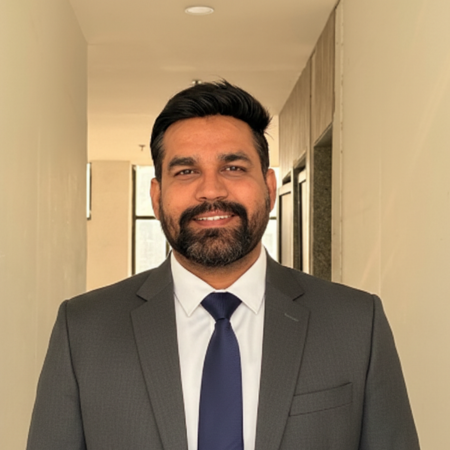
By Sahil Kataria, Chief Executive Officer, QServices
Updated June 13, 2026
Sahil Kataria is the CEO of QServices, a Microsoft Solutions Partner delivering AI agents and custom software for regulated industries. He leads enterprise AI strategy and FinTech delivery. LinkedIn ↗
Written from QServices' hands-on delivery work and reviewed by Rohit Dabra, Chief Technology Officer, QServices, before publishing.
QServices provides mobile app development for Ottawa businesses in government tech, cybersecurity, and tech services. We are not based in Ottawa, but we work with Canadian clients on remote engagements with Eastern Time hours overlap and PIPEDA-compliant data practices built in from day one.
What Ottawa buyers typically need from mobile app development
Ottawa's economy centres on federal government institutions, cybersecurity firms, and technology service providers. Mobile app projects in this market carry compliance and procurement requirements that differ from those in other Canadian cities.
- Government-facing citizen apps: Federal departments and Crown corporations need apps meeting Government of Canada digital standards, including WCAG 2.1 AA accessibility and bilingual (English/French) support.
- Procurement-compliant development: Organizations operating under PSPC (Public Services and Procurement Canada) frameworks need vendors who work within structured procurement timelines and can supply documented software supply chain practices.
- Cybersecurity product interfaces: Ottawa cybersecurity firms regularly need mobile frontends for security dashboards, incident response tools, and zero-trust authentication flows.
- PIPEDA compliance: Any app collecting personal data from Canadian users must meet the Personal Information Protection and Electronic Documents Act requirements, covering informed consent, data minimization, and breach notification obligations.
- Internal tooling for tech services firms: Mid-size tech services companies in Ottawa need cross-platform apps for field technicians, project managers, and client portals.
PIPEDA is enforced by the Office of the Privacy Commissioner of Canada. We design consent flows, data storage, and retention policies to meet PIPEDA from the first sprint, not as a post-launch retrofit.
How we work with Ottawa clients
Our engineering team is in India (IST, UTC+5:30). Ottawa runs on Eastern Time: UTC-5 in winter (EST) and UTC-4 in summer (EDT). The gap is 9.5 hours during EDT and 10.5 hours during EST. That is a wide gap, and we want to be direct about how we handle it.
On active projects, our team works until 9pm IST. That creates a 1.5- to 2-hour working overlap with Ottawa's 9am to 11am ET morning. We schedule all sprint reviews, demo calls, and code walkthroughs inside that window. Async standup updates are posted each morning IST so your team reads them at the start of their day in Ottawa.
Our typical engagement cadence:
- Weekly 45-minute sprint review, Monday or Tuesday at 10am ET
- Async daily standup note in Microsoft Teams or Slack, posted by 7am ET
- Pull request reviews returned within 4 hours during the overlap window
- Milestone demos booked 48 hours in advance via shared calendar
We do not have a physical Ottawa office. On-site visits for project kickoffs or critical milestone reviews are available and are priced separately from the project scope.
Relevant work in similar markets
We have not built a mobile app for an Ottawa government agency or cybersecurity firm. We want to be direct about that. Our direct mobile app experience is in regulated financial services, which carries similar compliance-first requirements to Ottawa's government tech sector.
We built T+ for SomBank, a mobile payment platform for an Islamic bank in Somalia. The app reached 100K+ downloads with a 4.8-star rating at launch. The stack included React Native, .NET, Azure Service Bus, Azure B2C, and Azure Key Vault. Regulatory constraints covered Sharia-compliant transaction rules and international remittance flows, which required structured approval logic and audit trail design of the kind that government app projects demand.
Case Study
Mobile Payment Platform for SomBank (Somalia)
Islamic bank, Somalia
100K+ downloads with 4.8-star rating on launch
First digital payment platform in a predominantly cash-based economy, enabling P2P transfers, merchant QR payments, and international remittances
React Native.NETMySQLAzure Service BusAzure B2C
We also built Chikwama, a digital wallet for a payments company operating in an emerging market with no prior digital payment infrastructure. The stack included Xamarin Forms, ASP.NET Web API, Azure, and SignalR for real-time transaction updates. The defining constraint: handling sensitive financial data for first-time digital users where data handling errors had direct real-world consequences.
Case Study
Digital Wallet Mobile App (Chikwama)
Digital payments company, emerging market economy
Introduced real-time digital peer-to-peer transfers to a previously cash-dependent economy
QR code merchant payments and bank account top-ups with SignalR real-time transaction updates
Xamarin FormsASP.NET Web APISQL AzureAzureSignalR
Neither project was in Ottawa or Canadian government tech. What transfers is the experience of building secure, compliant mobile apps under regulatory constraints with no room for data handling errors.
What mobile app development costs for a typical Ottawa project
Our engagements are priced in USD. Ottawa clients handle CAD conversion on their end.
- Small scope ($35,000 to $60,000 USD): Single-platform app (iOS or Android), defined feature set, up to 5 core screens, App Store or Play Store submission, analytics and crash reporting from launch. Timeline: 12 to 16 weeks.
- Medium scope ($60,000 to $120,000 USD): Cross-platform in React Native, user authentication, backend API integration, both store submissions. Timeline: 16 to 20 weeks.
- Large scope ($120,000 to $200,000 USD): Full platform with offline sync, push notifications, multiple user roles, CMS integration, QA across device families. Timeline: 20 to 24 weeks.
For Ottawa projects involving PIPEDA-regulated data or PSPC procurement documentation, add 15 to 25 percent for compliance design, consent flow architecture, and audit trail requirements. Each non-trivial third-party system integration adds $3,000 to $12,000 to the scope.
See the full breakdown on our mobile app development cost page.
How to start working with us
- Discovery call (30 minutes): We confirm the target platform, primary use case, and any PIPEDA or PSPC constraints upfront.
- Scoping document: A written scope covering feature list, tech stack recommendation, timeline, and cost range arrives within 3 business days.
- Project start: On approval, we assign a dedicated project manager and kick off the first sprint within one week.
Use the form below to book the initial call. We respond to Ottawa inquiries within one business day ET.
Can you work with Ottawa companies remotely?
Yes. The engagement is fully remote. Our team works until 9pm IST, creating a 1.5- to 2-hour overlap with Ottawa's 9am to 11am ET window. Outside that window, we communicate through Microsoft Teams or Slack with same-day responses on active projects.
On data residency: for Canadian clients, we configure Azure storage in the Canada Central region (Toronto) or Canada East (Quebec City) to keep personal data within Canadian borders. This directly addresses PIPEDA compliance and, for projects under PSPC procurement, any data sovereignty requirements set by the contracting department. We include a data flow document as a standard project deliverable, covering collection, storage, retention, and deletion of all personal data the app handles.
Ready to discuss your project?
Share your requirements with QServices. Our engineers will give you a straight answer on fit, timeline, and cost — no sales scripts.
Book a Free Consultation
Frequently Asked Questions
Do you have an office in Ottawa? +
No, QServices does not have a physical office in Ottawa. We are a remote-first consultancy based in India. We work with Ottawa clients on fully remote engagements, scheduling all meetings within the 9am to 11am ET overlap window when both teams are available. On-site visits for project kickoffs or critical milestone reviews can be arranged on request.
What is the time difference between Ottawa and your team? +
Our team is in India (IST, UTC+5:30). Ottawa is Eastern Time: UTC-5 in winter (EST) and UTC-4 in summer (EDT). The gap is 9.5 hours in summer and 10.5 hours in winter. When our team works until 9pm IST, Ottawa clients have a working overlap from 9am to approximately 11am ET each business day.
Have you worked with Canadian companies before? +
Our mobile app case studies are from regulated financial services engagements in Africa, not Canadian clients specifically. The PIPEDA compliance disciplines, audit trail design, and secure data handling we bring to Ottawa projects are drawn from those engagements. We are transparent about the absence of prior Canadian clients rather than overstating our local track record.
How do you handle PIPEDA data residency requirements for Canadian clients? +
We configure all data storage for Canadian projects in Microsoft Azure's Canada Central (Toronto) or Canada East (Quebec City) regions, keeping personal data within Canadian borders. We document all data flows covering collection, storage, retention, and deletion in the project's technical specification, which is a standard deliverable on every engagement.
What industries do you serve in the Ottawa market? +
We target three primary sectors in Ottawa: government tech organizations including federal departments, Crown corporations, and agencies operating under PSPC procurement frameworks; cybersecurity product companies that need mobile app frontends; and technology services firms building internal or client-facing mobile tools for field technicians and project teams.