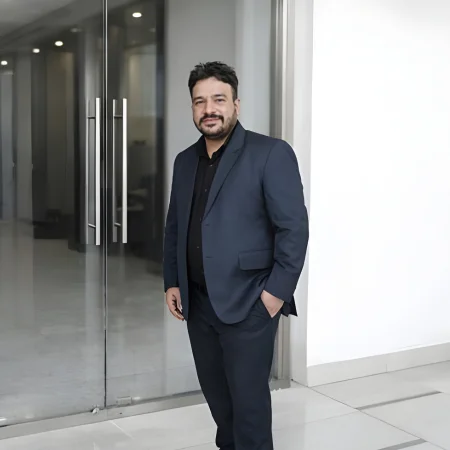
By Sahil Kataria, Chief Executive Officer, QServices
Updated June 13, 2026
Sahil Kataria is the CEO of QServices, a Microsoft Solutions Partner delivering AI agents and custom software for regulated industries. He leads enterprise AI strategy and FinTech delivery. LinkedIn ↗
Written from QServices' hands-on delivery work and reviewed by Rohit Dabra, Chief Technology Officer, QServices, before publishing.
QServices is a remote-first AI governance consulting company serving Vancouver businesses across tech, real estate, film, and mining. We are India-based, not Vancouver-based, and we cover PIPA BC and BC Securities Commission compliance requirements for AI systems. We work on Pacific Time, which means a full overlap with your business day.
What Vancouver buyers typically need from AI governance consulting
Vancouver companies asking about AI governance usually fall into one of three situations: a compliance team is asking hard questions about an AI system already in production; they are building new AI capabilities and want oversight designed in from the start; or a customer audit or regulatory review is the forcing function.
The industries driving this demand in Vancouver are specific:
- Tech companies deploying AI features to consumers need documented model evaluation, bias testing, and change-management policies before enterprise customers or regulators demand them.
- Real estate firms using automated valuation models or AI-assisted tenant screening run directly into PIPA BC obligations around automated decision-making that affects individuals.
- Mining operations applying AI to ore prediction, safety monitoring, or equipment maintenance need human-in-the-loop review on decisions with physical safety consequences.
- Film and media companies using AI for casting tools, content moderation, or script analysis face growing policy obligations around AI-generated content and bias in creative tools.
Two regulatory regimes shape most Vancouver AI governance engagements. PIPA BC (British Columbia's Personal Information Protection Act) governs how private-sector organizations collect and use personal information, and automated decisions made using that data fall squarely under its scope. The BC Securities Commission applies to any Vancouver firm using AI in investment analysis, trading decisions, or client-facing financial tools, where model transparency and audit trails are not optional.
How we work with Vancouver clients
Vancouver is on Pacific Time. Our team in India runs on IST (UTC+5:30). In summer that is a 12.5-hour gap; in winter, 13.5 hours. We close it by maintaining a PT-aligned schedule: standups, review calls, and milestone demos all happen during Vancouver business hours, which runs into our team's evening in India.
In practice:
- Weekly 60-minute call on Teams or Slack, your morning, our evening
- Written async updates every Friday covering what shipped, what is blocked, and what is next
- All governance deliverables (policy drafts, framework documents, evaluation reports) live in a shared folder you own, not our systems
- For engagements above $50,000, milestone reviews run as working sessions, not just demos
On data residency: governance work involves reviewing your AI systems, not pulling your data into ours. For clients with PIPA BC obligations, we can scope the entire engagement to run within your Azure Canada Central environment so your data never leaves Canadian jurisdiction during our collaboration.
We do not offer on-site visits to Vancouver for standard engagements. If your process requires in-person workshops, that can be added to larger scopes at cost.
Relevant work in similar markets
We do not have a published case study with a Vancouver-based client. We are stating that plainly rather than pointing to something tangential and calling it a local match.
The closest work we can reference is in regulated tech and FinTech markets: clients who came to us with AI systems already in production and no documented governance framework, needing one built before a customer audit or regulatory review. That work covered evaluation tooling built on Azure AI Foundry, HITL review workflows designed around the team's actual capacity (not just org-chart approval chains), and audit logging that compliance teams can read rather than interpret.
The PIPA BC and BCSC context of Vancouver maps onto the compliance pressures we have worked through in those markets. If you want to understand how that translates to your specific situation, a 30-minute scoping call is the right starting point. We will tell you directly whether we are the right fit or point you toward someone who is.
For more context, see our full services list, the AI governance consulting pricing guide, and our AI governance work for tech companies covering the evaluation and audit patterns we use most often.
What AI governance consulting costs for a typical Vancouver project
Project costs run from $15,000 to $90,000 USD, depending on scope. All engagements are priced in USD.
- Small scope ($15,000-$30,000 USD, 4-6 weeks): Governance framework for one or two AI systems, HITL design, policy documentation, evaluation checklist. Best for a single team needing to answer a specific compliance question.
- Medium scope ($30,000-$60,000 USD, 6-10 weeks): Full governance framework across multiple systems, Azure AI Foundry evaluation setup, audit logging implementation, staff training materials.
- Larger scope ($60,000-$90,000 USD, 10-12 weeks): Multi-system governance program, drift monitoring in production, BCSC or PIPA BC documentation package, third-party review preparation.
Add 15-25% to any scope if your situation requires formal compliance documentation under PIPA BC or BCSC rules. A production-grade AI evaluation setup on Azure AI Foundry adds $5,000-$15,000 to the base cost.
How to start working with us
Three steps: a 30-minute discovery call to understand your AI systems and the compliance pressure you are facing; a written scoping document from our team within five business days; and a project kickoff once scope and price are confirmed. No retainer or upfront payment is required to start the conversation. We respond to every inquiry within one PT business day.
Can you work with Vancouver companies remotely?
Yes. All of our Vancouver engagements are fully remote. Our team works on Pacific Time hours, so standups and milestone calls happen during your business day. We use Teams or Slack for communication and your own Azure or SharePoint environment for all deliverables. We do not require access to your production systems: governance work runs on architecture documentation, model cards, and decision logs you share with us.
For clients with PIPA BC data-residency requirements, we can structure the engagement so all collaborative work stays within your Azure Canada Central tenant.
Ready to discuss your project?
Share your requirements with QServices. Our engineers will give you a straight answer on fit, timeline, and cost — no sales scripts.
Book a Free Consultation
Frequently Asked Questions
Do you have an office in Vancouver? +
No. QServices is based in India and operates remotely for all client work. We have no physical office in Vancouver or anywhere in Canada. We work with Vancouver clients entirely over video calls, Teams, and Slack. Our team maintains Pacific Time hours, so your business day is our primary working window. There is no in-person component to our standard engagements.
What is the time difference between Vancouver and your team? +
Vancouver runs on Pacific Time (UTC-7 in summer, UTC-8 in winter). Our team is on India Standard Time (UTC+5:30). That is a 12.5-hour gap in summer and 13.5 hours in winter. To close it, our team maintains PT-aligned working hours. Your 9 AM standup runs as our 9:30 PM in summer. We operate this way by design, not as an exception.
Have you worked with Vancouver or British Columbia companies before? +
We do not have a published case study with a Vancouver-based client. Our governance work has been with regulated tech and FinTech companies in similar markets facing comparable compliance pressures. The PIPA BC and BC Securities Commission regulatory context is within our scope, and we will tell you directly in a scoping call whether we are the right fit for your situation.
How do you handle PIPA BC requirements for AI governance work? +
PIPA BC applies to automated decisions made using personal information, which covers most production AI systems. We build governance frameworks that document what data the model uses, when a human must review the output, and how decisions are logged. For clients with strict data-residency requirements, we scope all work to run inside your Azure Canada Central environment so data does not leave Canadian jurisdiction.
What industries do you serve in the Vancouver market? +
We serve Vancouver businesses in tech, real estate, film and media, and mining. Each has distinct AI governance requirements: tech companies face consumer-facing transparency obligations; real estate firms have PIPA BC automated-decision rules; mining operations need safety-critical human-in-the-loop oversight; media companies face content provenance and generative AI policy questions.