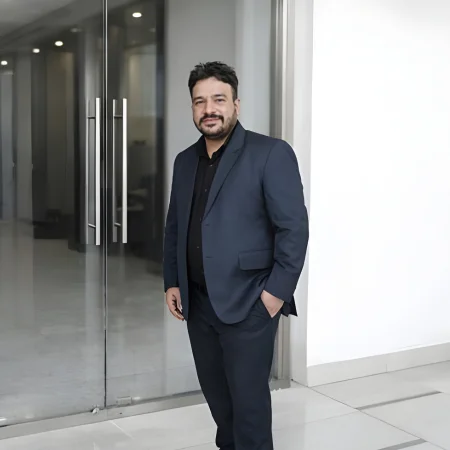
By Sahil Kataria, Chief Executive Officer, QServices
Updated June 12, 2026
Sahil Kataria is the CEO of QServices, a Microsoft Solutions Partner delivering AI agents and custom software for regulated industries. He leads enterprise AI strategy and FinTech delivery. LinkedIn ↗
Written from QServices' hands-on delivery work and reviewed by Rohit Dabra, Chief Technology Officer, QServices, before publishing.
QServices is not headquartered in Dallas, but we work with Dallas companies in FinTech, Healthcare, Telecom, and Logistics on remote Azure AI Foundry engagements with Central Time daily overlap. We are a remote-first Microsoft Solutions Partner serving Texas businesses in regulated industries, from initial architecture through production deployment.
What Dallas buyers typically need from Azure AI Foundry implementation
Dallas sits at the intersection of four industries with a shared requirement: AI that works inside tightly governed environments. Based on the types of projects common across FinTech, Healthcare, Telecom, and Logistics companies in Texas, the most frequent Azure AI Foundry use cases are:
- FinTech: Transaction monitoring agents, fraud detection pipelines, and document processing workflows built to meet Texas Data Privacy Act obligations and applicable federal financial regulations.
- Healthcare: Clinical decision support tools and prior authorization automation, operating within Azure HIPAA compliance controls and aligned with Texas Department of Insurance (TDI) requirements for health data handling.
- Telecom: Customer churn prediction models and network anomaly detection, integrated with existing Azure infrastructure via Azure Functions and Azure AI Search.
- Logistics: Demand forecasting and route optimization agents connecting Azure AI Foundry to SQL databases or ERP systems via Azure Functions.
A pitfall we see on regulated Texas projects: teams treat Azure AI Foundry as just another OpenAI wrapper. The evaluation harness and observability tooling are where the compliance value lives. Skipping that setup adds significant remediation cost when TDI or a Texas Data Privacy Act auditor asks for evidence of model governance. Azure consumption costs at scale are also routinely underestimated in initial scoping, and that gets painful fast on high-volume FinTech workloads.
How we work with Dallas clients
Our team is based in India, working in India Standard Time (IST). Dallas runs on Central Time (CT), which is 10.5 hours behind IST during daylight saving and 11.5 hours behind during standard time. A 9am CT call is 7:30pm to 8:30pm IST, which sits in our standard working evening. That gap is workable, and we structure the engagement around it rather than pretending it does not exist.
In practice, Dallas stakeholders arrive each morning to reviewed pull requests and written async updates. Code review and architecture feedback happen overnight India-time. We hold structured standups twice a week via Microsoft Teams, with a longer technical review each Friday. All decisions go into Azure DevOps or a shared Teams channel so nothing lives only in someone's inbox.
We do not currently offer routine on-site visits to Dallas. For projects above $80,000, we are open to discussing travel for critical design phases. For data residency, we configure all Azure AI Foundry resources inside your Azure tenancy, specifying US East or South Central US regions. Client data never moves to our infrastructure.
Relevant work in similar markets
We do not have a published case study from a Dallas company. Our two most relevant Azure AI Foundry engagements are with SaaS and enterprise software clients, not Texas-regulated FinTech or Healthcare firms. The architecture patterns transfer directly; what would need to be added for a Dallas regulated project is the compliance configuration layer for Texas Data Privacy Act and TDI requirements.
In our Smart PM Assistant engagement, we built an AI agent on Azure AI Foundry that automated meeting transcript capture, backlog creation in Azure DevOps with Fibonacci story point assignment, and sprint capacity tracking. The integration chain included Azure AI Search, Power Automate, Microsoft Graph API, and Azure AD. The outcome was real-time Power BI sprint velocity dashboards replacing manual meeting note capture and task allocation.
Case Study
AI Project Management Bot for Azure DevOps and MS Teams (Smart PM)
IT services company
Automated meeting transcript capture and backlog creation in Azure DevOps with Fibonacci story point assignment and sprint capacity tracking
Real-time Power BI sprint velocity dashboards replacing manual meeting note capture and task allocation
Azure AI FoundryAzure AI SearchPower AutomatePower BIMS Teams
In our Enterprise Knowledge Management Bot engagement, we delivered a unified assistant on Microsoft Copilot Studio and Azure AI Foundry, backed by Azure AI Search and GPT-4o, that accurately handled both document-specific queries and broader knowledge questions from a single interface.
Case Study
Enterprise Knowledge Management Bot (Copilot Studio + Azure AI Foundry)
Enterprise software company
Accurate, prompt responses for both document-specific queries and broader general knowledge questions from a unified AI assistant
Microsoft Copilot StudioAzure AI FoundryAzure AI SearchGPT-4o
If your Dallas project involves FinTech document processing or Healthcare knowledge retrieval, these are the same retrieval-augmented generation patterns. The compliance configuration for TDI or Texas Data Privacy Act obligations would be an explicit addition to the project scope.
What Azure AI Foundry costs for a typical Dallas project
All project quotes are in USD. Dallas clients in regulated industries should add 15-25% to base project costs for compliance overhead tied to Texas Data Privacy Act or TDI data handling requirements. Here is how typical scope brackets break down:
- Small scope ($25,000-$40,000): A single AI application such as a document Q&A agent or workflow automation. Includes evaluation setup, Azure AI Search integration, and one system integration.
- Medium scope ($40,000-$80,000): Multi-agent workflows or a platform with 2-3 system integrations, prompt flow pipelines, and safety evaluation.
- Large scope ($80,000-$120,000): Enterprise deployments with full observability, compliance review, and tight integration across existing Azure infrastructure.
A production-grade evaluation setup adds $5,000-$15,000 on top of base project costs. A third-party compliance review for TDI-regulated scopes adds $5,000-$20,000. See our full Azure AI Foundry pricing breakdown for a line-by-line view of what drives cost at each stage.
Can you work with Dallas companies remotely?
Yes. We work entirely remotely. We do not have a Dallas office. Our team structures working hours to overlap with Central Time mornings, uses Microsoft Teams for all synchronous communication, and keeps Azure DevOps as the single source of project truth.
For data residency under the Texas Data Privacy Act, Azure AI Foundry supports US-specific region deployment. We configure all Foundry resources within your Azure tenancy in US East or South Central US regions, so data does not leave compliant infrastructure. For TDI-regulated healthcare clients, the entire deployment stays inside your Azure environment. For more detail on TDI data security requirements for regulated entities, see the Texas Department of Insurance guidance directly.
How to start working with us
Three steps to getting a Dallas Azure AI Foundry project started:
- Discovery call (30 minutes): We review your use case, current Azure setup, and compliance requirements. No pitch deck, just questions.
- Scoping document: We send a written scope within 5 business days covering architecture, an 8-16 week timeline estimate, and a fixed-price or time-and-materials quote.
- Project start: Once the scope is signed, we provision the shared Azure DevOps board and schedule a kickoff call with your technical lead.
For Azure AI Foundry projects that also involve agentic workflows, see our AI agent development services. Human-in-the-Loop governance is built into every AI project we ship by default, which matters for FinTech and Healthcare clients with model accountability requirements.
Ready to discuss your project?
Share your requirements with QServices. Our engineers will give you a straight answer on fit, timeline, and cost — no sales scripts.
Book a Free Consultation
Frequently Asked Questions
Do you have an office in Dallas? +
No. QServices is a remote-first consultancy based in India. We do not have a Dallas office. Our team schedules overlap with Central Time mornings, holds standups via Microsoft Teams, and tracks all work in Azure DevOps. For project-critical milestones on large engagements, we are open to discussing on-site travel.
What is the time difference between Dallas and your team in India? +
Dallas Central Time is 10.5 hours behind India Standard Time during daylight saving, and 11.5 hours behind during standard time. A 9am CT call is 7:30pm to 8:30pm IST. We schedule daily overlap during Dallas mornings, which falls in our working evening, so the gap does not block daily progress.
Have you worked with companies in Dallas or Texas before? +
We do not have a published case study from a Dallas company. Our closest Azure AI Foundry work is with SaaS and enterprise software clients. The architectural patterns transfer directly to Dallas FinTech and Healthcare contexts, though the Texas Data Privacy Act and TDI compliance configuration would be added as explicit scope for Texas-regulated projects.
How do you handle Texas Data Privacy Act compliance on AI projects? +
We configure all Azure AI Foundry resources within your Azure tenancy using US East or South Central US regions. Client data does not move to our infrastructure. For TDI-regulated healthcare clients, the entire deployment stays inside your Azure environment. We recommend pairing this with a third-party compliance review for projects subject to the Texas Data Privacy Act.
What industries do you serve in the Dallas market? +
We work with companies in FinTech, Healthcare, Telecom, and Logistics, which are Dallas's primary industries. Most Azure AI Foundry engagements involve document processing agents, knowledge retrieval systems, or workflow automation tools built on Azure AI Search and Azure Functions, often with compliance requirements tied to TDI or Texas Data Privacy Act.