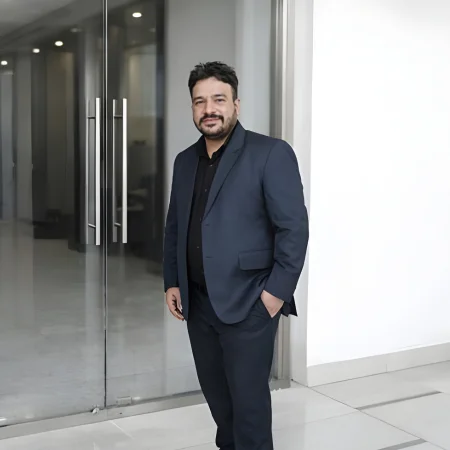
By Sahil Kataria, Chief Executive Officer, QServices
Updated June 12, 2026
Sahil Kataria is the CEO of QServices, a Microsoft Solutions Partner delivering AI agents and custom software for regulated industries. He leads enterprise AI strategy and FinTech delivery. LinkedIn ↗
Written from QServices' hands-on delivery work and reviewed by Rohit Dabra, Chief Technology Officer, QServices, before publishing.
QServices is a remote-first software consultancy based in India, not in Munich. We work with Munich-area clients in manufacturing, automotive, and insurance on Power Automate projects, with roughly four hours of daily overlap during CET morning hours. See our full services portfolio.
What Munich buyers typically need from Power Automate
Bavaria's manufacturing, automotive, and insurance sectors run on structured, repetitive workflows that Power Automate handles well. Common project types we see from Bavarian businesses:
- Manufacturing: production order routing, supplier approval chains, ERP-to-email escalations, and shift-handover checklists
- Automotive: parts procurement approvals, dealer network reporting, quality checkpoint routing, and warranty claim intake
- Insurance: claims intake and routing, policy renewal reminders, compliance reporting, and document collection from brokers
Two regulatory regimes apply directly to Power Automate work in Munich. EU GDPR requires that any flow processing personal data routes through EU-region endpoints and is covered by a data processing agreement. BaFin, Germany's financial regulator, adds a second layer for insurance and banking workflows: audit trails, role-based access controls, and immutable change logs are compliance requirements, not optional features. We architect for both from the first scoping call, not as a retrofit.
Manufacturing plants and automotive suppliers in Bavaria typically run SAP or comparable ERP systems. Power Automate connects to these through dedicated connectors, but the design matters as much as the connectivity. Getting connector licensing right from the start, understanding which flows need premium connectors and which run on standard, avoids cost surprises mid-project. Mixing personal flows with shared business processes is a mistake we flag early in every engagement.
How we work with Munich clients
Munich operates on CET in winter (UTC+1) and CEST in summer (UTC+2). Our team is on IST (UTC+5:30). In winter, CET 9am is IST 1:30pm. In summer, CEST 9am is IST 12:30pm. Either way, we have four hours of real-time morning overlap available each day for calls, reviews, and live debugging sessions.
Our standard cadence: async status updates posted before 8am CET each morning, two structured review calls per week over Microsoft Teams or Slack, and a recorded flow walkthrough before each milestone review so your team can prepare independently. All flows and configuration live in shared Azure DevOps repositories with full change history. Your team has read access throughout the project, not just at handoff.
For large engagements (typically above $25,000), on-site visits to Munich are available for key milestone reviews. For standard projects in the $8,000 to $30,000 range, the remote cadence handles everything. The four-hour CET morning overlap is enough for meaningful daily collaboration when both sides commit to the async structure we use.
Relevant work in similar markets
We do not have a published case study from a Munich manufacturer or Bavarian automotive supplier. That is worth stating plainly. The closest work we can reference comes from financial services, which shares the compliance and back-office integration discipline that Munich's insurance sector requires.
For a mid-market bank (BA Systems), we built a Power Platform CRM integration where the central constraint was connecting Power Automate to backend banking systems without disrupting live CRM customizations. The outcome was a dynamic enquiry-source management system with automated lead qualification. Insurance operations face a structurally identical problem: legacy back-office systems that cannot be interrupted, regulatory audit requirements, and users who need the automation to be self-maintaining after handoff.
We also built an AI project management bot for an IT services company, using Power Automate alongside Azure AI Foundry and Microsoft Teams to automate meeting transcript capture, Azure DevOps backlog creation with story point assignment, and sprint velocity reporting. For Munich automotive or manufacturing teams with high internal coordination overhead, this demonstrates the compound automation we can build on the Microsoft stack.
Case Study
Power Platform CRM Integration for Banking Client (BA Systems)
Mid-market bank, CRM modernization project
Optimized lead management and opportunity qualification without overwriting live CRM customizations
Dynamic enquiry source management with backend banking system integration via Power Automate
Microsoft Power AppsPower AutomateSQL Server
Case Study
AI Project Management Bot for Azure DevOps and MS Teams (Smart PM)
IT services company
Automated meeting transcript capture and backlog creation in Azure DevOps with Fibonacci story point assignment and sprint capacity tracking
Real-time Power BI sprint velocity dashboards replacing manual meeting note capture and task allocation
Azure AI FoundryAzure AI SearchPower AutomatePower BIMS Teams
What Power Automate costs for a typical Munich project
Engagements are priced in USD. A typical Power Automate project for a Munich business falls in one of these brackets:
- Small ($6,000 to $8,000): One automation workflow, one system integration, 3 to 5 weeks. Suits a single department process such as invoice routing or supplier approvals.
- Medium ($8,000 to $30,000): Multiple connected flows across two or three business units, premium connector licensing, user documentation, and training. 4 to 8 weeks.
- Large ($30,000 to $35,000+): Department-wide automation with multiple ERP or legacy system integrations, GDPR-compliant data routing, and BaFin audit trail requirements built in. 8 weeks or more.
For SAP, dealer management systems, or proprietary insurance platforms, add $3,000 to $12,000 per non-trivial integration. For BaFin-regulated workflows, budget 15 to 25 percent additional for compliance documentation and access control design. Engagements are invoiced in USD. See our Power Automate pricing guide for a full breakdown.
How to start working with us
Three steps: a 30-minute discovery call to map the workflows you want to automate and the systems involved, a scoping document with effort estimates and licensing recommendations delivered within five business days, and project kickoff once scope is approved. Most engagements start within two weeks of scope approval.
To book a discovery call, use the contact form on this page or visit our services page.
Can you work with Munich companies remotely?
Yes. We work remotely with Munich clients across manufacturing, automotive, and insurance. The CET morning window aligns with our IST afternoon, giving us four hours of daily real-time availability. We use Microsoft Teams or Slack, depending on your preference. For GDPR compliance, we sign data processing agreements and configure all Power Platform environments within the EU data boundary, routing personal data exclusively through EU-region connectors. For BaFin-regulated workflows, audit trail documentation and role-based access control design are included in every delivery. On-site visits to Munich are available for milestone reviews on large projects.
Ready to discuss your project?
Share your requirements with QServices. Our engineers will give you a straight answer on fit, timeline, and cost — no sales scripts.
Book a Free Consultation
Frequently Asked Questions
Do you have an office in Munich? +
No. QServices is a remote-first consultancy based in India. We work with Munich clients through structured async collaboration and scheduled review calls during CET morning hours, which overlap with our IST afternoon. For large engagements, we can arrange on-site visits to Munich for milestone reviews.
What is the time difference between Munich and your team? +
Munich runs on CET (UTC+1) in winter and CEST (UTC+2) in summer. Our team operates on IST (UTC+5:30), which puts us 4.5 hours ahead in winter and 3.5 hours ahead in summer. CET 9am equals IST 1:30pm in winter, giving us around four hours of real-time overlap each morning for calls and reviews.
Have you worked with companies in Germany before? +
We do not have a published case study from a German client. Our closest relevant work is a Power Platform CRM integration for a mid-market bank, where GDPR-compliant data routing and back-office system integration were central requirements. That compliance-first approach applies directly to Munich's insurance and financial services workflows.
How do you handle GDPR and BaFin requirements for Munich clients? +
For GDPR: we configure Power Platform in the EU data boundary, sign a data processing agreement under Article 28, and route all personal data through EU-region connectors only. For BaFin-regulated workflows, we design audit trails, role-based access controls, and change logging into the flow architecture from the start, not as a later addition.
What industries do you serve in the Munich market? +
We work with Munich clients in manufacturing, automotive, and insurance. Manufacturing and automotive clients typically need approval chains, SAP integrations, and production reporting flows. Insurance clients need claims routing automation, BaFin-compliant audit trails, and document collection workflows from brokers and policyholders.