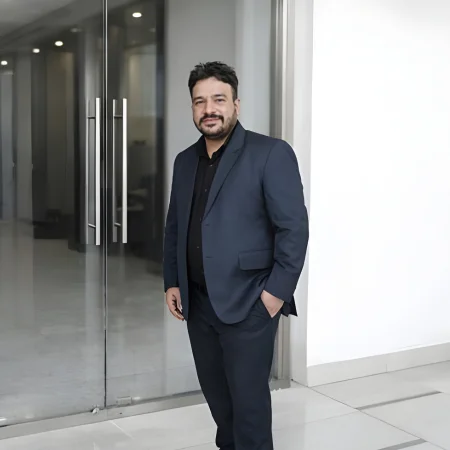
By Sahil Kataria, Chief Executive Officer, QServices
Updated June 12, 2026
Sahil Kataria is the CEO of QServices, a Microsoft Solutions Partner delivering AI agents and custom software for regulated industries. He leads enterprise AI strategy and FinTech delivery. LinkedIn ↗
Written from QServices' hands-on delivery work and reviewed by Rohit Dabra, Chief Technology Officer, QServices, before publishing.
QServices offers Azure AI Foundry implementation for Toronto companies in FinTech, Healthcare, Insurance, and Real Estate. We are not headquartered in Toronto, but we work with Ontario clients on remote engagements with full Eastern Time hours overlap. Our typical project runs $25,000–$120,000 USD over 8–16 weeks. See our full services list to understand where Azure AI Foundry fits in our broader offering.
What Toronto buyers typically need from Azure AI Foundry
Toronto sits at the intersection of four industries where AI compliance requirements are among the most demanding in Canada: FinTech, Healthcare, Insurance, and Real Estate. Conversations with buyers in these sectors move quickly from what the AI can do to whether it is safe, auditable, and compliant with the regulators they answer to.
- FinTech: PIPEDA-compliant AI pipelines for loan decisioning, fraud detection, or client onboarding automation. OSC-regulated firms need a complete audit trail on every model inference; Azure AI Foundry’s evaluation framework is built for exactly this requirement.
- Healthcare: Applications that process health data in OHIP-adjacent workflows require PIPEDA-compliant data residency within Canadian Azure regions. Connecting Azure AI Search to clinical document stores with access controls is the most common starting point we see.
- Insurance: Claims automation and underwriting support where every AI decision must be explainable to both adjusters and Ontario regulators. Foundry’s prompt flow and observability tools make this achievable without building custom logging infrastructure from scratch.
- Real Estate: Document extraction, lease analysis, and property valuation pipelines integrated with existing Azure infrastructure and CRM systems.
The most common mistake across all four sectors is treating Azure AI Foundry as just another wrapper around Azure OpenAI models. It is not. The platform’s value is in its evaluation framework, prompt flow tooling, and model observability. For Toronto organizations under PIPEDA or OSC oversight, these features must be configured from day one; retrofitting them later is expensive and disruptive.
How we work with Toronto clients
Our engineering team is based in India on IST (UTC+5:30). Toronto operates on Eastern Time: EDT (UTC-4) in summer, EST (UTC-5) in winter. In summer the time difference is 9.5 hours, which creates a reliable daily overlap. Toronto at 9 AM ET is India at 6:30 PM IST. We book daily standups in that window.
- Daily standup at 9–10 AM ET / 6:30–7:30 PM IST via Teams or Slack
- Pull request reviews posted by 5 PM IST; Toronto reviewers see them at the start of their working day
- Bi-weekly sprint demos, recorded and shared for stakeholders who cannot attend live
- Async Slack channel with a 2-hour response target during IST business hours
We do not include on-site visits in our standard scope. We have operated as a fully remote team since 2010. For Toronto clients who want an in-person kickoff or milestone review, we can arrange travel as a separate line item. All repositories, Azure environments, and documentation are transferred at project close.
Relevant work in similar markets
We do not have a published Toronto or Canadian client case study. We prefer to state that directly. The closest work we can reference uses the same Azure AI Foundry stack and addresses similar enterprise compliance patterns:
Case Study
AI Project Management Bot for Azure DevOps and MS Teams (Smart PM)
IT services company
Automated meeting transcript capture and backlog creation in Azure DevOps with Fibonacci story point assignment and sprint capacity tracking
Real-time Power BI sprint velocity dashboards replacing manual meeting note capture and task allocation
This engagement used Azure AI Foundry, Azure AI Search, Power Automate, Azure DevOps API, and Microsoft Graph to automate meeting transcript capture, backlog creation with Fibonacci story point assignment, and real-time sprint velocity dashboards in Power BI. The auditable, event-driven architecture is directly applicable to Toronto FinTech and Insurance teams building AI workflows that require traceability under OSC oversight.
Case Study
Enterprise Knowledge Management Bot (Copilot Studio + Azure AI Foundry)
Enterprise software company
Accurate, prompt responses for both document-specific queries and broader general knowledge questions from a unified AI assistant
Microsoft Copilot StudioAzure AI FoundryAzure AI SearchGPT-4o
This project combined Microsoft Copilot Studio with Azure AI Foundry and GPT-4o to deliver a unified knowledge assistant grounded in proprietary document stores and general knowledge. The data-isolation approach (sensitive internal documents held in Azure AI Search with role-based access controls, inference results logged for audit review) reflects the pattern Toronto Healthcare organizations need to satisfy PIPEDA data handling requirements.
What Azure AI Foundry costs for a typical Toronto project
Most Toronto Azure AI Foundry projects fall in the $25,000–$120,000 USD range. We price in USD regardless of client location or currency.
- Proof of concept ($25K–$40K USD): Azure AI Foundry environment setup, one AI workflow, a basic evaluation setup, and two Azure service integrations. Timeline: 8 weeks.
- Production application ($40K–$80K USD): Full pipeline with evaluation and observability, three to five integrations, and a 90-day maintenance handover. Timeline: 10–14 weeks.
- Regulated deployment ($80K–$120K+ USD): Adds PIPEDA compliance documentation, OSC audit trail configuration, or OHIP-adjacent data handling controls. Budget an additional $5,000–$15,000 for a production-grade evaluation framework and $5,000–$20,000 for third-party compliance review if your regulator requires it. Timeline: 14–16 weeks.
Azure consumption costs are separate from our project fees. Underestimating Azure costs at scale is one of the three most common problems we see on Foundry projects; we flag expected consumption in the scoping document before any work begins. See our Azure AI Foundry pricing breakdown for full details. For the current PIPEDA obligations that affect AI data handling in Canada, the Office of the Privacy Commissioner of Canada publishes the authoritative guidance.
How to start working with us
From first contact to project start typically takes two weeks:
- Discovery call (30 minutes): we map your use case to Azure AI Foundry capabilities and identify the compliance requirements that shape architecture choices before any code is written.
- Scoping document: a written proposal covering team composition, timeline, and fixed-price or time-and-materials options.
- Project start: onboarding call, Azure environment access, and first sprint planning.
Can you work with Toronto companies remotely?
Yes. QServices has no Toronto office and operates entirely on a remote model. Toronto clients work with us through Microsoft Teams and Slack. When PIPEDA or client security policy requires it, we configure Azure AI Foundry deployments to use Canadian regions (Canada Central in Toronto or Canada East in Quebec City) so data does not leave Canada. For OSC-regulated FinTech firms, we document data flows and access controls as part of the project scope to support any regulatory review by the Ontario Securities Commission. The 9.5-hour IST-to-EDT gap has not been a delivery blocker on any engagement we have run; the daily standup structure handles it.
Ready to discuss your project?
Share your requirements with QServices. Our engineers will give you a straight answer on fit, timeline, and cost — no sales scripts.
Book a Free Consultation
Frequently Asked Questions
Do you have an office in Toronto? +
No. QServices is a remote-first consultancy based in India with no Toronto office. Toronto clients work with us through Microsoft Teams and Slack, with daily standups at 9–10 AM ET (6:30–7:30 PM IST). On-site visits for project kickoffs or milestone reviews are available on request and priced separately from the standard engagement scope.
What is the time difference between Toronto and your team? +
India (IST, UTC+5:30) is 9.5 hours ahead of Toronto in summer (EDT, UTC-4) and 10.5 hours ahead in winter (EST, UTC-5). We use this gap productively: code reviews posted at 5 PM IST land in Toronto inboxes before 9 AM. Daily standups run at 9–10 AM ET / 6:30–7:30 PM IST so both sides have a live touchpoint every working day.
Have you worked with companies in Toronto or Canada before? +
We do not have a published Toronto or Canadian case study. Our Azure AI Foundry work includes an AI project management bot and an enterprise knowledge management bot for SaaS companies. Both projects use PIPEDA-compatible Azure region configuration and audit trail setup that apply directly to Toronto FinTech, Healthcare, and Insurance clients.
How do you handle data residency requirements for Canadian clients? +
For PIPEDA compliance, we configure Azure AI Foundry deployments to use Canadian Azure regions: Canada Central in Toronto or Canada East in Quebec City, keeping all data within Canada. For OSC-regulated FinTech firms or OHIP-adjacent healthcare projects, we document data flows and access controls as part of the project scope to support any required regulatory review.
What industries do you serve in the Toronto market? +
In Toronto, we work with companies in FinTech, Healthcare, Insurance, and Real Estate. These are the sectors where Azure AI Foundry’s compliance controls, evaluation frameworks, and observability features provide the most direct value. OSC-regulated financial firms and PIPEDA-bound healthcare providers benefit most from the platform’s built-in audit trail and model evaluation capabilities.