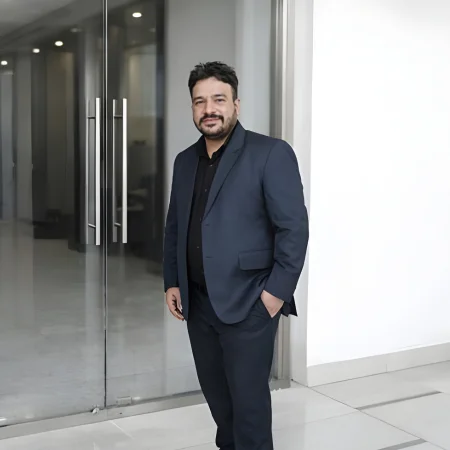
By Sahil Kataria, Chief Executive Officer, QServices
Updated June 13, 2026
Sahil Kataria is the CEO of QServices, a Microsoft Solutions Partner delivering AI agents and custom software for regulated industries. He leads enterprise AI strategy and FinTech delivery. LinkedIn ↗
Written from QServices' hands-on delivery work and reviewed by Rohit Dabra, Chief Technology Officer, QServices, before publishing.
We are not headquartered in Minneapolis, but we provide AI governance consulting to Minnesota companies in healthcare, retail, FinTech, and manufacturing. QServices is a remote-first software consultancy based in India, serving Minneapolis-area businesses with a scheduled CT morning overlap window for live calls and reviews.
What Minneapolis buyers typically need from AI governance consulting
Minneapolis sits at the center of several regulated industries where AI without governance creates real legal exposure. The most common project types in these markets:
- Healthcare and clinical AI: Minnesota healthcare providers deploying AI in clinical decision support or patient triage face HITECH requirements for audit trails, access controls, and documented human oversight. Governance work here means building evaluation pipelines that catch model drift before it affects care decisions, and documenting the human review process for every high-stakes output.
- FinTech and lending: Minnesota’s data breach notification statute (Minn. Stat. § 325E.61) creates a compliance floor for any AI system touching consumer financial data. That means documented policies, incident response procedures tied to AI system behavior, and human-in-the-loop checkpoints on high-stakes automated decisions.
- Retail AI: Large Minneapolis-area retailers using AI for pricing, inventory forecasting, or customer segmentation need governance frameworks that document model inputs, outputs, and the human review step before decisions go live at scale.
- Manufacturing automation: AI systems in quality control or predictive maintenance require evaluation baselines so your engineering team can detect when a model’s performance drifts from its initial deployment benchmark.
HITECH compliance is the most common regulatory driver we hear from Minneapolis clients in healthcare. Minnesota’s state data breach statute is the second most cited concern, particularly for FinTech teams handling consumer data. These two regimes together define the compliance floor for most Minneapolis AI governance engagements we scope.
How we work with Minneapolis clients
We are India-based. India Standard Time (IST) runs 10.5 hours ahead of US Central Daylight Time (CDT). Our standard model for Minneapolis clients: we schedule part of our team’s day so that 9am to 11am CDT is available for live calls, code reviews, and milestone demos. Outside that window, updates flow async through Slack or Teams.
In practice, a typical Minneapolis engagement looks like this: a weekly 45-minute video call (Teams or Zoom, your preference) at 9am or 10am CDT, written async updates each morning your time, and a shared project tracker (Linear or Jira) your team can check at any point. We send written scoping documents before any significant decision and do not begin implementation until you have approved the scope in writing.
On-site visits to Minneapolis are available for milestone reviews on engagements over $50,000. We will tell you honestly if a face-to-face session would add value, and equally honestly if we think it would not.
Relevant work in similar markets
We do not have a published case study from a Minneapolis client. We will not fabricate one.
Our closest relevant work is in regulated industries that share Minneapolis’s compliance profile. We have built human-in-the-loop governance frameworks for FinTech clients where AI-driven decisions in lending workflows required documented human review checkpoints and full audit logs before any decision was actioned. We have designed drift monitoring systems for healthcare-adjacent AI where post-launch performance tracking was a compliance requirement, not an optional feature. Those engagements involved the same three problems Minneapolis healthcare and FinTech teams typically face: governance that operates as a daily practice rather than a documentation exercise, HITL designs that do not create review bottlenecks at scale, and post-launch monitoring that alerts before drift becomes a production incident.
If you want to know whether our experience maps to your situation, a 30-minute discovery call is the fastest way to find out. We will tell you directly if it does not.
What AI governance consulting costs for a typical Minneapolis project
All engagements are priced in USD. Minneapolis clients do not need to handle currency conversion.
- Small scope ($15,000 to $40,000): Governance framework design, HITL process mapping, policy documentation, and a basic evaluation pipeline. Typically 4 to 8 weeks. Suitable for a single AI system or workflow.
- Medium scope ($40,000 to $90,000): End-to-end governance program across multiple AI systems, including production-grade evaluation on Azure AI Foundry, audit logging patterns, and HITECH or Minnesota data breach compliance review. 8 to 12 weeks.
- Add-on costs to plan for: Third-party compliance review adds $5,000 to $20,000. A production-grade evaluation pipeline on Azure AI Foundry adds $5,000 to $15,000. HITECH-scoped engagements carry a 15 to 25 percent regulatory overhead on the base estimate.
We provide a written, itemized scope before any work begins. See our AI governance consulting pricing page for a full breakdown.
How to start working with us
Three steps to get started:
- Discovery call (30 minutes): We discuss your AI systems, the governance gaps you have identified, and your regulatory obligations under HITECH or Minnesota’s data breach statute.
- Scoping document: We send a written document covering deliverables, timeline, and cost. No work begins until you approve it.
- Project start: We kick off with a structured onboarding call, set up your team’s communication channels, and deliver a project plan within the first week.
Browse our full services portfolio or see how we apply this work in AI governance for healthcare companies.
Can you work with Minneapolis companies remotely?
Yes. All our Minneapolis engagements are fully remote. We are India-based and work with US clients over video calls (Teams or Zoom), async communication through Slack or Teams, and shared project trackers. We schedule a CT morning window from 9am to 11am CDT for live calls. For HITECH-scoped healthcare work, data residency is handled through Azure’s US data center regions, so protected health information does not route through India-based infrastructure. On-site visits to Minneapolis are available for projects over $50,000 on request.
Ready to discuss your project?
Share your requirements with QServices. Our engineers will give you a straight answer on fit, timeline, and cost — no sales scripts.
Book a Free Consultation
Frequently Asked Questions
Do you have an office in Minneapolis? +
No. QServices is based in India. We work with Minneapolis clients entirely remotely, using video calls, Slack or Teams for async updates, and shared project trackers. We maintain a 9am to 11am CDT overlap window for live calls each business day. For projects over $50,000, on-site visits to Minneapolis are available on request.
What is the time difference between Minneapolis and your team? +
India Standard Time (IST) is 10.5 hours ahead of US Central Daylight Time (CDT). Our team schedules a CT morning window from 9am to 11am CDT for live calls and reviews. Outside that window, updates are async. This works well when communication expectations and scoping are established clearly at the start of the engagement.
Have you worked with companies in Minneapolis or Minnesota before? +
We do not have a published Minneapolis case study. Our relevant experience is in regulated industries that match Minneapolis's profile: FinTech AI governance with HITL checkpoints and audit logging, and healthcare-adjacent AI with drift monitoring and compliance documentation. If you want to know whether that maps to your situation, a discovery call is the fastest way to find out.
How do you handle HITECH compliance for Minneapolis healthcare clients? +
HITECH compliance for healthcare AI means audit logs for every AI-assisted decision, documented human review checkpoints for high-stakes outputs, and access controls limiting who can act on AI recommendations. We design governance frameworks that satisfy these requirements as operational practices, not just documentation, and we use Azure US data center regions so protected health information stays within the United States.
What industries do you serve in the Minneapolis market? +
In Minneapolis specifically, we work with clients in healthcare, retail, FinTech, and manufacturing. Healthcare and FinTech are most common because both face clear regulatory requirements, specifically HITECH and Minnesota's data breach notification law (Minn. Stat. § 325E.61), that make AI governance a compliance necessity rather than an optional practice.