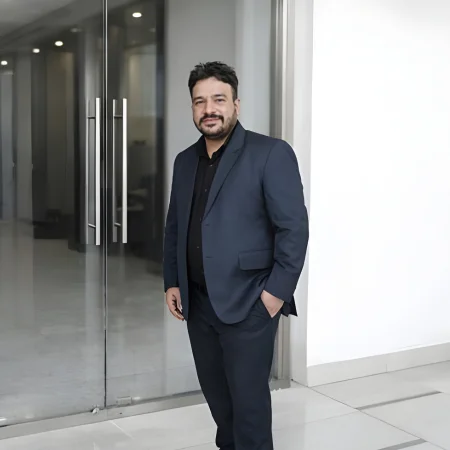
By Sahil Kataria, Chief Executive Officer, QServices
Updated May 29, 2026
Sahil Kataria is the CEO of QServices, a Microsoft Solutions Partner delivering AI agents and custom software for regulated industries. He leads enterprise AI strategy and FinTech delivery. LinkedIn ↗
Written from QServices' hands-on delivery work and reviewed by Rohit Dabra, Chief Technology Officer, QServices, before publishing.
Azure AI Foundry cost for a community bank ranges from $30,000 to $150,000. The low end covers a scoped pilot with one AI use case and one core banking integration. The high end includes multi-system integration with FIS, Fiserv, or Jack Henry, FFIEC-aligned compliance review, and a production-grade evaluation harness. See our pricing guide for context across service types.
Quick answer: $30,000–$150,000. A scoped pilot with one core banking integration runs $30,000–$55,000 over 8–10 weeks. A full production platform with multiple integrations and compliance review runs $95,000–$150,000 over 16–24 weeks. Regulatory overhead from FFIEC, GLBA, and BSA/AML requirements is the single biggest cost driver.
The honest cost range
The base Azure AI Foundry service runs $25,000–$120,000 across industries. For community banks, add 15–25% for regulatory scope. FFIEC guidance, GLBA data handling requirements, and BSA/AML obligations all require documented model governance and audit trails that increase development time materially.
- Pilot scope ($30,000–$55,000, 8–10 weeks): One AI use case, typically loan document pre-screening or compliance report summarization. Single integration with your core banking system (FIS, Fiserv, Jack Henry, or Finastra). Covers Azure AI Foundry setup, prompt engineering, basic evaluation framework, and initial deployment. Ongoing monitoring and model retraining are not included.
- Production deployment ($55,000–$95,000, 12–16 weeks): Two to three AI workflows running in production. Two core system integrations plus document storage. Full evaluation harness, structured logging, and an FFIEC-aligned audit trail. Third-party compliance review scoped in.
- Full platform ($95,000–$150,000, 16–24 weeks): The complete Azure AI Foundry stack across Azure OpenAI, AI Search, and Azure Functions with custom orchestration. Four or more system integrations. Human-in-the-Loop governance layer. Compliance documentation ready for OCC or FDIC examination. Supports 50,000+ end users.
| Project Size |
Typical Scope |
Estimated Cost |
Timeline |
| Small |
|
|
|
| Medium |
|
|
|
| Large |
|
|
|
| Platform |
|
|
|
* Estimates based on QServices hourly rates: $20–$35/hr (offshore), $65/hr (senior lead). Regulatory projects add 15–25%. Third-party integrations add $3K–$12K each.
What drives cost up and what keeps it down
Azure AI Foundry itself is not the expensive part. The cost drivers for community banks are regulatory structure and core banking complexity.
Drives cost up:
- Regulatory scope: FFIEC guidance, GLBA, and BSA/AML requirements add 15–25% to baseline cost. Any use case touching customer data requires documented model risk management and audit trails built to satisfy examiners, not just developers.
- Core banking integrations: FIS, Fiserv, Jack Henry, and Finastra each have different API structures, rate limits, and data formats. Budget $3,000–$12,000 per integration on top of the base project cost.
- BSA/AML automation: Suspicious activity detection and transaction monitoring require stricter evaluation thresholds, larger test datasets, and additional sign-off cycles before production deployment.
- Production-grade evaluation harness: Building tooling to track model accuracy, output drift, and bias over time adds $5,000–$15,000. This is not optional if you expect examiner scrutiny of model outputs.
- Third-party compliance review: OCC and FDIC pre-examination preparation adds $5,000–$20,000 depending on your current model risk management maturity.
Keeps cost down:
- Existing Azure infrastructure: An active Azure subscription with Azure Active Directory already configured cuts setup costs by 15–20% and removes 1–2 weeks of onboarding work from the project.
- Narrow initial scope: Starting with one well-defined use case, such as loan document classification only, keeps the pilot under $50,000 and limits scope risk at a stage when requirements are still forming.
- Clean data pipelines: Banks with an existing data dictionary and governed data pipelines skip 2–3 weeks of discovery and data preparation work that otherwise adds to the bill.
- Out-of-the-box AI Search: Azure AI Search handles most document retrieval use cases without custom vector store development, saving $8,000–$20,000 compared to building retrieval infrastructure from scratch.
A real project example
A typical Azure AI Foundry engagement for a community bank looks like this:
A $450M-asset community bank needed to reduce time loan officers spent reviewing supporting documents during origination. Each application was consuming 4–6 hours of manual document review across income statements, tax returns, and employment verification letters. Project details:
- Team: two Azure ML engineers and one compliance architect
- Duration: 12 weeks
- Integrations: Finastra core banking, SharePoint for document storage, Power BI for reporting dashboards
- Use cases: income verification document classification and policy exception flagging with confidence scoring
- Compliance work: FFIEC-aligned audit trail, GLBA data handling documentation for the model risk register
Total cost: $72,000. The bank cut document review time by 65% and reduced loan origination cycle from 18 days to 11 days.
QServices has worked with financial institutions on demanding delivery timelines under tight regulatory constraints. Our work building the first digital payment platform for an Islamic bank in Somalia, documented in the SomBank case study, shows how we ship production financial systems under strict compliance and performance requirements. The Azure AI Foundry service page covers our full engagement model for financial services.
How agencies inflate this cost
Four patterns that add cost without adding value:
- Treating Foundry as OpenAI with extra steps. Some vendors charge a platform configuration fee before any real work begins. Azure AI Foundry setup should take days, not weeks. If you see a $15,000 line item for platform configuration before a single prompt is written, ask for a specific deliverables list. The answer will usually reveal scope padding.
- Open-ended discovery phases. A two-week scoping exercise is reasonable. A six-week discovery engagement producing a 40-page architecture deck before any code is written is a margin play. We scope in one to two weeks and put the options in writing with fixed prices attached before asking for any commitment.
- Overbought compliance tooling. Not every community bank needs enterprise-grade MLOps infrastructure for a first AI deployment. FFIEC guidance requires documented risk assessments and oversight processes — it does not require a full ML platform designed for a bank with $100B in assets. Match the compliance investment to your actual examination exposure.
- Enterprise architecture at community bank scale. Vendors who default to Azure Machine Learning workspace, MLflow tracking servers, and full CI/CD pipelines for a 150-employee bank are building for their portfolio, not your problem. Azure AI Foundry's built-in evaluation tooling covers most community bank use cases without additional infrastructure layers and the costs that come with them.
How we quote it
Three steps from first conversation to signed statement of work:
- Discovery call (30 minutes, free). We ask about your core banking system, the specific workflow you want to start with, your current Azure footprint, and whether you have received FDIC or OCC examination comments about model risk or AI governance in the past two years. That conversation usually surfaces the biggest cost drivers immediately and without any obligation.
- Scoping document with three options (one to two weeks). We provide a fixed-scope document presenting a lean pilot, a production deployment, and a full platform build. Each option includes a price range, timeline, and an explicit list of what is included and what is not.
- Fixed-price SOW or T&M with a cap. For projects under $60,000, we work fixed-price. For larger engagements where compliance requirements may shift during delivery, we use time-and-materials with a defined cap so you have cost certainty throughout the project.
Payment terms: 30% upfront, milestone payments tied to delivery checkpoints, 20% on final acceptance. Full details are on the pricing page.
Start with a no-obligation scoping call.
How long does Azure AI Foundry implementation usually take?
For a community bank, plan for 8–16 weeks from kickoff to production. A scoped pilot with one use case and one core banking integration takes 8–10 weeks. A full deployment across multiple workflows — loan origination, compliance reporting, and customer service automation — takes 14–16 weeks. Add 2–4 weeks if your exam cycle requires formal third-party compliance review before go-live. Azure AI Foundry's built-in evaluation tooling reduces testing time compared to building evaluation infrastructure from scratch. Microsoft's official Azure AI Foundry documentation covers the platform's evaluation and monitoring capabilities in detail.
Ready to discuss your project?
Share your requirements with QServices. Our engineers will give you a straight answer on fit, timeline, and cost — no sales scripts.
Book a Free Consultation
Frequently Asked Questions
What is included in the Azure AI Foundry implementation price? +
Development, testing, deployment, and a basic evaluation harness are included in all scopes. Core banking integrations (FIS, Fiserv, Jack Henry, Finastra) and third-party compliance reviews are scoped as add-ons with fixed prices agreed upfront. Project management, code review, and deployment pipeline setup are part of standard delivery, not separate line items.
Is Azure AI Foundry development fixed price or time and materials? +
Projects under $60,000 are quoted fixed-price with a defined scope. Larger engagements with complex or evolving regulatory requirements use time-and-materials with a defined cap so you absorb no unlimited cost risk. Either structure starts with a written options document. Work does not begin without a signed statement of work.
Are there ongoing costs after the Azure AI Foundry project completes? +
Yes. Azure consumption costs — including Azure OpenAI tokens, AI Search queries, and Azure Functions compute — typically run $500–$3,000 per month depending on query volume. Our optional maintenance retainer covers monitoring, model updates, and minor changes for $2,000–$4,000 per month. Most community banks start without a retainer and add one after 60–90 days in production.
How does your India-based pricing compare to US agencies? +
Our blended rate of $35–$65 per hour for senior Azure AI engineers is 40–60% below equivalent US-based firms. The savings are real. The trade-off is time zone overlap — we schedule overlapping hours for real-time collaboration. We have delivered 40+ production projects for US and UK financial institutions under this model with no reduction in delivery quality.
What happens if the scope changes mid-project? +
We document scope changes in writing with a price impact before starting the additional work. No surprise invoices at project close. For fixed-price projects, additions are quoted as separate change orders at the same hourly rate used in the original SOW. We surface scope creep early so you can decide whether to absorb, defer, or add it.