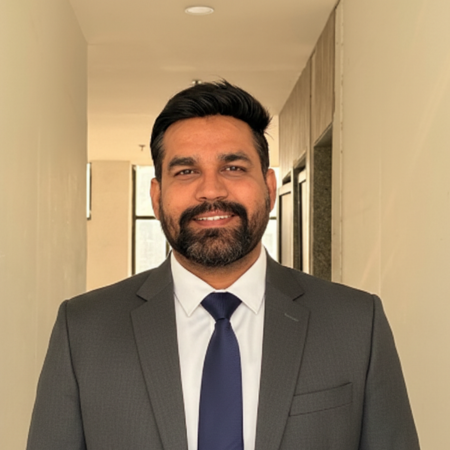
By Rohit Dabra, Chief Technology Officer, QServices
Updated May 29, 2026
Rohit Dabra is the Co-Founder and Chief Technology Officer at QServices, a software development company focused on building practical digital solutions for businesses. At QServices, Rohit works closely with startups and growing businesses to design and develop web platforms, mobile applications, and scalable cloud systems. He is particularly interested in automation and artificial intelligence, building systems that automate routine tasks for teams and organizations. LinkedIn ↗
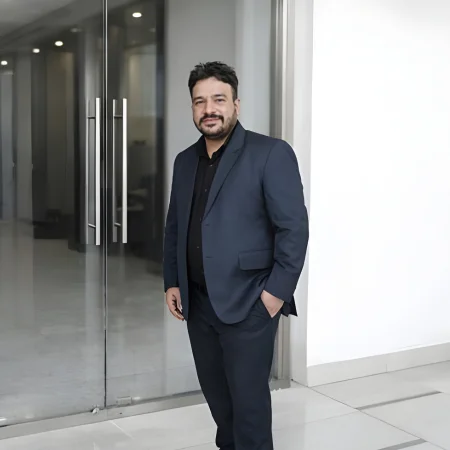
Written from QServices' hands-on delivery work and reviewed by Sahil Kataria, Chief Executive Officer, QServices, before publishing.
A fund management firm QServices modernized reduced manual portfolio management effort by 40 percent after we replaced its legacy desktop app with a real-time WebSocket-driven platform. Legacy system modernization for wealth management firms is the process of replacing aging advisory, compliance, and reporting platforms so firms can scale under SEC and FINRA requirements without being blocked by outdated code.
Why wealth management firms need legacy modernization right now
The pressure is coming from three directions at once. Regulation keeps tightening: the SEC's 2022 amendments to Rule 17a-4 require firms to store electronic records in WORM-compliant systems with third-party auditor access. Many RIAs and broker-dealers are still running platforms that cannot meet this standard without expensive manual workarounds — and the SEC is actively examining for compliance gaps.
The talent risk is just as serious. According to Cerulli Associates, more than 37 percent of financial advisors plan to retire within the next decade. The people who built your current systems are leaving, and undocumented business logic leaves with them. Firms on legacy Orion configurations or 15-year-old .NET Framework apps are one retirement away from a knowledge gap that takes months to recover from.
On the competitive side, custodians like Schwab Advisor Center and platforms like Tamarac have moved to API-first architectures. Firms still on thick-client legacy apps cannot pull real-time data or push orders programmatically. That means slower trade execution, more manual reconciliation, and higher ops headcount per advisor than the competition is carrying.
Younger advisors expect modern tooling. Firms competing for talent against banks and fintech companies cannot recruit with a Citrix desktop app and a manual spreadsheet reporting process. That gap is visible in retention numbers across the RIA space right now.
See our full suite of industry solutions to understand how modernization fits alongside AI agent development and compliance automation for regulated firms.
What we build for wealth management clients
We do not replace everything at once. We identify the modules blocking growth, migrate those first, and leave stable components in place until the risk of moving them drops. Here is what a typical engagement delivers:
- API gateway over the legacy core: We wrap your existing database behind a .NET 8 API layer so modern frontends and third-party platforms (Salesforce Financial Services Cloud, Schwab, Orion) can connect without touching fragile legacy code. This eliminates 40 to 60 percent of the integration calls your team currently makes by hand.
- Reporting consolidation across custodians: We replace manual per-custodian data pulls with a unified pipeline. Advisors get one dashboard instead of logging into three systems. Our Human-in-the-Loop (HITL) governance layer flags any report where AI-generated figures deviate from expected ranges; a human reviewer approves before those numbers reach clients.
- Digital client onboarding: Paper-heavy onboarding is replaced with digital workflows that write directly to your CRM. KYC checks, Reg BI suitability documentation, and e-signature capture run in sequence. HITL checkpoints pause the workflow wherever a licensed advisor's judgment is required by regulation.
- FINRA recordkeeping compliance layer: We build a compliance archive that captures all electronic communications and advice records in a FINRA Rule 4511-compliant store on Azure, with audit trails your compliance director can pull in minutes instead of days.
- Knowledge documentation before decommission: We extract and document every undocumented business rule we find in the old code before the migration runs. That documentation becomes part of the handover, so knowledge concentration in retiring staff stops being a risk.
How a legacy modernization engagement actually works (step by step)
Most wealth management modernization projects run 16 to 52 weeks, depending on the number of custodian integrations and the state of the existing codebase. Here is the typical phase structure:
- Weeks 1 to 3: Discovery and risk mapping. We audit the existing stack — code, data flows, integrations, and compliance obligations. We map every place the system touches SEC and FINRA requirements. Output: a prioritized migration backlog with effort and risk estimates for each module.
- Weeks 4 to 8: Strangler-fig foundation. We stand up the .NET 8 API gateway alongside the legacy app. Traffic shifts module by module; the legacy system stays live throughout. HITL checkpoint: the COO or Director of Operations signs off on the migration order before we route production traffic to any new component.
- Weeks 9 to 20: Module-by-module migration. Reporting, onboarding, and compliance modules move in sequence. Each is tested with real data before go-live. Every business rule we find in the old code is documented; those rules migrate with the code, not separately.
- Weeks 21 to 30: Integration wiring. Connections to Salesforce Financial Services Cloud, Orion, Tamarac, and Schwab Advisor Center are rebuilt against the new API layer and tested in staging before any production cutover.
- Weeks 31 to 40: Compliance validation and parallel run. The new system runs alongside legacy for four to eight weeks. Output figures are compared daily. HITL checkpoint: the compliance director reviews side-by-side results and signs off before legacy is decommissioned.
- Weeks 41 to 52: Decommission and handover. The legacy system is retired. Your team receives full documentation, operational runbooks, and a 90-day support retainer.
What this costs
A legacy modernization project for a wealth management firm typically runs $60,000 to $500,000. The range is wide because scope varies considerably. See our full legacy modernization cost guide for a detailed breakdown by engagement size.
What drives cost up:
- Multiple custodian integrations: add $3,000 to $12,000 per non-trivial integration
- SEC, FINRA, or Reg BI compliance scope adds 15 to 25 percent to baseline effort
- Undocumented business logic buried in stored procedures or Excel macros
- Critical business rules that exist only in the heads of retiring staff
- Third-party compliance review for regulated recordkeeping systems: add $5,000 to $20,000
What keeps cost down:
- Strangler-fig migration over big-bang rewrite: you pay for what moves, in the order that matters most
- Our offshore-based team rates of $20 to $65 per hour depending on seniority, compared to onshore US rates of $150 to $250
- Well-documented source systems with clean data schemas
- Limiting initial scope to the two or three modules that are blocking the most revenue or creating the most compliance risk
Three things wealth management buyers usually get wrong
1. Planning a big-bang rewrite. Every firm that has tried to replace everything at once has either blown the budget, gone live with a broken system, or both. Wealth management platforms have too many custodian integrations and too many compliance dependencies to cut over safely in one shot. The strangler-fig approach, where you replace one module at a time while the legacy system stays live, is not a compromise. It is the only migration strategy that works at this level of regulatory and integration complexity.
2. Migrating the code but not the business rules. Legacy wealth management systems carry 15 years of compliance logic that was never written down. It exists only in the code, and often only in the heads of the people who wrote it. When teams move to a new platform without extracting and documenting those rules first, they rebuild the same compliance exposure on a new stack. We spend the first three weeks of every engagement on this documentation work before we touch a line of code. Skipping it is how firms end up in front of a FINRA examiner two years after a modernization project.
3. Underestimating the integration surface. Most wealth management firms have four to eight external connections at minimum: a custodian, a CRM, a portfolio management system, a compliance archive, and a reporting layer. Each one needs to be tested against the new system in staging before production cutover. Teams that skip staging and go straight to production see outages that breach SLAs and, in some cases, attract regulatory scrutiny. Budget for integration testing as a first-class line item, not as an afterthought at the end of the project.
For a detailed comparison of migration approaches, see our legacy modernization service overview.
Recent work with wealth management clients
We have delivered three production platforms for wealth management and financial analysis clients. The Analyst Intelligence platform achieved a 100x speed increase in Excel data handling and drew interest from Franklin Templeton and Goldman Sachs. The fund manager desktop app reduced manual portfolio management effort by 40 percent with real-time WebSocket trade execution. The Nuworkz platform automated financial data entry and reconciliation with multi-factor authentication and encryption built in from day one.
Case Study
Financial Analysis and Forecasting Platform (Analyst Intelligence)
Financial analysis SaaS startup, US
100x speed increase in Excel data handling versus the previous manual process
Won enterprise customers against well-funded competitors including interest from Franklin Templeton and Goldman Sachs
React.jsPythonExcel Add-inGoogle Sheets Add-onREST APIs
Case Study
Fund Manager Desktop Portfolio and Trading Application
Investment advisory and fund management firm
Reduced manual portfolio management effort by 40 percent
Unified multi-client tracking dashboards with real-time trade execution on live WebSocket data streams
WPFMVVMWebSocketREST APIs
Case Study
Cloud-Based Financial Reporting Platform (Nuworkz)
Financial reporting SaaS company
Automated data entry and reconciliation with real-time financial insights replacing manual reporting
Seamless integration with existing accounting applications with encryption and multi-factor authentication
React.js.NET
How long does legacy modernization take for a wealth management firm?
Most wealth management legacy modernization projects run 16 to 52 weeks. A focused module migration, such as replacing a single reporting layer or client onboarding workflow, typically completes in 16 to 24 weeks. A full-platform migration covering multiple custodian integrations, compliance systems, and CRM connections runs 40 to 52 weeks. Scope drives timeline, not the technology itself.
Ready to discuss your project?
Share your requirements with QServices. Our engineers will give you a straight answer on fit, timeline, and cost — no sales scripts.
Book a Free Consultation
Frequently Asked Questions
How much does legacy modernization cost for a wealth management firm? +
Most wealth management legacy modernization projects run $60,000 to $500,000. A focused module replacement — one reporting layer or onboarding workflow — typically lands in the $60,000 to $150,000 range. Full-platform migrations with multiple custodian integrations and compliance validation run $200,000 to $500,000. Regulatory scope (SEC, FINRA, Reg BI) adds 15 to 25 percent to baseline costs.
How do you handle SEC and FINRA compliance during a legacy migration? +
We map every compliance obligation before writing a line of code. During migration, the legacy system stays live; we shift traffic module by module using the strangler-fig pattern. Compliance validation runs in parallel for four to eight weeks before decommission. A licensed compliance director signs off at two explicit Human-in-the-Loop checkpoints before production cutover.
Can you modernize our wealth management systems without taking them offline? +
Yes. We use strangler-fig migration, which means the legacy system stays live throughout. We stand up new modules alongside it, shift traffic incrementally, and only decommission the old system after the new one has passed a parallel-run validation period. Client advisors and operations teams see no downtime during the migration.
How does QServices handle undocumented business logic in legacy wealth management code? +
We spend the first two to three weeks of every engagement on discovery: auditing stored procedures, tracing data flows, and interviewing staff before they leave. Every undocumented rule we find gets documented and reviewed before migration starts. This prevents compliance logic from being silently lost in the move to a new platform.
Does QServices have experience with systems like Orion, Tamarac, or Salesforce Financial Services Cloud? +
Yes. We have built integrations against Orion, Tamarac, Schwab Advisor Center, and Salesforce Financial Services Cloud. Our .NET 8 API gateway approach means we can connect to any custodian or CRM that exposes a REST or WebSocket API without rewriting the underlying advisory or reporting logic.